
Seamless Gutter Warranty Comparison Explained
A seamless gutter warranty comparison should start with one practical question: if water is overflowing beside your foundation during a hard Portland-area rain, who is responsible for fixing the problem? The answer is rarely found in the largest number printed on a sales brochure. It depends on whether the issue involves the gutter material, the gutter guard product, or the installation itself.
For homeowners in Southwest Washington and the Portland metro, that distinction matters. Rain is frequent, roofs shed grit and moss, and fir and pine needles can test a gutter system in ways that a warranty written for mild, dry conditions may not address. A good warranty is valuable, but only when you understand what it covers, what it requires from you, and who will be there to handle a legitimate problem.
A Seamless Gutter Warranty Comparison Starts With Coverage Types
Most gutter warranties fall into three separate categories. They may be presented together during a quote, but they protect different parts of the project.
A material warranty generally covers defects in the aluminum gutter, finish, or related components. It may protect against premature paint failure, manufacturing defects, or certain forms of corrosion. Aluminum is a strong fit for the Pacific Northwest because it will not rust like steel, but no material warranty turns gutters into maintenance-free equipment. Physical damage from ladders, falling limbs, ice, or improper roof work is usually excluded.
A gutter guard product warranty applies to the guard itself. Depending on the manufacturer, it may address defects in the mesh, frame, coating, or the product’s ability to keep ordinary debris out of the gutter. The wording deserves close attention. A guard warranty may not promise that every particle of roof grit stays out, that water will never overshoot in extreme weather, or that a homeowner will never need to inspect the system again.
An installation workmanship warranty covers the contractor’s labor and installation practices. This is often the most meaningful protection for a homeowner because many early system problems are not material failures. They come from improper pitch, weak fastening, poorly supported downspouts, bad transitions, or guards installed without accounting for the roof edge and water flow.
When comparing proposals, ask each contractor to separate these three warranties in writing. A long manufacturer warranty is helpful, but it does not automatically cover labor to remove, reinstall, adjust, or troubleshoot the system.
The Fine Print That Changes the Value of a Warranty
The length of a warranty is easy to compare. Its conditions are harder, and they often determine whether the coverage is useful years later.
Transferability matters when you sell
A transferable warranty can add confidence when a home changes hands. But transferable does not always mean automatic. Some manufacturers require registration, a transfer request within a certain number of days after the sale, or a modest administrative fee. Others limit transferability to one subsequent owner.
If you expect to sell in the next decade, ask for the transfer process before signing. Keep the original invoice, product information, and any registration confirmation with your home records. A warranty that cannot be documented can be difficult for a new owner to use.
Prorated coverage is different from full coverage
Some warranties provide full replacement value for an initial period, then reduce the manufacturer’s responsibility over time. Others may offer a replacement product but not labor, shipping, removal of the old product, or repair of affected exterior materials.
That does not make a prorated warranty bad. It simply means the advertised term is not the entire story. A 30-year warranty with clear workmanship support and a responsive local installer can be more useful than a longer warranty that leaves the homeowner responsible for nearly all service costs.
Exclusions are normal, but they should be reasonable
Every exterior product warranty has exclusions. The concern is not that exclusions exist. The concern is whether they leave out the conditions your home is most likely to face.
For Pacific Northwest homes, pay close attention to exclusions involving storm damage, wind-driven rain, snow and ice, tree impact, roof alterations, pressure washing, chemical exposure, and lack of maintenance. Also ask how the warranty treats debris common in this area, including fir needles, pine needles, seed pods, roof granules, and moss.
No guard should be sold as a cure for a roof that is shedding heavy moss or a drainage system with too few downspouts. The guard, gutter size, outlet placement, downspout capacity, and roofline all need to work together.
Why Workmanship Coverage Deserves Extra Weight
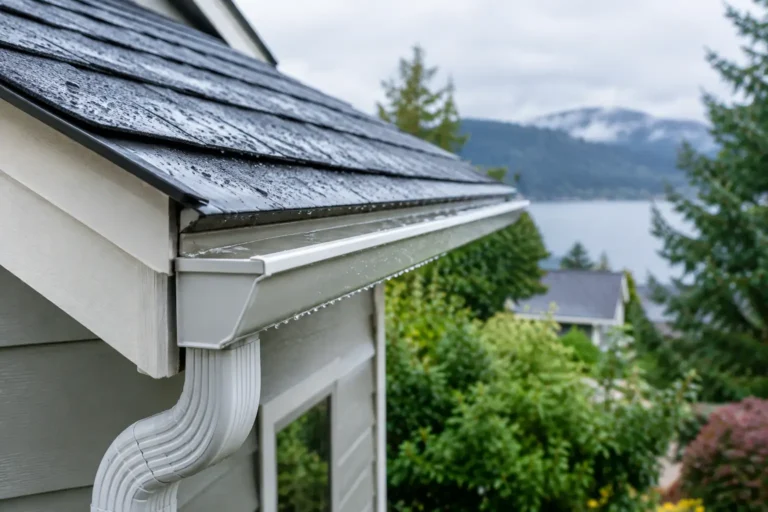
Custom-formed aluminum gutters are made to the measurements of your home, which reduces the number of joints where leaks can develop. That is an advantage, but the system still relies on proper installation.
The installer needs to establish the right slope so water reaches the downspouts without standing in the gutter. Hidden hangers need to be secured into sound fascia at appropriate spacing. Downspouts must be sized and positioned for the roof area they serve. Where gutter guards are installed, the attachment method must manage water flow without creating a weak point at the roof edge.
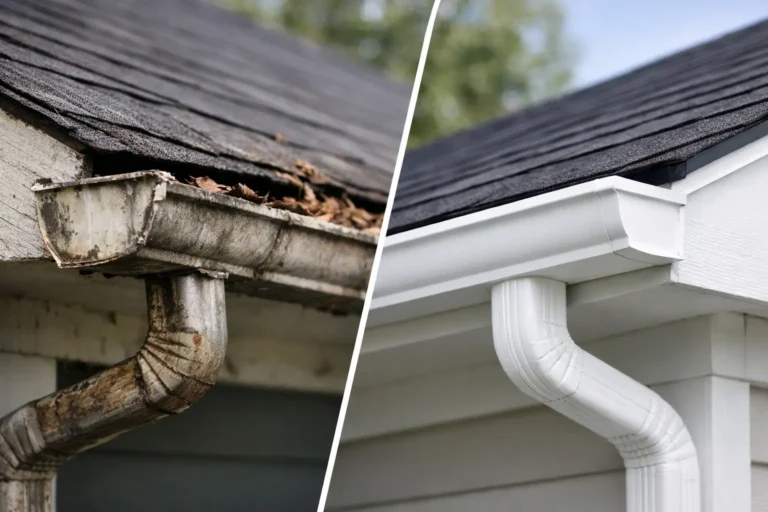
These are not cosmetic details. A gutter can look straight from the driveway and still hold water, pull loose, overflow at an inside corner, or drain too slowly during a sustained downpour.
Ask how long the contractor stands behind workmanship and what the service process looks like. Will the same local company inspect the issue? Is labor covered for a repair caused by installation? Is there a clear point of contact if the manufacturer needs to be involved? Straight answers here are often more valuable than broad promises.
Comparing Gutter Guard Warranties in Heavy Debris Areas
Gutter guard warranties require an especially careful reading because product performance is affected by the home itself. A steep metal roof, a low-slope composition roof, large evergreens overhead, and long valley runs can all change how water and debris reach the gutters.
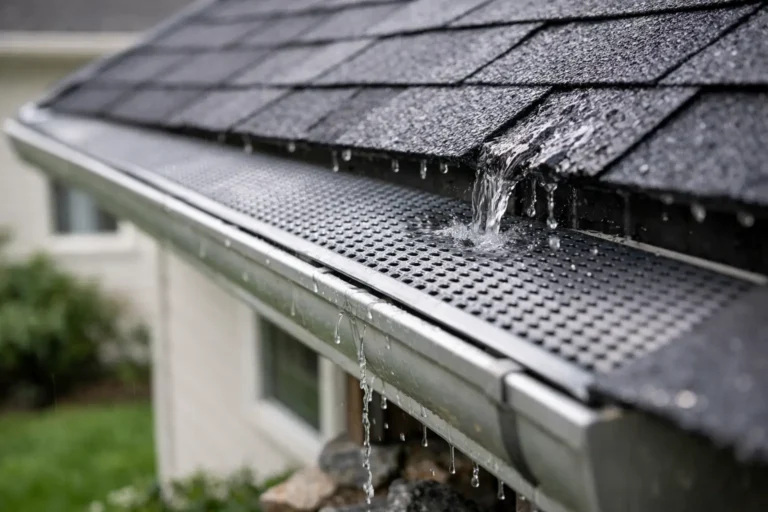
Premium stainless steel micro-mesh guards are designed to block fine debris while allowing water into the gutter. For homes surrounded by conifers, a fine mesh is generally a better starting point than a wide-opening screen that can collect needles or allow smaller debris through. Still, a guard cannot stop needles from resting on top temporarily, especially after windstorms. The goal is reliable drainage and much less gutter cleaning, not a promise that nature will never leave debris on the roofline.
For example, Gutter Glove Pro systems include a 50-year transferable manufacturer warranty. That is a meaningful feature, particularly for homeowners planning to stay in their homes or preserve resale appeal. Before treating any guard warranty as a deciding factor, confirm exactly what is covered, whether installation by an approved contractor is required, and whether the warranty includes labor for a service call.
Questions to Ask Before You Approve the Quote
A contractor should be comfortable answering warranty questions without turning them into a pressure tactic. Get the answers in writing, along with the scope of work.
Ask whether the gutter material, guard product, and installation each have separate coverage. Confirm the term for each one, whether the warranty transfers, and any registration deadline. Ask what happens if a repair is needed after the initial labor period ends. Finally, ask who handles the claim: the contractor, the manufacturer, or the homeowner.
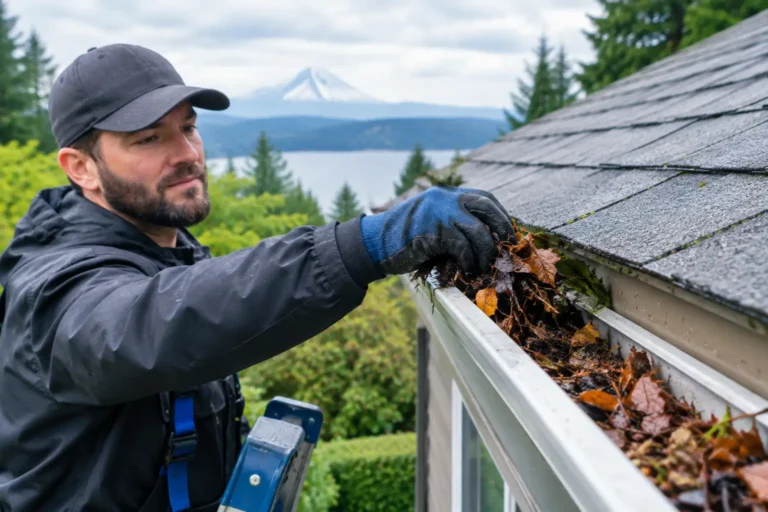
It is also reasonable to ask what routine care is expected. Even a well-designed gutter protection system benefits from occasional visual checks after major storms, especially when nearby trees drop needles, cones, or branches. Keeping roof valleys clear and watching for unusual overflow protects the home and helps identify problems before they become expensive.
Choose Accountability, Not Just a Warranty Number
The strongest warranty package combines quality materials, a product suited to local debris, and installation by a contractor who understands wet-weather drainage. NW Gutter Protection approaches gutter systems with that practical standard: custom-measured components, durable hidden-hanger support, and guard options built for the rain and evergreen debris homeowners deal with here.
Before choosing a proposal, read the warranty documents while the contractor is still available to answer questions. The right system should leave you with more than a long term on paper. It should give you a clear path to service, dependable drainage through the rainy season, and confidence that the people who installed it will stand behind their work.