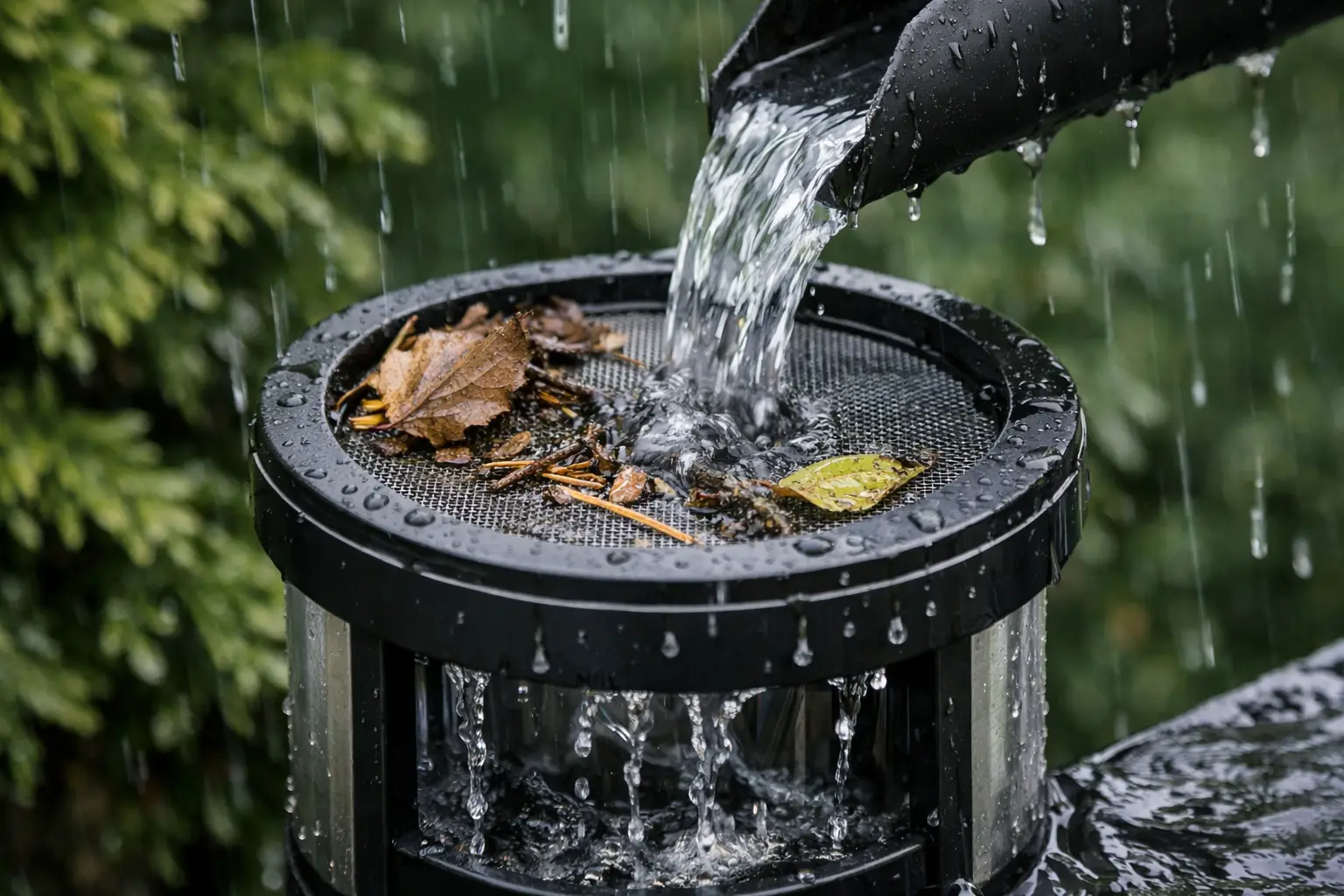
How Micro Mesh Filters Debris in Wet Climates
A gutter guard has one job: keep the material that causes clogs out of the gutter while allowing water to enter it. That sounds simple until you consider how micro mesh filters debris during a Portland or Southwest Washington downpour, when rain is heavy, roofs shed gritty particles, and fir needles seem to arrive from every direction.
For homes under evergreens, a guard needs to do more than block large leaves. It needs to manage pine needles, roof granules, seed pods, moss fragments, and windblown debris without slowing water flow. Premium stainless steel micro-mesh guards are designed around that specific challenge.
How Micro Mesh Filters Debris From Rainwater
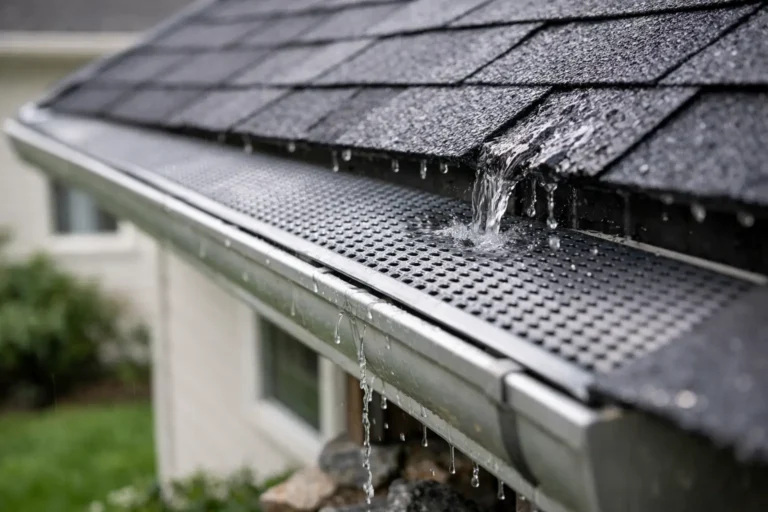
Micro mesh is a finely woven stainless steel screen installed over the top of the gutter. Its openings are small enough to keep out most common gutter-clogging debris, yet numerous enough to let rainwater pass through and drain into the gutter channel below.
The filtering action starts at the roof edge. Rainwater runs down the shingles and reaches the guard surface. Water is drawn through the mesh openings and into the gutter. Needles, leaves, and larger roof debris remain on top, where wind and the next rainfall can move them away.
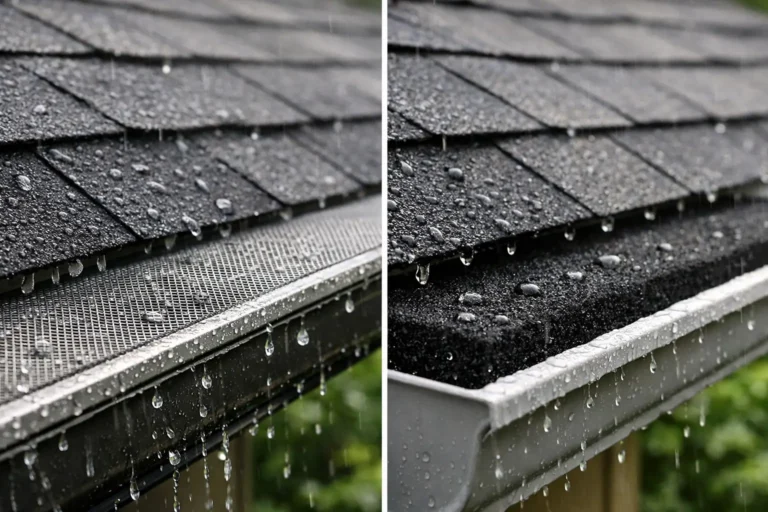
This is different from a basic perforated cover or wide-screen guard. Those products may stop large leaves but often leave openings big enough for pine needles, roof grit, and small seed material to enter. Once that material is inside, it can collect at downspout outlets and form the same type of clog a homeowner was trying to avoid.
The goal is not to make debris disappear. No gutter protection system can stop every piece of material from landing on a roof. The goal is to keep debris out of the gutter interior, where it holds water, restricts drainage, and creates the conditions for overflow.
Why stainless steel mesh matters
Mesh material makes a real difference in the Pacific Northwest. Stainless steel resists rust and holds its shape through years of rain, temperature swings, and seasonal debris. A flimsy plastic screen can become brittle, warp, or sag. Once a guard loses its shape, water and debris no longer move across it as intended.
Fine stainless steel mesh also provides a much more consistent filtering surface than a guard with large punched holes. That consistency is especially useful around Douglas firs, pines, cedars, and other trees that drop narrow needles capable of slipping through more open guard designs.
What Happens to Pine Needles and Roof Grit?
Homeowners often ask whether fine mesh will clog on top. It is a fair question, particularly in neighborhoods with dense tree cover. The answer depends on the debris load, roof pitch, tree type, and installation quality.
Pine and fir needles generally rest on the mesh surface rather than entering the gutter. On a properly installed system, the guard is positioned to encourage debris to shed off the roof edge. Wind helps, and rainfall can wash lighter material away. Needles may collect temporarily, especially after a storm, but that is far better than having them packed inside the gutter and downspout.
Roof grit is another concern. Asphalt shingles naturally shed granules over time, and newer roofs can shed more heavily for a period. Fine mesh keeps much of that grit from reaching the gutter interior. Some dust-like particles may remain on the surface or wash through depending on their size, but the mesh dramatically reduces the material that can build into a dense, muddy blockage.
A small amount of surface debris is not a system failure. Water should continue to drain through the mesh. If the guard surface becomes persistently covered, the likely issue may be an unusual debris condition, insufficient roof slope, or a guard system that was not fitted correctly to the roof and gutter.
Water Flow Is About More Than the Mesh
A micro-mesh guard can have excellent filtration and still underperform if it is installed poorly. The guard must be secured at the right angle, tied into the roof edge correctly, and supported so it does not dip under the weight of water or debris.
That is why professional installation matters. A guard that sits too flat can hold debris. One that is pitched incorrectly can allow water to overshoot during a hard rain. One that is loosely attached can move over time, creating gaps where debris enters or sections where water does not drain properly.
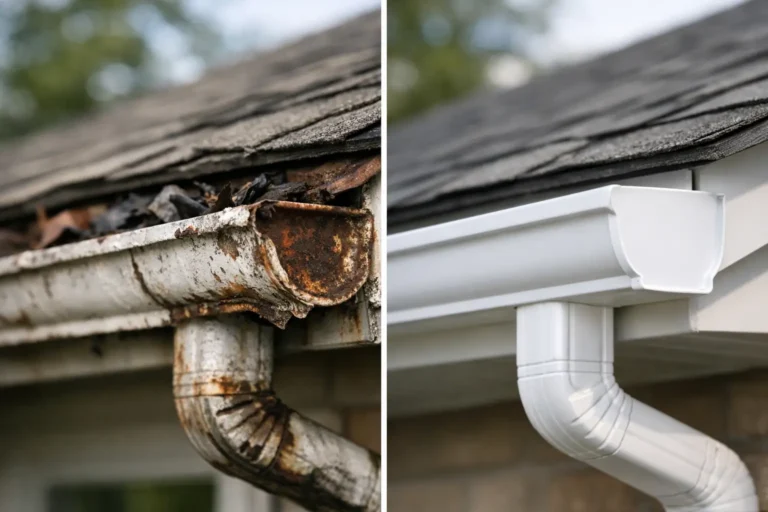
The gutter system underneath matters just as much. Gutters need the proper slope toward the downspouts, and downspouts need adequate capacity to move water away from the home. If an existing gutter is undersized, pulling away from the fascia, or full of old debris, adding a guard alone will not correct those underlying drainage problems.
At NW Gutter Protection, this is why guard work starts with the condition of the full system, not just the top cover. The right micro-mesh product needs a solid gutter, dependable attachment points, and a layout designed for the roofline.
Heavy rain creates a real test
The Pacific Northwest does not have a single rain pattern. A light winter drizzle tests a guard differently than a sudden heavy shower after a dry stretch. During high-volume rain, water must transition from the roof, across the guard, and into the gutter without spilling over the edge.
Quality micro-mesh systems are engineered to use the natural surface tension of water. As water reaches the finely textured guard surface, it follows the contour and enters the mesh. However, performance still depends on roof pitch, shingle style, valley runoff, and the amount of water being concentrated in one section.
Roof valleys deserve particular attention. They can send a large volume of water and debris into a short gutter run. A professional installer may recommend additional considerations in these areas, including wider gutters, added downspouts, or a drainage adjustment. There is no one-size-fits-all answer for every roof.
The Trade-Off: Less Cleaning, Not Zero Maintenance
Micro-mesh gutter guards are designed to reduce gutter cleaning substantially. For many homeowners, that means no longer climbing ladders multiple times each year to scoop wet needles and decomposing leaves from the gutter trough.
Still, a home surrounded by mature evergreens may need an occasional visual check. Debris can settle in roof valleys, collect behind chimneys, or build up on top of any gutter guard after a major windstorm. The difference is that maintenance becomes a surface-level inspection rather than a dirty, clogged-gutter cleanup.
Watch for water spilling over the gutter edge during rain, debris building heavily at roof valleys, or downspouts draining slowly. These signs do not always mean the guard is the problem, but they do signal that the drainage system deserves attention.
Homeowners should also be cautious about pressure washing or scraping a guard with sharp tools. Aggressive cleaning can damage the mesh, dislodge fasteners, or force debris into places it does not belong. If a system needs service, it is best handled with methods appropriate for the guard and roof materials.
Choosing a Micro-Mesh Guard That Fits Your Home
Not all micro-mesh guards are built or installed the same way. Look beyond a general promise of “clog-free” gutters and ask practical questions. What is the mesh made of? How is the guard attached? Is it designed for pine needles? Will the installer inspect the existing gutters and downspouts before installation? What warranty applies to both the product and the work?
For homes in Vancouver, Camas, Ridgefield, Portland, Beaverton, Tigard, Hillsboro, and Lake Oswego, local conditions should guide the recommendation. A roof with open exposure and a few deciduous trees has different needs than a steep roof beneath tall firs. The best system is one matched to the home, installed with care, and supported by a contractor who understands what local weather can do.
A well-installed micro-mesh guard does not ask your gutters to work harder. It gives them a cleaner path to do the job they were built for: carry rainwater away from your home, season after season.