K-Style vs Half-Round Gutters: Which Fits?
Water spilling over a gutter during a Portland downpour is not usually a gutter-shape problem alone. It can be a sizing, pitch, downspout, debris, or installation problem. Still, k style vs half round is a worthwhile comparison because the profile you choose affects water capacity, how debris moves through the system, curb appeal, and long-term maintenance.
For most homes in Southwest Washington and the Portland metro, a properly sized 5- or 6-inch K-style seamless aluminum gutter is the practical choice. Half-round gutters can be an excellent fit for certain homes, especially historic, traditional, and higher-end architectural styles. The right answer depends on your roof, rainfall exposure, tree cover, and the look you want to preserve.
K-Style vs Half-Round Gutters at a Glance
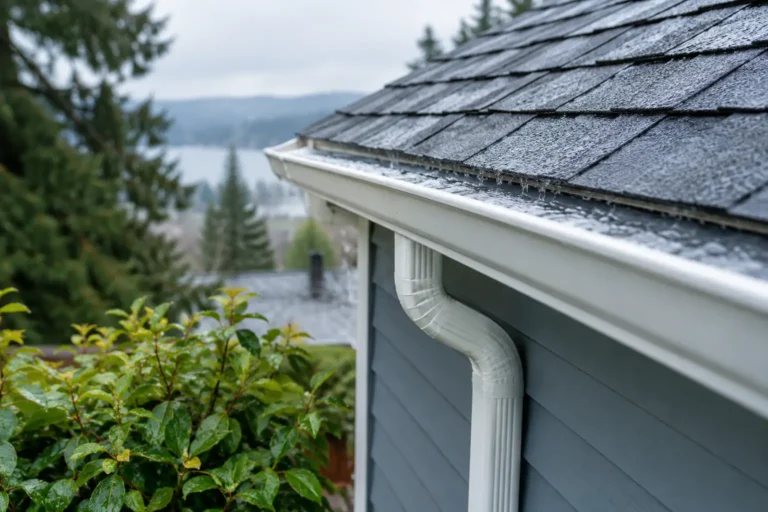
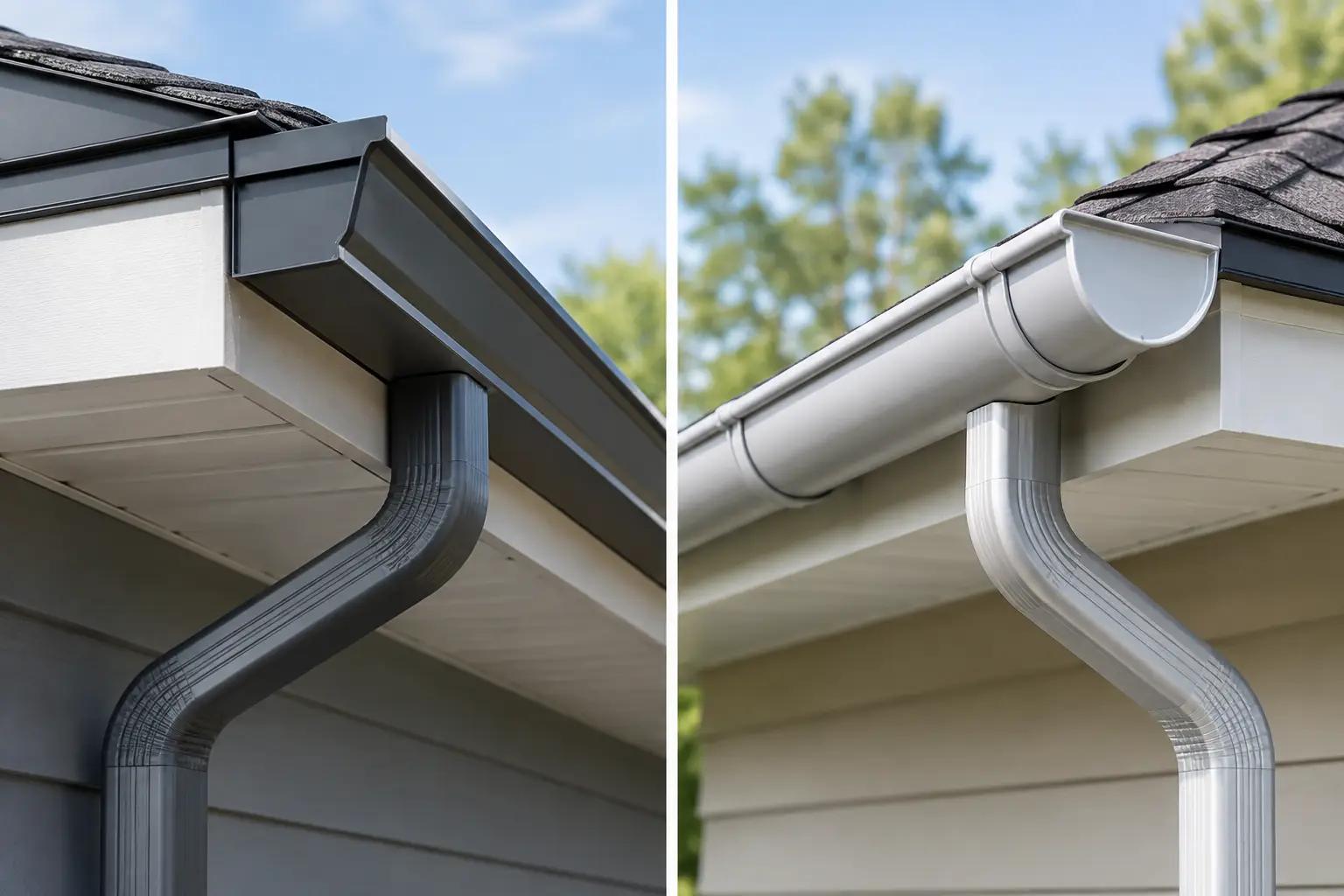
K-style gutters have a flat back and bottom with a shaped front edge that resembles decorative crown molding. They are the most common residential gutter profile in the United States. Because they mount flat against the fascia, they offer a clean, familiar appearance on everything from ranch homes to newer two-story construction.
Half-round gutters are exactly what they sound like: open channels shaped like a half circle. They have a softer, more traditional appearance and are commonly used on older homes, custom homes, and properties where architectural detail matters as much as function.
Both styles can handle Pacific Northwest rain when they are correctly sized and installed. The difference is in how they get there. K-style gutters generally provide more water-carrying capacity at the same nominal width. Half-round systems often need a larger gutter size or more downspout capacity to manage the same roof runoff.
Why K-Style Gutters Are the Common Choice
A 5-inch K-style gutter holds substantially more water than a 5-inch half-round gutter. That extra capacity matters when rain is coming down hard, especially on steep roofs, large roof planes, and areas where valleys concentrate a great deal of water in one location.
K-style gutters also work well with seamless aluminum fabrication. A contractor measures the roofline, forms each gutter run on site, and installs it as one continuous piece wherever possible. Fewer seams mean fewer locations where leaks can eventually develop. For a typical Pacific Northwest home, that combination of capacity, affordability, and low-maintenance aluminum makes sense.
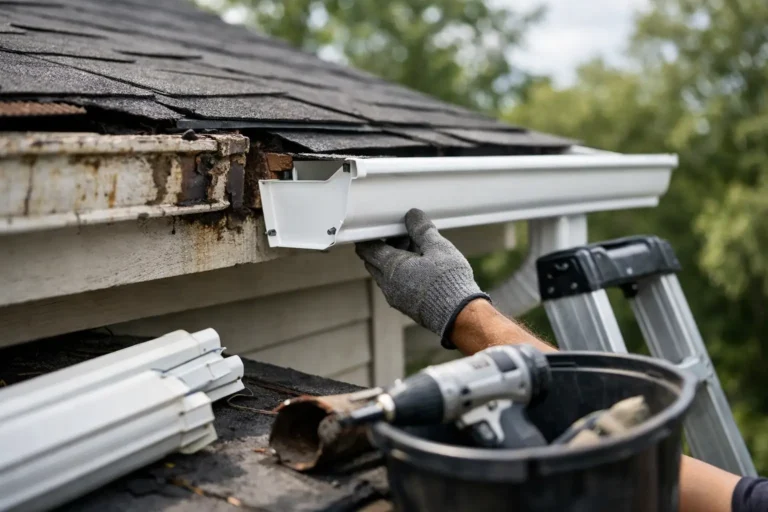
The flat rear section gives installers a strong mounting surface against the fascia board. When paired with properly spaced hidden hangers and long fasteners driven into solid framing, the system is built to stand up to the weight of wet debris and standing water. That installation detail matters more than many homeowners realize. A gutter can be made from good material and still fail early if it is under-supported or fastened only into weak fascia.
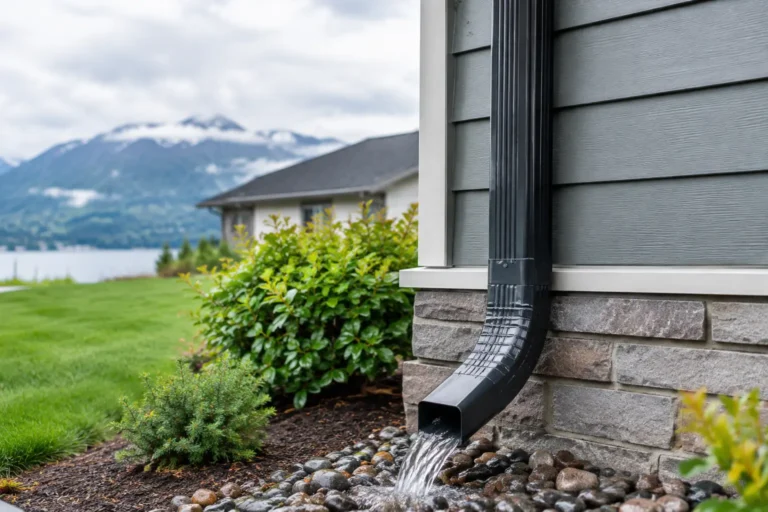
K-style gutters are also easier to pair with standard rectangular downspouts, which move a large volume of water efficiently. Larger downspouts can be especially helpful below valleys or on homes with long gutter runs. If your goal is dependable drainage with a straightforward appearance, K-style is usually hard to beat.
Where Half-Round Gutters Make Sense
Half-round gutters are not simply an upgrade or a downgrade from K-style. They are a different tool for a different set of priorities. Their rounded profile has a classic, finished look that can suit Craftsman, Colonial, Victorian, cottage, and custom-built homes particularly well.
The smooth interior is another advantage. With no sharp interior corners, leaves and small debris can move more freely toward the downspout when water is flowing. That does not mean half-round gutters are maintenance-free. Fir needles, roof grit, moss, and shingle granules still settle in any open gutter. But their shape can be easier to rinse out during maintenance.
Half-round gutters are often installed with visible brackets or hangers, which can become part of the design. Copper half-round systems are popular on premium homes for that reason, though they come at a significantly higher price. Aluminum half-round options provide a more budget-conscious way to achieve a similar style.
The trade-off is capacity. A half-round gutter generally needs to be sized larger than its K-style counterpart to move the same amount of water. On a heavily wooded property in Camas, Ridgefield, or the West Hills, it may also require more attention to downspout placement and gutter protection. A system that looks right but overflows at roof valleys is not doing its job.
Capacity Is About More Than Gutter Width
Homeowners often hear terms such as 5-inch or 6-inch gutters and assume width alone determines performance. It does not. Effective capacity depends on the gutter profile, the roof’s square footage, roof pitch, valley layout, gutter slope, downspout size, and the number of downspouts.
A 6-inch K-style system is a common recommendation for homes with large or steep roof sections because it offers meaningful additional volume. It can also be paired with oversized downspouts to prevent bottlenecks during intense rain. A larger half-round gutter can perform very well too, but it should be designed for the actual runoff load rather than chosen solely for appearance.
This is why a quick measurement from the ground is not enough. A professional quote should account for where water collects on the roof, where it needs to discharge, and whether the existing fascia can support the new system.
Debris, Gutter Guards, and Pacific Northwest Conditions
In this region, the real test is not a light rain with a few dry leaves. It is a wet fall week when fir needles, maple leaves, roof grit, and moss are all moving toward the gutter at once. Either profile can clog when debris reaches the downspout opening.
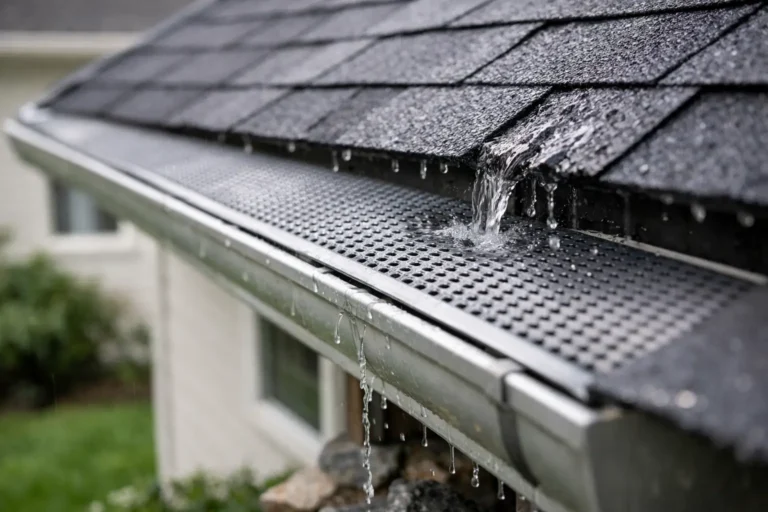
K-style gutters are widely compatible with quality micro-mesh gutter guards. A professionally installed stainless steel micro-mesh guard keeps larger debris above the gutter while allowing water to enter the system. That can greatly reduce the repeated cleaning cycle caused by pine and fir needles, but it must be installed with the roofline and water flow in mind. A poorly fitted guard can shed water past the gutter during a hard storm, regardless of the gutter profile below it.
Half-round gutters can also use gutter protection, although compatibility and installation methods vary by system. Homeowners choosing half-rounds should make sure the guard design preserves the gutter’s appearance and does not compromise drainage. On architectural homes, the guard should solve a maintenance problem without creating a bulky or mismatched look.
No gutter guard makes gutters completely maintenance-free. Periodic inspection is still smart, particularly after windstorms and heavy leaf drop. The goal is to minimize leaves/debris from sitting on the gutter guards too long, as that may cause the mesh to clog, Using a good brush attached to a broom handle will remove any standing debris the wind and rain did not blow off. Installing the guards at the angle of the roof eliminates most debris from accumulating..
Installation Details That Matter More Than Profile
A gutter’s shape does not compensate for poor installation. Whether you choose K-style or half-round, look for a system designed around the house rather than a one-size-fits-all replacement.
The gutter should have consistent slope toward downspouts without looking visibly tilted from the street. Hangers should be closely and securely spaced, especially in areas exposed to snow, wind, or heavy evergreen debris. Downspouts should be located where they can handle concentrated roof runoff and direct water away from the foundation, walkways, and landscaping.
Material quality matters as well. Seamless aluminum is a strong everyday choice because it resists rust, comes in many baked-on colors, and avoids the unnecessary seams found in sectional systems. Copper and steel may fit certain designs or performance requirements, but they bring different costs, maintenance needs, and installation considerations.
At NW Gutter Protection, the recommendation starts with what the roof and property need in real Pacific Northwest weather, not with a predetermined profile. For many homes, that means custom-measured seamless aluminum K-style gutters, hidden hanger support, and properly planned downspouts. For a home where half-rounds protect an important architectural style, the system should still be sized and supported for the same rain and debris conditions.
Choosing the Right Gutter for Your Home
Choose K-style gutters when water capacity, broad compatibility, straightforward maintenance, and value are your main concerns. They are usually the sensible choice for standard residential rooflines and properties with large roof planes, frequent rain, or heavy tree cover.
Choose half-round gutters when the home calls for a traditional profile and you are willing to size the system carefully for your roof. They can be a durable, attractive option, particularly when the gutter line is an intentional part of the home’s exterior design.
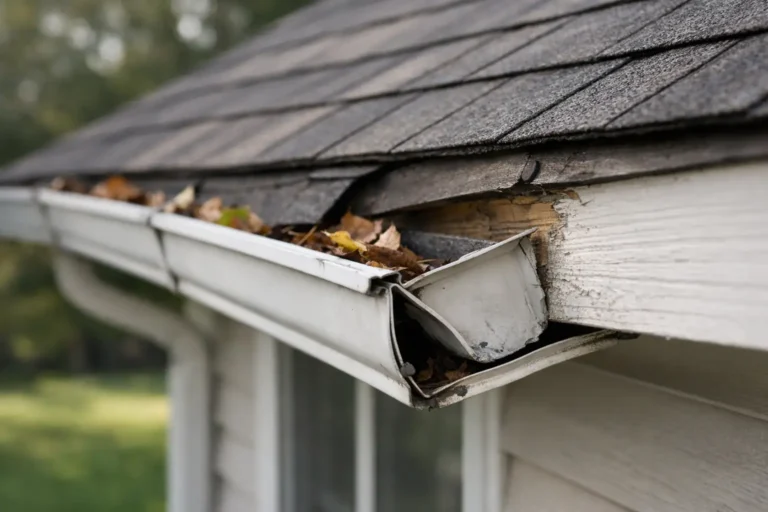
Before deciding, stand back from the question of shape alone. Look at where water currently spills over, whether downspouts are undersized, how much debris lands on the roof, and whether the fascia shows signs of rot. The best gutter system is the one that fits the home, carries runoff reliably through a hard storm, and gives you fewer reasons to climb a ladder when the weather turns.