Why Gutters Pull Away From Your House Over Time
A gutter hanging away from the roofline may start as a small gap you can see from the driveway. After a few Pacific Northwest downpours, that gap can become overflowing water, stained siding, damaged fascia, and moisture collecting too close to the foundation. Understanding why gutters pull away helps you address the real problem before a minor repair turns into a larger exterior project.
Why Gutters Pull Away From the House
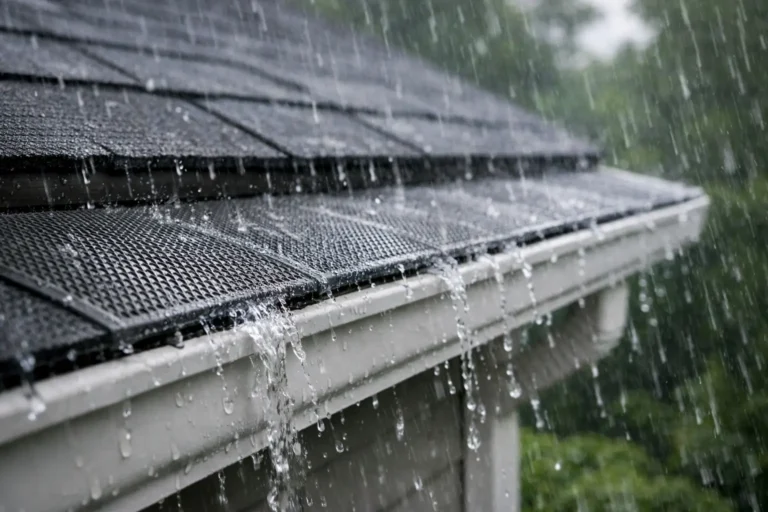
Gutters are designed to collect a surprising amount of water. A moderate rain on a typical roof can send hundreds of gallons toward the gutter system in a short period. When the gutters, fasteners, or wood behind them are not in good condition, that weight has to go somewhere.
The most common reason gutters pull away is failed fastening. Older gutter systems are often held with long spikes or nails that gradually loosen as the gutter expands and contracts through changing temperatures. Every heavy rain, windstorm, and ladder bump can add a little more movement. Eventually, the fastener no longer holds the gutter tightly against the fascia board.
Modern hidden hangers provide a stronger attachment when they are installed correctly and spaced appropriately. But even a strong hanger cannot solve a problem if it is screwed into soft, rotted, or split fascia wood. The condition of the structure behind the gutter matters just as much as the gutter itself.
Water Weight From Clogs and Overflow
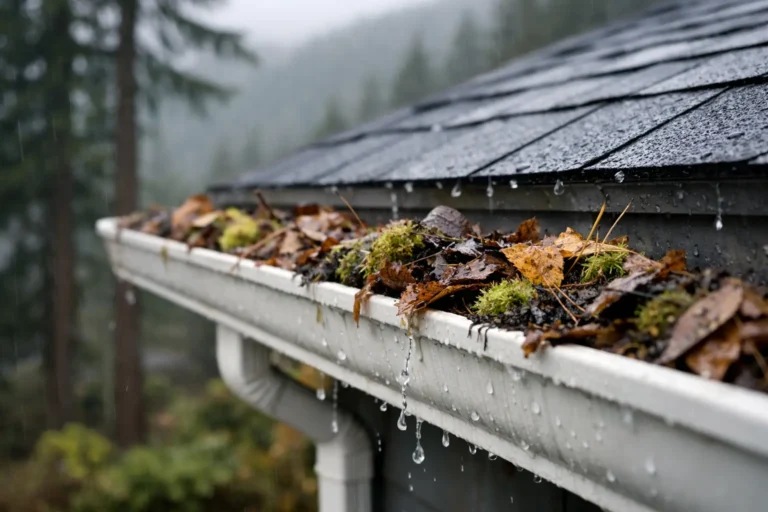
Clogged gutters are a major issue in Southwest Washington and the Portland metro area. Pine needles, fir needles, moss, roof grit, maple seeds, and wet leaves can block water flow quickly. A gutter filled with standing water and saturated debris becomes much heavier than it was designed to be.
That added weight pulls downward on hangers and fasteners. It can also cause the gutter to sag, changing its slope so water stops flowing toward the downspout. Once water pools in the low spot, the cycle gets worse: more standing water creates more weight, and more weight creates more separation.
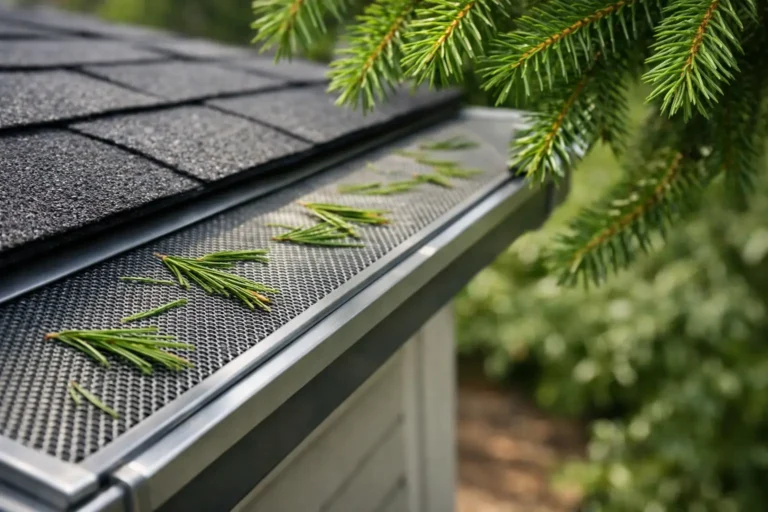
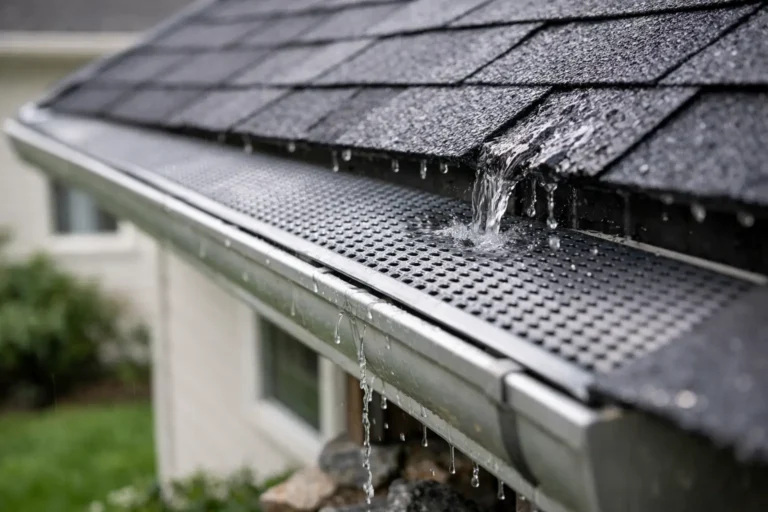
Gutter guards can reduce this burden, but product selection matters. A guard that handles broad leaves may not perform well under fine evergreen needles or roof grit. In this region, a properly installed stainless steel micro-mesh system is designed to keep small debris out while allowing rainwater into the gutter.
Rotted or Damaged Fascia Boards
Fascia is the horizontal board at the edge of the roof where gutters are attached. When water repeatedly spills behind a gutter, runs over the edge, or leaks from a damaged roofline, the fascia can absorb moisture and begin to rot.
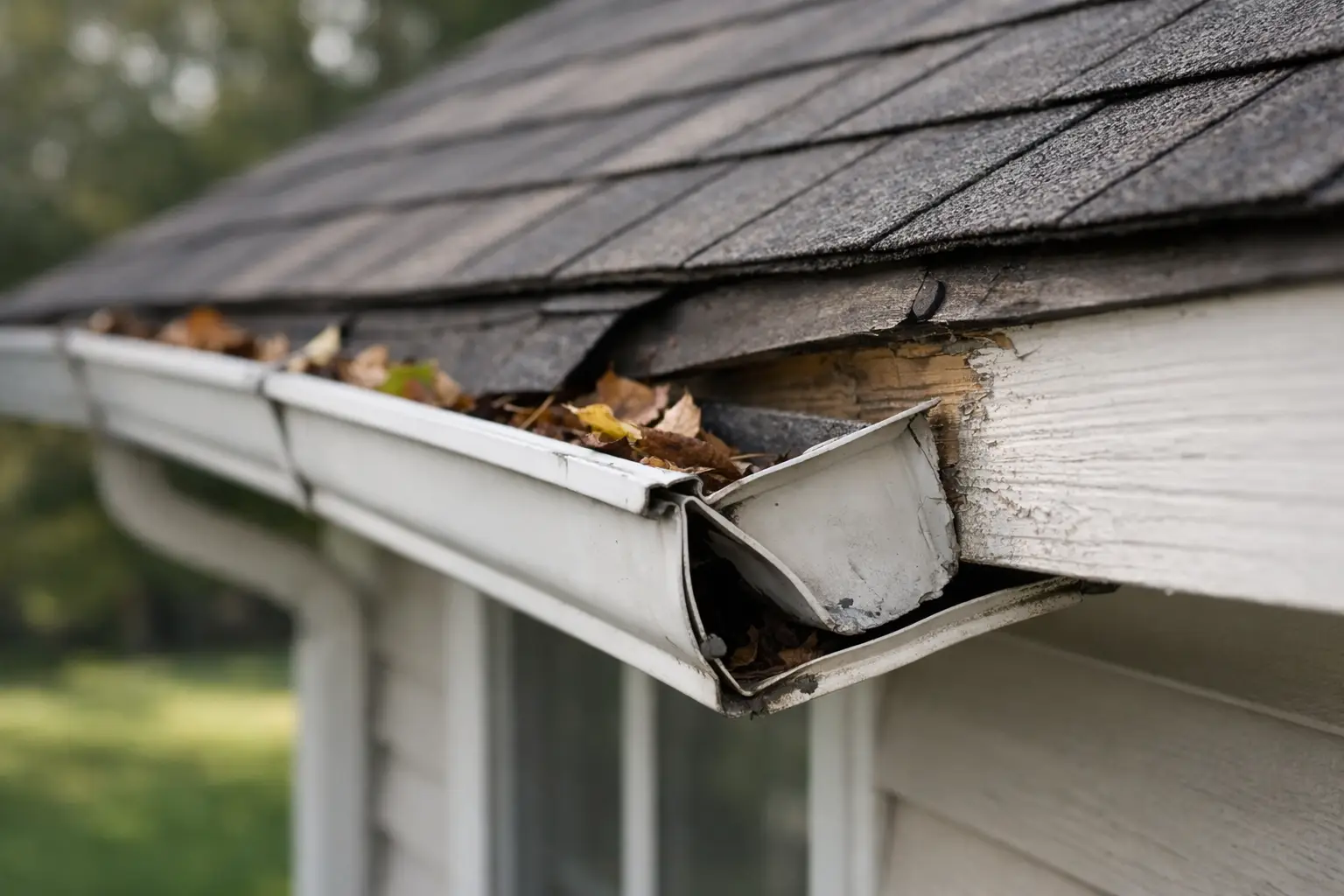
Rot is often hidden until the gutter starts to pull away. A screw may look secure from the ground while the wood around it has lost its holding strength. In that situation, simply driving in a new screw is rarely a lasting repair. The damaged wood needs to be evaluated and repaired before the gutter can be securely reattached.
This is one reason a professional inspection should look beyond the visible sag. The gutter may be the symptom, while the fascia condition is the actual repair priority.
Improper Installation or Weak Hardware
Not all gutter installations are built for long-term performance. Gutters can pull away early when hangers are spaced too far apart, undersized fasteners are used, or the system was installed without enough attachment points near corners and downspouts.
Seamless aluminum gutters are durable and practical for most homes, but they still need solid support. Long gutter runs, steep roofs, and areas that receive concentrated roof runoff may require closer hanger spacing than a simple one-size-fits-all approach. The correct setup depends on the roof, the gutter profile, local weather exposure, and the condition of the existing fascia.
Poor pitch can also contribute. Gutters need a subtle slope toward the downspout. If a system is level, back-pitched, or sagging between hangers, water remains in the channel longer. Standing water adds weight and makes debris buildup more likely.
Storm Damage, Snow, and Physical Impact
Heavy rain is the everyday concern in the Pacific Northwest, but wind and occasional snow or ice can also strain a gutter system. Wet snow can load a gutter heavily, especially when debris has already blocked drainage. Wind-blown branches can bend the aluminum or loosen hangers.
Physical impact is another overlooked cause. Leaning a ladder directly against a gutter can bend its outer edge or pull it loose. A branch falling onto the roof, a ball striking the gutter, or roof work performed without protecting the system can create damage that becomes visible later during the next storm.
Signs Your Gutters Need Attention Now
A little dirt on the outside of a gutter is normal. Separation, sagging, and water where it does not belong are not. Watch for these signs, particularly after heavy rain:
- A visible gap between the gutter and fascia board
- Gutters that sag or dip between attachment points
- Water overflowing from one section while the downspout appears clear
- Dark staining, peeling paint, or soft wood along the roof edge
- Fasteners, spikes, or screws that are protruding or lying on the ground
- Water pooling near the foundation or splashing heavily onto siding
If the gutter is pulling away at only one spot, the repair may be localized. If several sections are loose, the fascia is soft, or the gutter has widespread sagging, a larger repair or replacement is often the more dependable choice.
What a Lasting Gutter Repair Looks Like
A lasting repair begins with identifying the source of the failure. Reattaching a loose gutter without clearing the clog, correcting the slope, or addressing fascia damage may make it look better temporarily, but the same forces will pull it loose again.
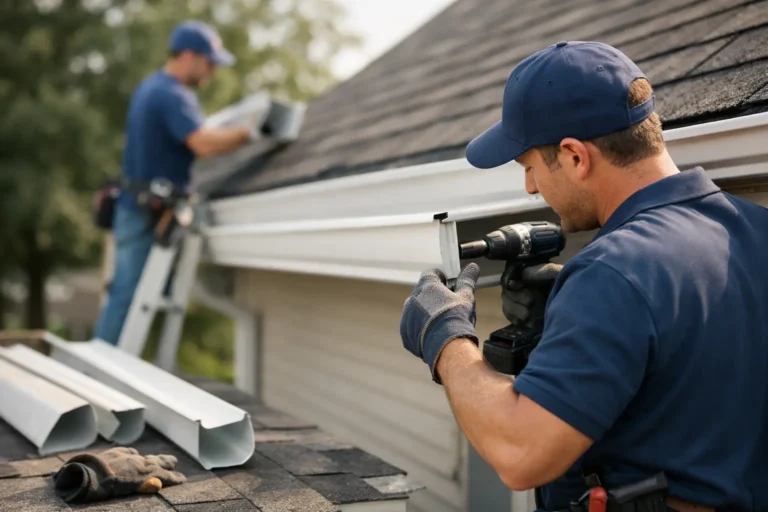
First, the gutter should be checked for debris, standing water, seams that leak, bent sections, and downspout blockages. Next, the installer should inspect the fascia and roof edge for signs of rot or water intrusion. If the wood is sound, the gutter can often be realigned to the proper pitch and secured with durable hidden hangers and screws.
If the gutter is old, undersized, heavily dented, or pieced together from multiple failing sections, replacement may be the better investment. Custom-measured seamless aluminum gutters reduce the number of joints where leaks commonly develop. Paired with properly sized downspouts, they move water away from the roofline more effectively during sustained rain.
There is a trade-off to consider. Repairing a newer, sound gutter system can be cost-effective. Continuing to patch an aging system with failing fascia, repeated overflows, and persistent debris clogs can cost more over time and leave the home exposed to water damage.
How to Prevent Gutters From Pulling Away Again
The goal is not just to make the gutter look straight. It is to keep excessive weight and water from stressing the system in the first place.
Regular cleaning helps, but it can be difficult to keep up with on tree-covered properties. Needles and roof grit do not arrive on a convenient schedule, and climbing ladders in wet conditions is not a good maintenance plan for every homeowner. A quality gutter protection system can significantly reduce the debris load, provided it is fitted to the roof and installed to maintain proper water flow.
Also pay attention to drainage below the gutter. Downspouts should be clear, securely connected, and directed away from the foundation. If water backs up at the downspout, it can fill the gutter from the bottom up during a hard rain.
For homeowners dealing with recurring clogs, sagging, or loose gutters, NW Gutter Protection focuses on seamless gutter systems, strong hidden hanger installation, and micro-mesh protection suited to the needles and heavy rainfall common in this area. The right solution depends on whether the existing gutters and fascia are still structurally sound.
A gutter pulling away from the house is a useful warning, not something to ignore until the next storm. Addressing it while the problem is limited can protect the roof edge, siding, landscaping, and foundation from the much more expensive effects of uncontrolled water.