How to Stop Gutter Leaks Before They Damage Your Home
A gutter leak can look minor until the next Portland or Southwest Washington downpour sends water down the siding, behind the fascia, or into the soil beside your foundation. Knowing how to stop gutter leaks starts with identifying whether water is escaping through a failed joint, overflowing from a clog, or running behind the gutter because the system is installed incorrectly. The fix depends on the cause.
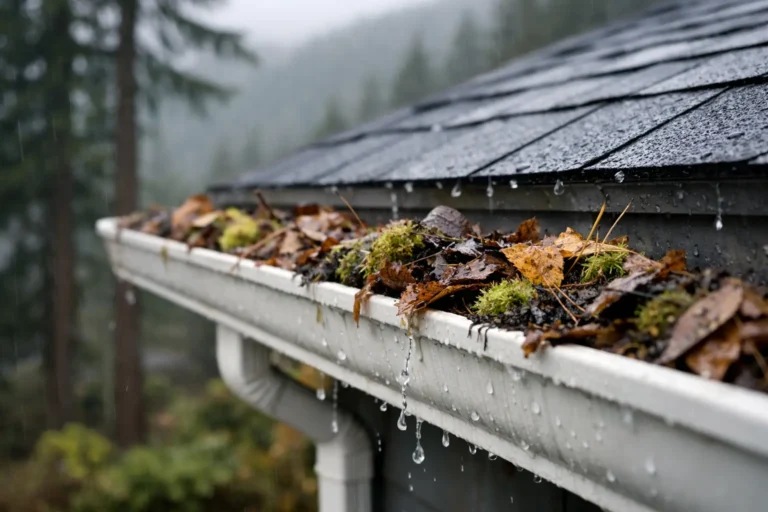
In the Pacific Northwest, gutters deal with more than rain. Fir needles, pine needles, moss, roof grit, and wet leaves can block drainage quickly. A repair that works during a dry week may fail as soon as the gutters are carrying a full load of water. That is why a lasting solution should address both the leak itself and the condition that caused it.
Find Out Where the Water Is Escaping
Wait for a light rain if possible, then watch the gutter system from the ground. You may see water dripping from a seam, pouring over the front edge, spilling behind the gutter, or leaking from a downspout connection. These problems can look similar from below, but they require different repairs.
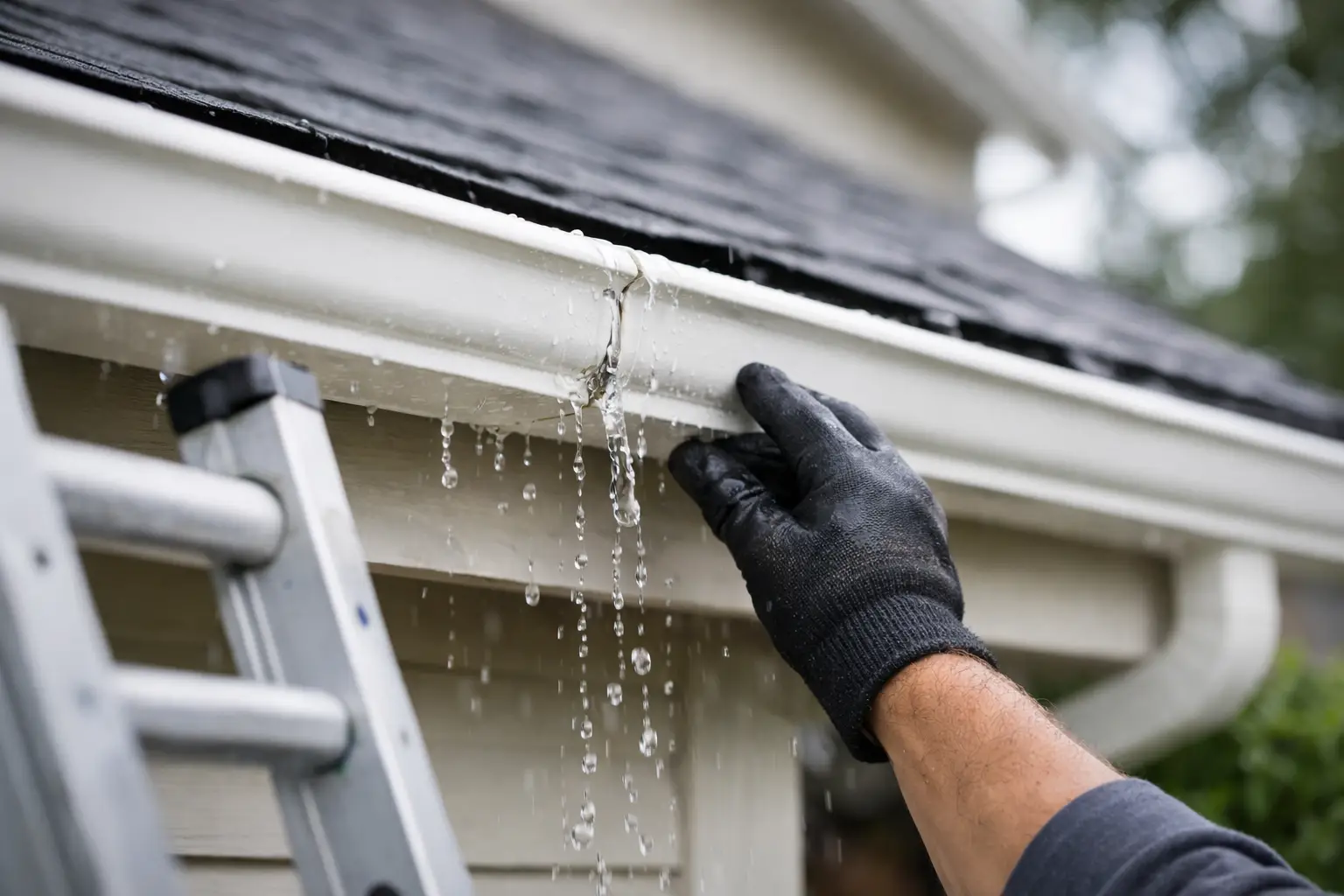
A true gutter leak usually appears at a joint, an end cap, a drop outlet, or a hole in the gutter trough. Water may drip steadily from one small location even when the gutter is not full. Aluminum gutters can also develop pinholes over time, particularly where standing water, debris, and old sealant have collected.
Overflow is different. When water runs over the front of the gutter, the usual cause is a clog, poor slope, an undersized downspout, or water shooting past the gutter from the roof edge. If water runs down the back of the gutter against the house, look closely at the fascia, drip edge, and gutter position. The gutter may be pulling away from the roofline, or roof runoff may be slipping behind it.
Do not assume a stain on the siding marks the exact leak location. Water can travel along the gutter, fascia board, or underside of the roof before it becomes visible.
How to Stop Gutter Leaks at Seams and End Caps
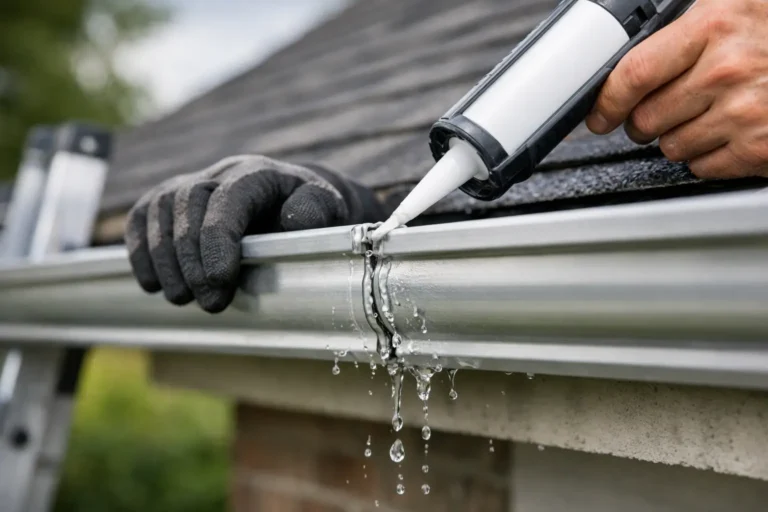
Most repairable leaks occur where two pieces of gutter meet. Before applying any sealant, clean the area thoroughly. Remove leaves, roof grit, old loose caulk, and standing water. The metal needs to be dry for a new seal to adhere properly.
Use a quality gutter sealant made for exterior metal and wet weather exposure. Apply it to the inside of the seam or end cap where water flows, not only to the outside. A bead applied to the exterior can hide a problem temporarily, but water pressure inside the trough will continue working against the joint.
Reseal a leaking joint the right way
If the existing seam is sound and the gutter sections are still aligned, resealing may be enough. Press the joint together, apply sealant along the interior seam, and smooth it so there are no gaps where debris can collect. Let it cure according to the product instructions before testing it with a hose.
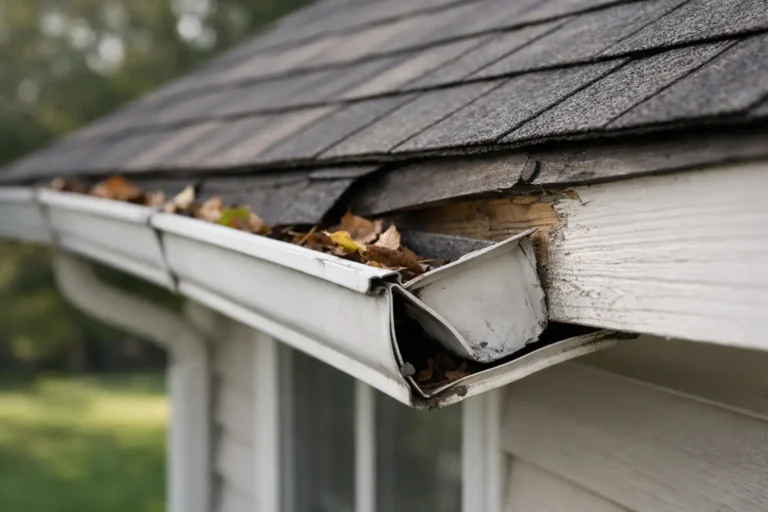
If the joint has separated, the gutter is bent, or the fasteners have pulled loose, sealant alone will not provide a reliable repair. The gutter sections need to be realigned and secured first. Otherwise, seasonal expansion, heavy water flow, and debris weight will reopen the seam.
Repair holes only when the surrounding gutter is solid
Small holes can sometimes be patched with a metal repair patch and compatible sealant. This is most useful when the rest of the gutter is in good shape and the problem is isolated.
A patch is not a good long-term answer for widespread corrosion, multiple leaking seams, or gutters that hold standing water. Those conditions often indicate a larger installation or drainage issue. Repeated patches can become more expensive and less dependable than replacing the affected run with a properly pitched seamless gutter.
Clear Clogs Before Calling It a Leak Repair
A clogged downspout can make a sound gutter system overflow at the first hard rain. Start by removing debris from the gutter trough, especially near the outlet where the downspout attaches. Then flush the downspout with a hose from the top.
If water backs up, disconnect the lower elbow if it is accessible and clear the blockage. Wet fir needles and roof granules often compact in elbows and at the outlet. Do not force a sharp tool through an aluminum downspout, since punctures and crushed sections create new leak points.
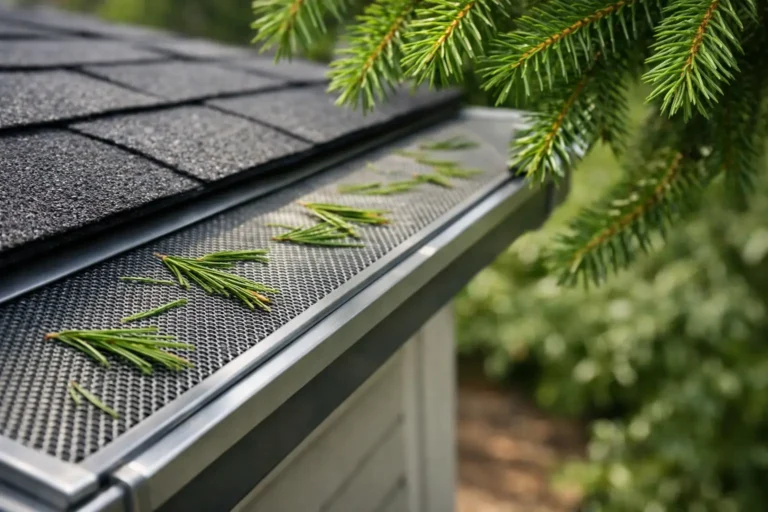
Cleaning alone is necessary but not always sufficient in this region. Homes surrounded by evergreens can clog again within weeks during the wet season. A professionally installed stainless steel micro-mesh gutter guard can reduce the debris entering the system while allowing rainwater into the gutter. It will not correct a leaking seam, poor pitch, or damaged fascia, but it can prevent recurring clogs that cause overflows and water damage.
Check Gutter Slope, Hangers, and Downspout Capacity
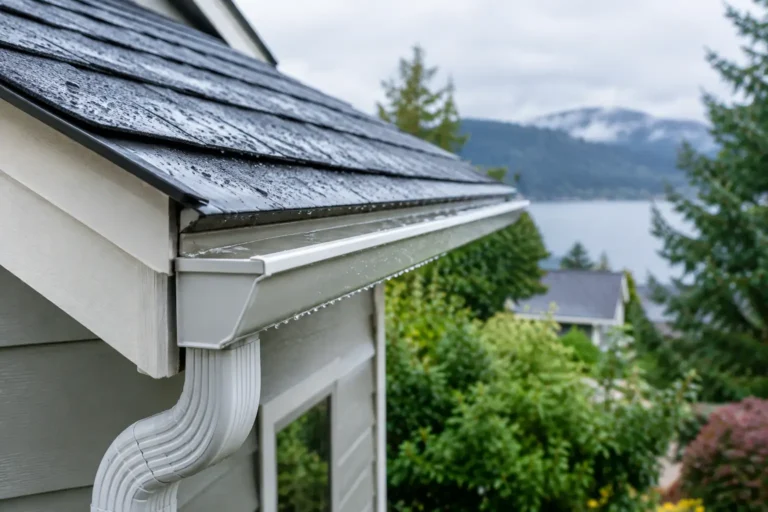
Gutters must slope gradually toward the downspout. The slope is subtle enough that it may not be obvious from the ground, but it is critical. If water remains in the gutter after rain stops, the run may be sagging or pitched incorrectly. Standing water adds weight, stresses joints, and shortens the life of sealant.
Look for sections that dip between hangers or pull away from the fascia. Loose spikes, weak fasteners, and failing fascia wood can all cause sagging. Modern hidden hangers provide better support than older spike-and-ferrule systems, but even strong hangers need solid material behind them. If the fascia is soft or rotted, it should be repaired before reinstalling the gutter.
Downspout capacity matters as well. A long roof valley can send a concentrated rush of water into one section of gutter. During heavy rain, that volume may overwhelm a single undersized downspout even when the gutter is clean. Adding a downspout, increasing its size, or changing the drainage layout may be the right fix.
Pay attention to where the downspout discharges. Water should move away from the foundation through a properly placed extension or drainage system. Stopping a gutter leak is only part of protecting the home if the runoff still pools against the house.
Watch for Roof Edge and Fascia Problems
Sometimes the gutter is not leaking at all. Water may be running behind it because the roof edge does not direct runoff into the trough. Missing or improperly installed drip edge can allow water to cling to the underside of shingles and travel back toward the fascia. This often becomes visible during wind-driven rain.
Water behind the gutter can rot fascia boards without creating a dramatic overflow. Look for peeling paint, dark staining, soft wood, or gutters that no longer sit straight along the roofline. These are signs to address promptly. Installing a new gutter onto damaged fascia only hides the issue and gives the fasteners less holding strength.
A qualified gutter professional can assess whether the correction involves the gutter position, a drip-edge detail, fascia repair, or all three. This is especially worthwhile on two-story homes or steep roofs, where do-it-yourself inspection creates a real fall risk.
When Repair Makes Sense and When Replacement Is Smarter
Resealing makes sense when the system is relatively new, the leak is limited to one joint or end cap, and the gutters are still firmly attached and draining correctly. It is a practical repair for an otherwise sound installation.
Replacement is usually the better value when leaks appear in several places, seams repeatedly fail, the gutters sag, or the system has been patched many times. Sectional gutters have joints along their runs, and each joint is another potential failure point. Custom-measured seamless aluminum gutters reduce the number of joints, leaving connections mainly at corners and downspouts.
For homes with frequent needle buildup, replacement is also the right time to consider gutter protection as part of the system rather than an afterthought. The best guard installation is fitted to the roof edge and gutter correctly, with proper pitch and secure hangers underneath. A guard that is simply laid over a weak or leaking gutter will not solve the underlying problem.
Get a Fix That Holds Up Through the Rainy Season
A dry seam is good. A gutter system that stays clear, carries water to the downspouts, remains firmly attached, and keeps runoff away from the foundation is better. If you are tired of resealing the same joints or cleaning out packed needles, NW Gutter Protection can assess the full system and recommend a practical repair or replacement for your home.
The goal is not to make the leak disappear until the next storm. It is to give rainwater one reliable path off the roof and safely away from the house.