Best Downspout Locations for Homes in the Northwest
A gutter can be clean, properly pitched, and sized for a heavy Northwest downpour, yet still cause water problems if the downspouts empty in the wrong place. One poorly located outlet can soak a foundation corner, erode a planting bed, flood a walkway, or send water back toward the house during the next hard rain. The best downspout locations for homes are the ones that move roof runoff away from the structure without creating a new drainage problem elsewhere on the property.
In Southwest Washington and the Portland metro, location matters even more because rain is frequent, roofs collect fir needles and roof grit, and many homes sit on lots where space between the house, fence, driveway, and neighboring property is limited. Downspout planning should be part of the entire gutter system design, not an afterthought once the gutters are already installed.
Start With Where the Water Naturally Wants to Go
Every property has a natural drainage pattern. Before choosing a downspout location, look at the grade around the home. Water should leave the foundation area and continue downhill or toward a drainage system designed to carry it away. If a downspout discharges onto a flat area beside the house, the water may simply pool there and work its way back toward the footing.
The goal is not just to get water out of the gutter. It is to get it far enough away that it cannot return to the home. In most situations, discharge should be directed at least several feet from the foundation, with extensions or buried drain lines used where necessary. The exact distance depends on soil, slope, roof area, and local drainage conditions, but a short elbow that dumps water at the base of a wall is rarely a good long-term solution.
A simple test helps: during a steady rain, watch where the water goes after it leaves the downspout. If it runs away and disappears without crossing a walkway, pooling near the house, or washing out mulch, the location is likely doing its job. If it gathers, backs up, or cuts a channel through the yard, the system needs attention.
Best Downspout Locations for Homes With Heavy Rain
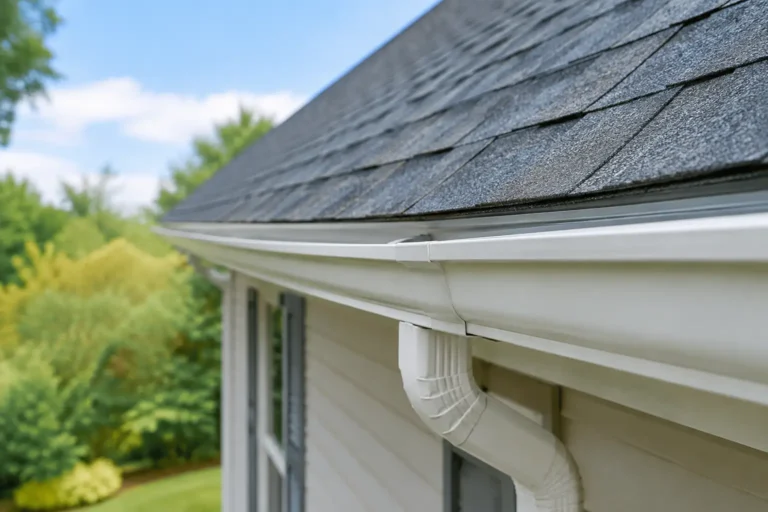
The best location is usually at a gutter low point near an outside corner, where the downspout can run straight down the wall and discharge toward open ground or a proper drain route. Corners make installation cleaner, reduce the need for unnecessary offsets, and allow water to leave the roofline efficiently.
That said, corners are not automatically correct. A corner next to a front entry, a narrow side yard, or a sloped driveway may be the worst place to release a large volume of water. A properly designed system considers where the water will land after it travels down the downspout.
Place outlets at gutter low points
Gutters need a controlled slope toward each downspout. On a long run, one downspout may be enough if the gutter is sized correctly and the roof area is modest. Larger roof sections often need a downspout at each end, with the gutter pitched from a high point in the middle toward both outlets.
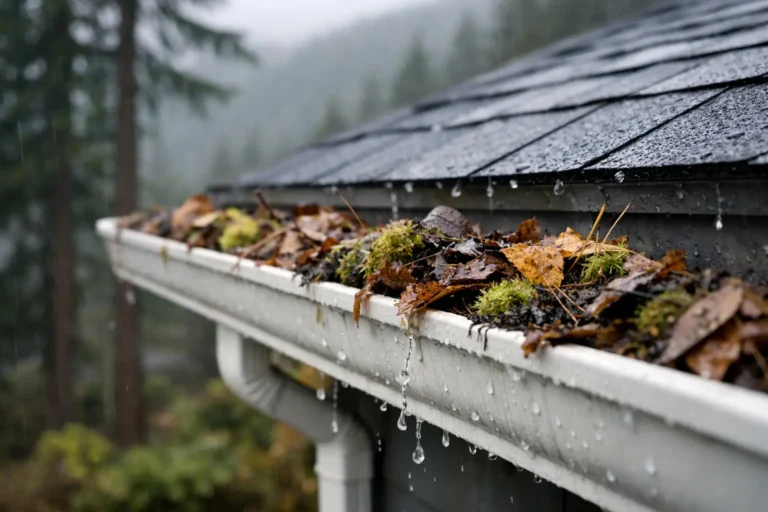
This approach shortens the distance water must travel inside the gutter. That matters during the type of sustained rain common around Vancouver, Camas, Portland, and Hillsboro. Water moving too far through an undersized or poorly pitched gutter can overtop the front edge, even when the downspout itself is clear.
Favor open, downhill discharge areas
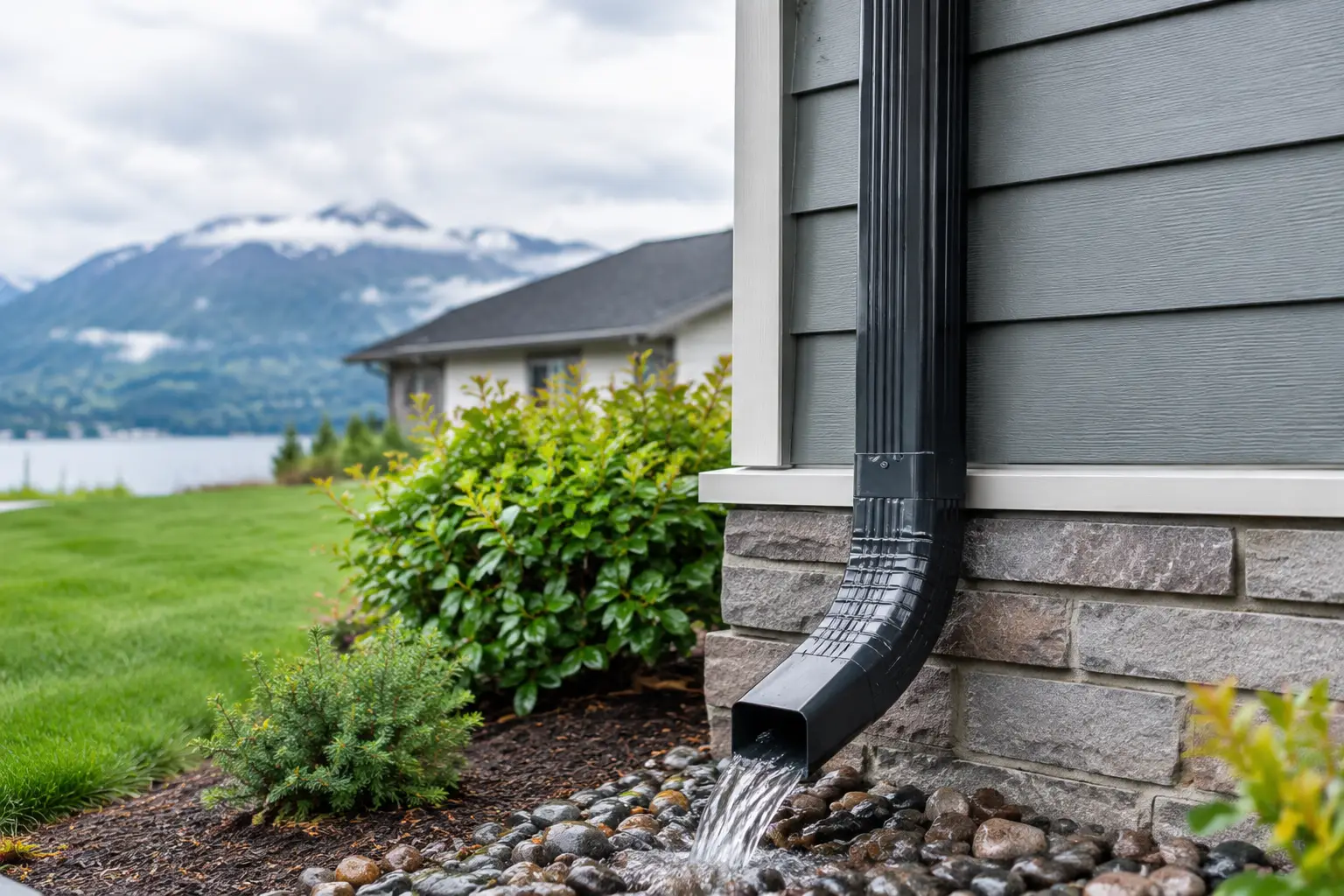
A downspout should ideally release water onto a stable area that slopes away from the house. Open lawn areas can work well when the grade is right and the outlet is protected with a splash block or extension. Rock-lined drainage paths may be appropriate where concentrated flow could erode soil.
The best route is often along the side or rear of the home, away from high-traffic areas. It keeps water out of sight, reduces slipping hazards, and avoids the constant wet spot that can damage landscaping beside a front entry.
Keep water away from doors, stairs, and walkways
Downspouts near entrances need special attention. A discharge that crosses a sidewalk may be inconvenient in summer and dangerous in cold weather. It can also deposit mud, moss, and debris where people walk.
If a downspout must be located near a path, route the water under the walkway through a properly sized drain line or redirect it to a safer discharge area. Do not rely on a shallow surface channel that can clog with leaves, bark dust, or gravel. The same rule applies near exterior stairs, patios, and deck landings.
Avoid dumping onto driveways whenever possible
A driveway may look like a convenient path to the street, but it can create problems. Runoff can spread across the surface, freeze in cold snaps, carry sediment toward a garage, or overwhelm a low point near the driveway edge. On sloped driveways, it may move quickly enough to erode adjacent soil or wash debris into a drain.
There are exceptions. A driveway with an established, functional drainage system may be able to handle runoff. But the system should be evaluated as a whole, not assumed to work because water has somewhere visible to go.
Match Downspout Count to Roof Area
Location and capacity go together. A large roof valley can send a surprising amount of water into one short section of gutter. If that section has only one small downspout, water may back up before it ever reaches the outlet. Adding a second downspout or increasing downspout size can solve a problem that extensions alone cannot.
Roof valleys, dormers, and transitions deserve extra attention because they concentrate flow. A downspout positioned near a valley outlet is often more effective than one placed at the far end of the run. This is one reason custom-measured seamless gutter installation is valuable: the layout can be built around the roof’s actual water load instead of using a one-size-fits-all arrangement.
For long gutter runs, placement may need to balance drainage performance with appearance. Homeowners understandably do not want downspouts breaking up every visible wall. A professional installer can often locate outlets at corners, behind porch columns, or along less prominent elevations while still maintaining adequate capacity.
Plan for the Ground Conditions, Not Just the Roofline
A downspout that works well in July may fail during November rain if the ground is saturated. Clay-heavy soil, compacted soil, and shaded side yards often absorb water slowly. If the yard stays soft or puddled for days, sending additional roof runoff there may make the problem worse.
Buried drain lines can be a good option when surface extensions are impractical, but they need a real outlet. A pipe that ends underground near the foundation only relocates the water problem out of sight. Drain lines should slope consistently and discharge to an approved location such as a suitable daylight outlet, stormwater connection where permitted, or a properly designed drainage area.
Be cautious around retaining walls, property lines, and neighboring homes. Directing concentrated roof runoff toward a fence line can saturate soil, undermine posts, and create disputes if water crosses onto another property. The responsible approach is to keep your roof water managed within your own drainage plan.
Do Not Let Gutter Guards Hide a Drainage Problem
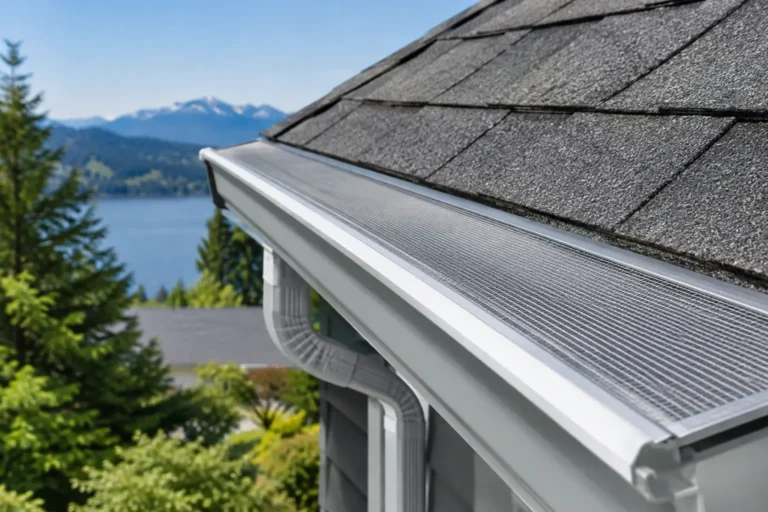
Quality micro-mesh gutter guards help keep pine needles, fir needles, leaves, and roof grit out of the gutter channel. That reduces clogging and helps water reach the downspouts as intended. But gutter guards cannot correct an undersized downspout, poor gutter pitch, or a discharge point that sends water back toward the house.
A complete system needs clear gutters, secure hidden hangers, properly pitched runs, enough outlet capacity, and downspouts that deliver water to a safe location. If one part is weak, the rest of the system has to work harder.
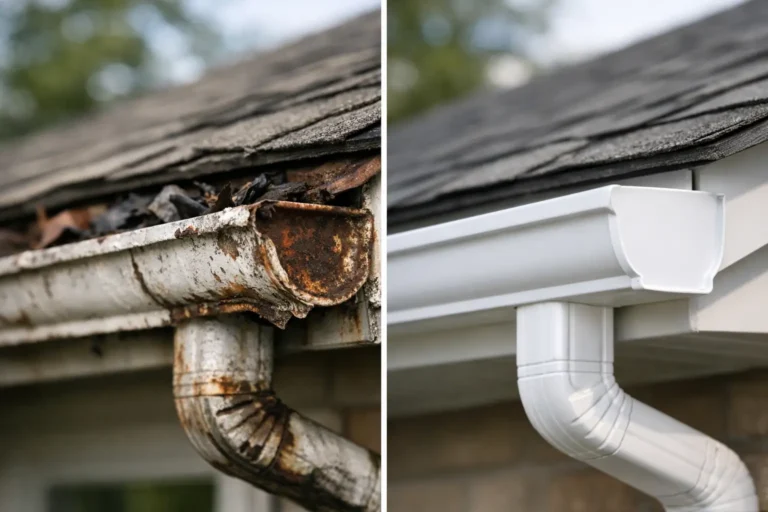
This is also why installation details matter. Downspouts should be firmly fastened, cleanly routed, and equipped with extensions or drainage connections that fit the property. Loose elbows and short, crushed extensions are common sources of water damage that homeowners do not notice until staining, rot, or foundation moisture becomes more serious.
When a Different Location Is Worth the Extra Work
Moving a downspout can involve modifying gutter slope, adding outlets, replacing sections of gutter, or installing drainage piping. It is worth considering when you see recurring overflow, mulch washing away, wet crawlspace conditions, standing water at a wall, or icy areas near a door.
It may also be worthwhile after a roof replacement, landscaping project, patio addition, or driveway change. These projects can alter how water moves across the property, even when the gutters themselves have not changed. What worked for the original layout may no longer be the best arrangement.
For Pacific Northwest homes, the right downspout location is usually the quietest one: water leaves the roof during a hard rain, travels away from the structure, and causes no puddles, washouts, or worries at the next storm. That is the standard a gutter system should meet.