Mesh Gutter Guards Versus Foam for Wet Roofs
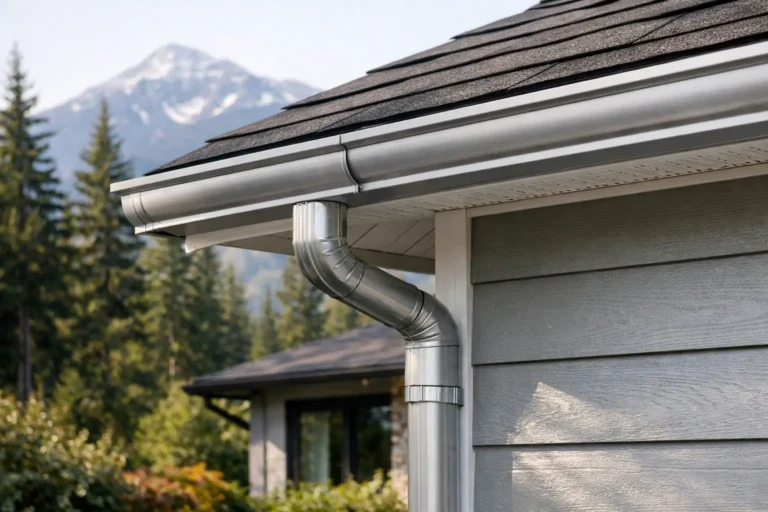
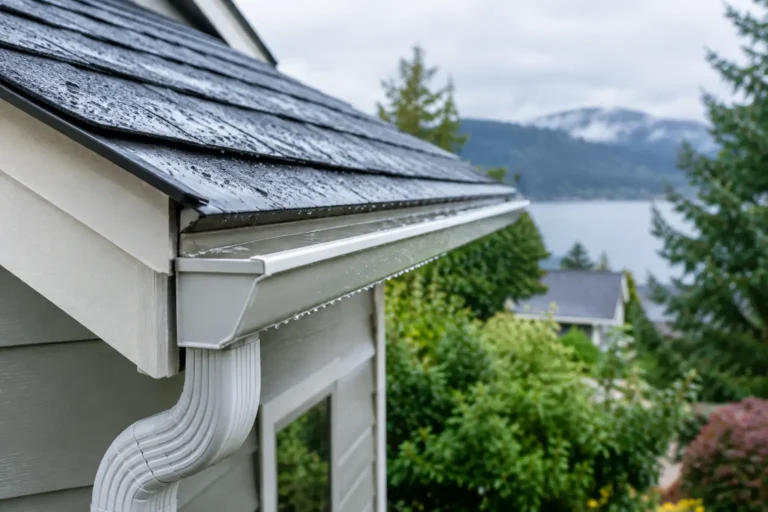
A gutter guard that works reasonably well under a few deciduous trees can fail quickly beneath Douglas firs, pines, and a roof that sheds gritty moss debris. That is why mesh gutter guards versus foam is not a simple price comparison for homeowners in Southwest Washington and the Portland metro. The better choice depends on what lands on your roof, how much rain your gutters carry, and whether you want a short-term filter or a permanent gutter protection system.
Foam inserts and mesh guards both aim to keep large debris out of the gutter while allowing rainwater through. The difference is where the debris goes, how the material handles prolonged moisture, and what happens after several wet seasons. In the Pacific Northwest, those details matter.
How Foam Gutter Guards Work
Foam gutter guards are porous wedges or blocks placed inside the gutter trough. Water is intended to pass through the foam while leaves, twigs, and needles remain on top. They are widely sold as a do-it-yourself option because installation is straightforward: cut the material to length and fit it into the gutter.
That simplicity is also their main advantage. Foam costs less upfront than professionally installed gutter protection and may be an acceptable temporary measure for a home with light leaf debris, easy roof access, and gutters that are otherwise in good condition.
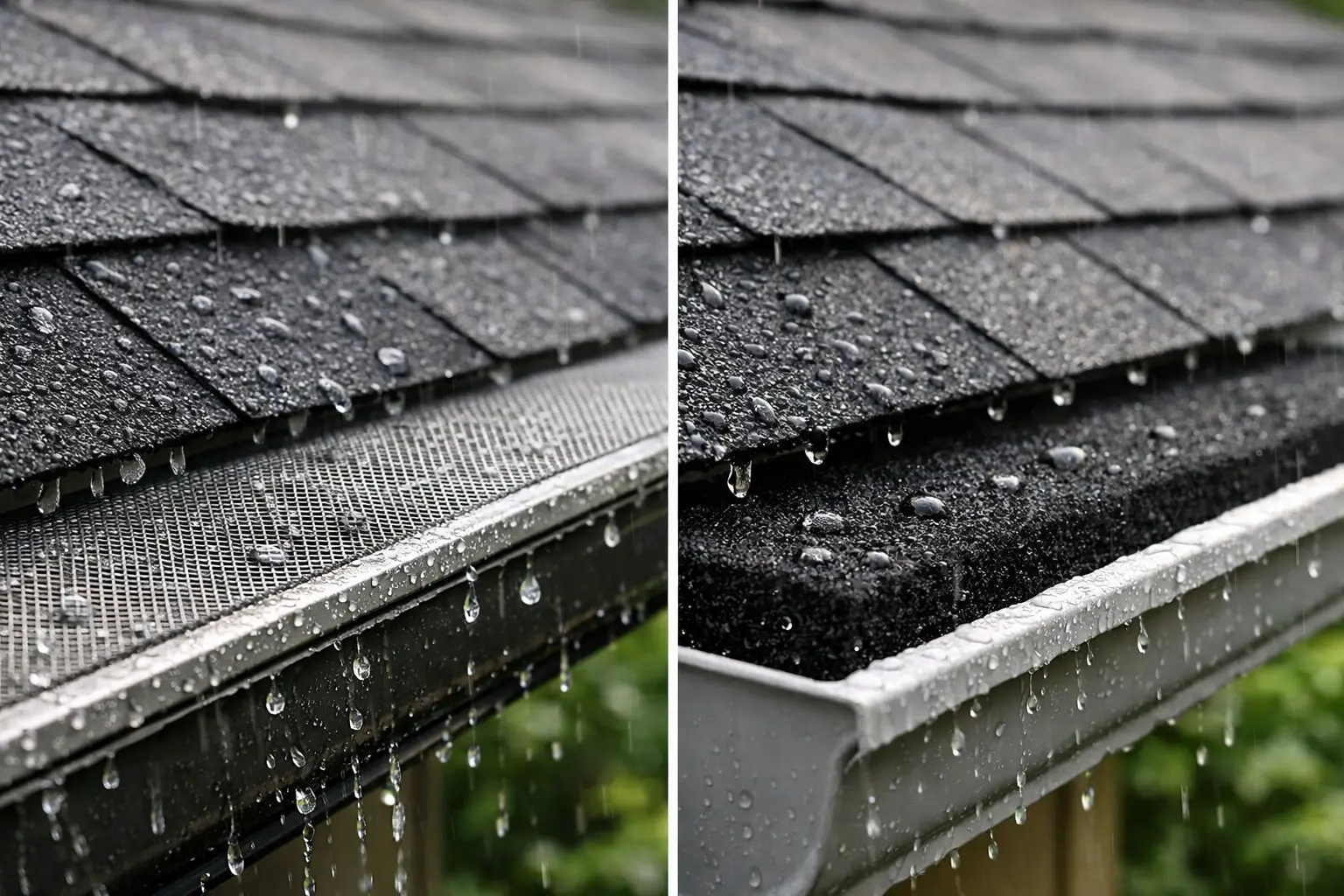
The problem is that foam lives inside the gutter, where it is constantly exposed to water, organic debris, and roof runoff. Fine roof grit can settle into its pores. Small needles and seed material can lodge in the surface. Over time, decomposing debris can create a damp layer that reduces water flow instead of protecting it.
For homeowners who are tired of climbing ladders, foam often shifts the cleaning job rather than eliminating it. The gutter may still need attention, but now the insert has to be lifted out, cleaned around, or replaced.
How Micro-Mesh Gutter Guards Work
A quality micro-mesh gutter guard covers the top of the gutter rather than filling the inside of it. Rainwater passes through very small openings, while leaves, needles, shingle grit, and other debris stay above the gutter and are carried away or can be brushed off during normal roof maintenance.
Material and installation make a major difference. Premium stainless steel micro-mesh resists rust and is designed to screen out much smaller debris than basic screens or foam. A professionally fitted system is also secured to work with the roof edge and gutter pitch, rather than simply resting in place.
This design preserves the gutter’s full carrying capacity. During sustained rain, water has an open gutter channel beneath the guard instead of trying to move through a foam block that may be wet or partially clogged with debris.
Not every mesh product performs the same way. Large-opening screens can still admit pine needles and roof grit. Light, loose screens may lift, warp, or collect debris at the front edge. The best results come from a guard built with fine stainless steel mesh and installed securely on properly pitched, well-supported gutters.
Mesh Gutter Guards Versus Foam in Pacific Northwest Conditions
The Pacific Northwest creates a demanding test for any gutter protection product. Rain is frequent, but rainfall alone is not usually the issue. The real challenge is the combination of rain, evergreen needles, moss fragments, seed pods, windblown dirt, and asphalt shingle granules.
Pine and fir needles
Foam has a tendency to catch fine needles on its top surface. As needles accumulate and break down, they can settle into the foam and form a mat that slows water entry. In heavily wooded neighborhoods, that buildup can happen sooner than homeowners expect.
Fine micro-mesh is better suited to this kind of debris because the needles remain above the gutter rather than being embedded in a porous insert. Some surface debris may still need to be cleared from valleys or roof edges, especially after a windstorm, but the gutter channel is far less likely to fill with compacted organic material.
Roof grit and moss debris
Every asphalt roof sheds some granules over time. Roofs with moss growth or nearby trees can also shed a surprising amount of fine material. Foam is particularly vulnerable here because small particles can work their way into the material and reduce its ability to pass water.
Micro-mesh is not maintenance-free in every situation, but it handles fine debris differently. The debris stays on the exterior surface instead of occupying the gutter. A properly designed mesh guard can keep much of that material from entering the drainage system in the first place.
Heavy, steady rain
During a hard downpour, the system must move water off the roof and into the gutter without allowing overflow. Foam relies on water filtering through the entire insert. When the foam is clean, that may be adequate. When it is saturated or loaded with debris, performance can decline.
Mesh guards allow water to pass through the screened surface while leaving the gutter cavity open. Proper installation is essential here. The guard must be set at the right angle and attached securely so water follows the roof line into the gutter instead of overshooting it.
Lifespan and Maintenance Expectations
Foam is generally a consumable product. Sun exposure, moisture, debris accumulation, and normal breakdown can all shorten its useful life. Depending on the conditions around the home, homeowners may need to replace foam inserts every few years. They can also become difficult to clean thoroughly once debris and grit work into the material.
A professionally installed stainless steel micro-mesh system is built for a much longer service life. It costs more at the start, but that investment can make sense when it reduces recurring cleaning, replacement, and the risk of clogged downspouts or overflowing gutters.
There is no honest gutter guard that makes roof and exterior maintenance disappear forever. A home beneath large evergreens may still need occasional checks after major storms. The goal is not to promise zero debris on the roof. It is to keep debris from collecting inside the gutters where it blocks drainage and contributes to water damage.
Installation Matters as Much as the Guard Material
Foam can be installed without tools, but it does not correct existing gutter problems. If your gutters are pulling away from the fascia, sagging between hangers, pitched incorrectly, or undersized for the roof area, placing foam inside them will not solve the underlying issue.
The same is true of mesh guards. A premium guard installed over weak, misaligned, or clogged gutters cannot deliver its full value. Before installation, the gutter system should be inspected for slope, secure fastening, downspout capacity, and damage at the roof edge.
For many homes, the right answer is a complete approach: seamless aluminum gutters sized and pitched for the roof, strong hidden hangers, correctly placed downspouts, and a micro-mesh guard fitted to the system. That is particularly worthwhile on homes that have repeated overflow issues or difficult access around two-story rooflines.
NW Gutter Protection takes this approach because a gutter guard should protect the entire drainage system, not cover up a problem that is already there.
Which Option Is the Better Value?
Foam is the lower-cost choice at the register. It may be practical for a homeowner who needs a temporary solution or has a small, accessible gutter run with limited debris. If replacement and periodic cleaning are acceptable, it can provide some short-term benefit.
Micro-mesh is usually the better long-term value for homes in Vancouver, Camas, Ridgefield, Portland, Beaverton, Tigard, Hillsboro, and other tree-heavy areas. It is better equipped to deal with needles, grit, and long wet seasons, while keeping the gutter channel open for water flow.
The price difference should be weighed against what clogged gutters can cost: fascia repairs, foundation drainage problems, basement moisture, damaged landscaping, and the ongoing risk of ladder work. A properly installed system is not the cheapest option, but it is designed to reduce the maintenance cycle instead of repeating it.
Questions Homeowners Often Ask
Do foam gutter guards cause problems?
They can when debris and fine sediment accumulate inside the foam. The insert may hold moisture and organic matter in the gutter, and water flow can become restricted as the material clogs or deteriorates. This is more likely in heavily wooded, rainy areas.
Can mesh gutter guards handle pine needles?
Fine stainless steel micro-mesh is one of the better options for pine and fir needle conditions because its openings are small enough to block fine debris. Product quality and correct installation still matter, especially where roof valleys concentrate heavy runoff.
Are gutter guards worth it if gutters still need occasional service?
Yes, if the guard significantly reduces material entering the gutter and lowers the frequency and difficulty of cleaning. Occasional exterior checks are far different from repeatedly removing packed debris from gutters and downspouts.
Before choosing any guard, look at the trees around your home, inspect the condition of the existing gutters, and consider how often you are willing to be on a ladder. For a wet, evergreen-heavy property, choosing a well-installed micro-mesh system is often the practical way to keep water moving where it belongs.