Seamless Aluminum Gutters Review for PNW Homes
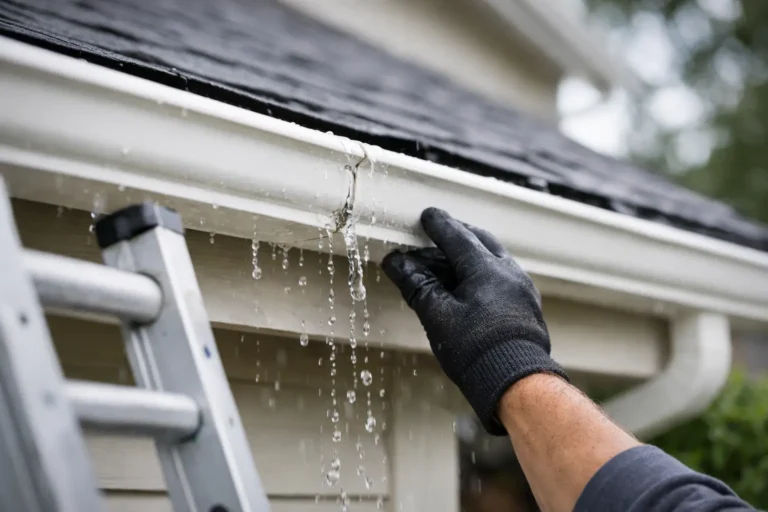
A gutter can look fine from the driveway and still fail during the first hard November rain. Water spilling over a corner, staining siding, or pooling beside the foundation usually points to a system that is undersized, poorly pitched, clogged, or weakened at the joints. This seamless aluminum gutters review looks at what homeowners in Southwest Washington and the Portland metro should expect from a professionally installed system – including where aluminum performs well, where the trade-offs are, and why installation details matter as much as the material.
What Are Seamless Aluminum Gutters?
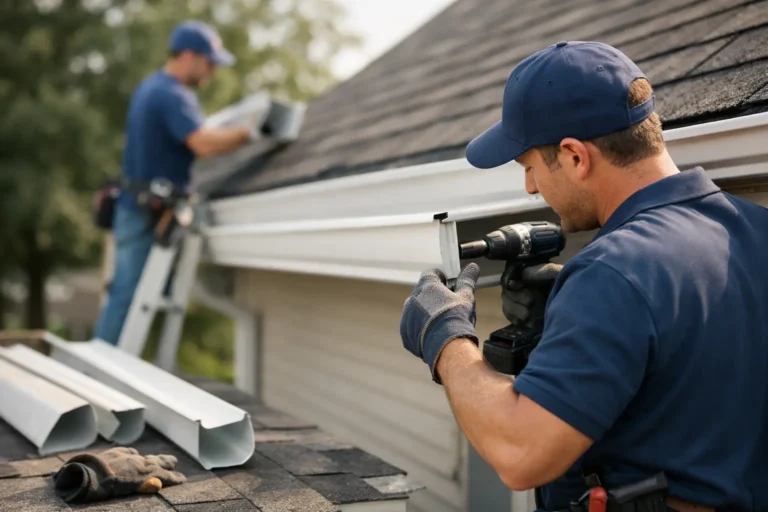
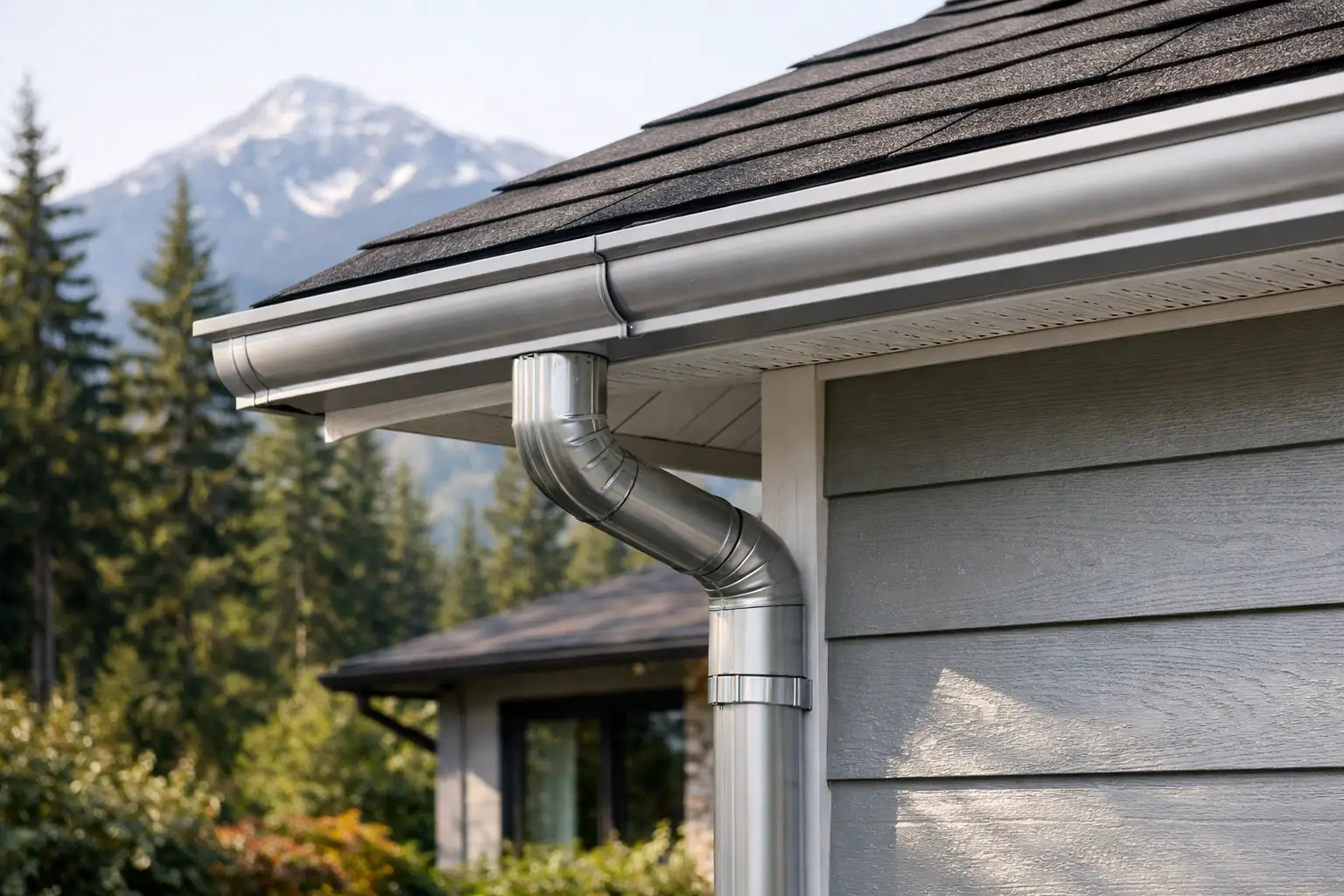
Seamless aluminum gutters are formed on-site from a continuous coil of painted aluminum. Rather than assembling multiple short gutter sections along a roofline, an installer measures each run and uses a gutter machine to form it to the exact length needed. End caps and outlet locations still require connections, but the long horizontal runs have far fewer joints.
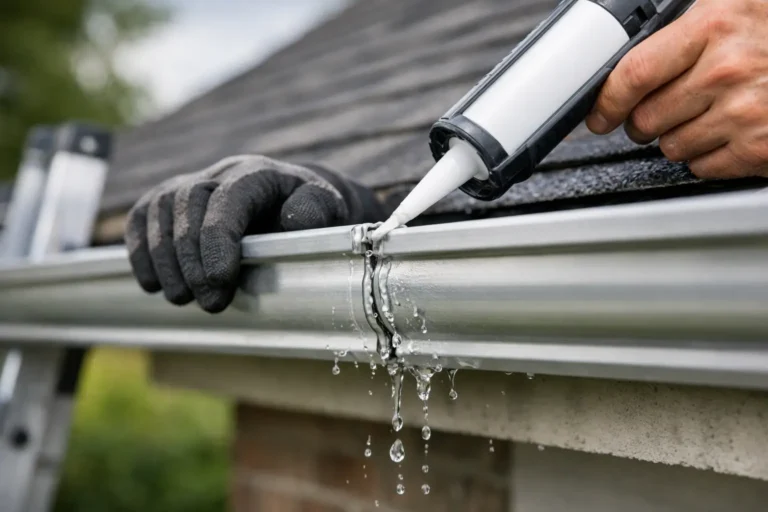
That matters in the Pacific Northwest. Every joint is a potential point for leakage, debris buildup, and eventual separation. Reducing joints does not make a gutter maintenance-free, but it removes one of the most common weak points found in sectional systems.
Most residential installations use 5-inch or 6-inch K-style gutters. The right size depends on roof area, roof pitch, valley locations, and the volume of water directed toward each run. A larger gutter is not automatically necessary on every home, but homes with steep roofs, long roof planes, or heavy valley flow often benefit from 6-inch capacity.
Seamless Aluminum Gutters Review: The Real Benefits
The biggest advantage is custom fit. Each gutter run is made to the measured length of the fascia, which creates a cleaner appearance and minimizes unnecessary connections. Properly installed aluminum gutters also resist rust, an important benefit in a region where gutters stay wet for much of the year.
Aluminum offers a good balance of durability, weight, and cost. It is light enough that it does not place excessive strain on the fascia, yet it is strong enough for normal residential use when the correct gauge and hanger spacing are used. Factory-finished aluminum also comes in colors that can complement trim, siding, and roof details without requiring routine painting.
For homeowners tired of cleaning out soggy leaves and checking drips at every joint, fewer seams can mean fewer trouble spots over time. It also gives the finished roofline a more consistent, professional look than pieced-together sections from a big-box store.
The benefit is not just appearance. Gutters work as a water-management system. When they are properly sized, pitched, secured, and connected to correctly placed downspouts, they help keep roof runoff away from siding, landscaping, walkways, and the foundation.
Installation Quality Determines Performance
The material is only one part of the decision. A well-made gutter can still overflow or pull away if the installation is rushed.
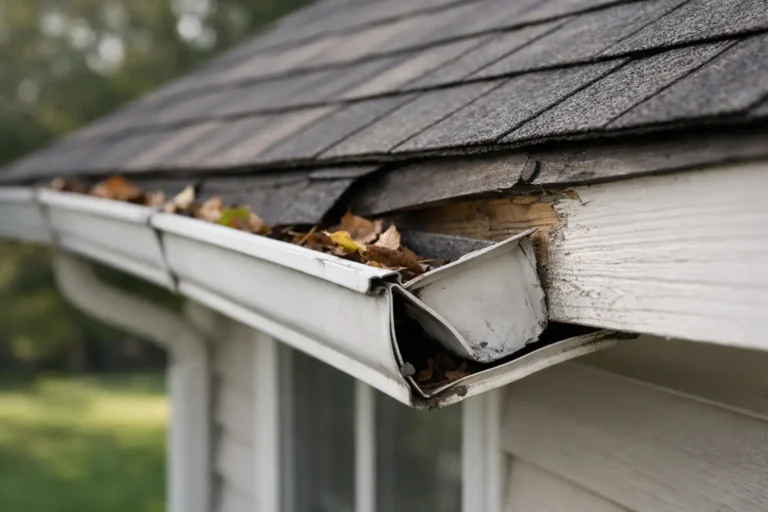
A professional installer should first inspect the fascia and roof edge. Rotting or soft fascia needs attention before new gutters are attached. Hanging new metal on damaged wood may cover the issue temporarily, but it will not create a dependable system.
From there, each run needs the right slope toward the downspout. Too little pitch can leave standing water and sediment. Too much pitch can look uneven from the ground. The goal is controlled drainage that still follows the roofline cleanly.
Hidden hangers are another important detail. These hangers fasten through the gutter into the fascia and should be spaced closely enough to support the system through wet weather, debris loads, and normal seasonal movement. In the Pacific Northwest, where gutters may hold soaked fir needles, moss, and roof grit before a cleaning, hanger strength is not a small detail.
Downspout placement also deserves more attention than it usually gets. A long gutter run with only one outlet may struggle during a heavy downpour, especially if a roof valley sends water to the same section. Adding capacity in the right places can be more effective than simply replacing gutters with the same layout.
How Aluminum Holds Up in Northwest Weather
Aluminum does not rust, which makes it well suited to persistent rain. Its painted finish can last for years when the gutters are maintained and not subjected to repeated impact. However, aluminum is not indestructible. A falling branch, a ladder placed carelessly against the edge, or heavy ice in an unusual winter event can dent or distort it.
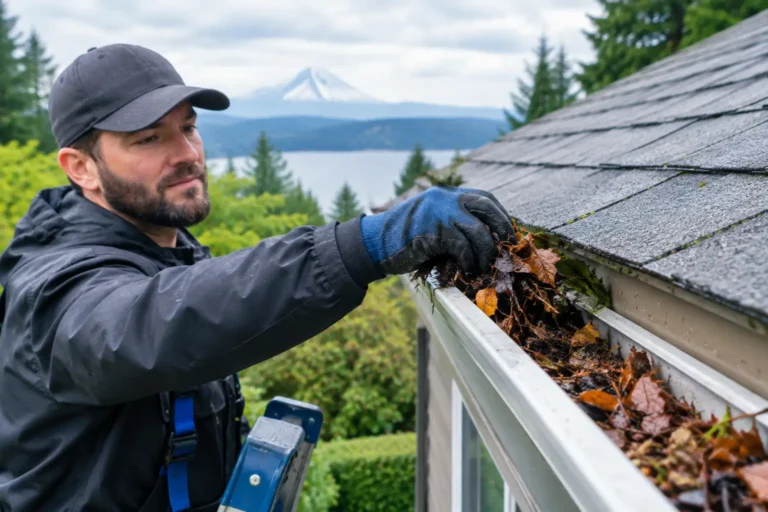
For most homes in Vancouver, Camas, Ridgefield, Portland, Beaverton, or nearby communities, the bigger threat is not snow load. It is the steady combination of rainfall and organic debris. Pine needles, fir needles, seed pods, shingle granules, and moss can block outlets or build up along the gutter floor. When water cannot reach a downspout, even a new gutter will overflow.
This is why gutters and gutter guards should be considered together. A guard needs to keep out the debris common to the property while still allowing water to enter during hard rain. Fine micro-mesh designs can be a practical fit for evergreen debris, but they must be installed at the correct angle and integrated properly with the roof edge. No guard eliminates every maintenance need, particularly on homes under dense trees. It should greatly reduce cleaning and help keep the system flowing, not create unrealistic expectations.
What Do Seamless Aluminum Gutters Cost?
Pricing varies because no two homes have the same roofline, drainage needs, access conditions, or fascia condition. A single-story home with straightforward runs is typically less involved than a tall home with multiple corners, valleys, steep slopes, and difficult landscaping access.
A quote should account for the gutter size, aluminum thickness, total linear footage, number and size of downspouts, corners, removal of old materials, and any needed fascia repairs. Gutter guards, oversized outlets, and underground drainage connections can also change the total.
The lowest quote is not always the lowest long-term cost. Thin material, wide hanger spacing, inadequate downspouts, or a poorly planned layout can lead to recurring overflow problems and repairs. On the other hand, not every house requires premium upgrades. A straightforward home with clear roof drainage may perform very well with standard 5-inch gutters and a sensible number of downspouts.
The useful question is not, “What is the cheapest gutter?” It is, “What system will handle this roof and this property’s debris without creating another repair project?”
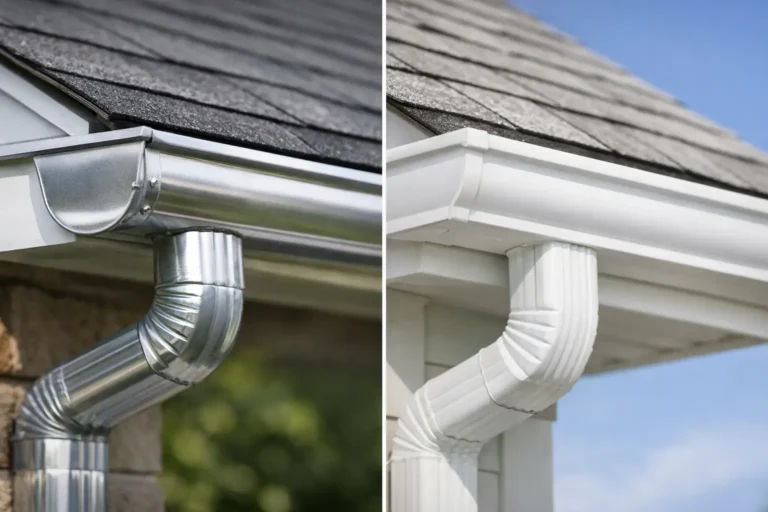
Aluminum Compared With Other Gutter Materials
Vinyl gutters are inexpensive and easy to find, but they are generally less durable and more prone to sagging, cracking, and joint problems over time. They are rarely the first choice for homeowners who want a long-term solution in a wet climate.
Steel gutters are strong but require protective coatings to resist corrosion. Once coatings are compromised, rust becomes a concern. Copper is long-lasting and visually distinctive, but it comes at a much higher price and is usually selected for architectural style rather than basic value.
Aluminum remains the practical choice for many residential properties because it combines corrosion resistance, custom fabrication, color options, and reasonable cost. The comparison changes if a home has a historical design, unusual roof geometry, or a homeowner specifically wants copper. For most standard residential applications, aluminum is the sensible middle ground.
Questions to Ask Before Hiring an Installer
Before approving a project, ask what size gutter is recommended and why. Ask how downspout locations will be determined, how close hidden hangers will be spaced, and whether the fascia will be inspected before installation. If gutter guards are included, ask how they handle pine needles, roof grit, and heavy rainfall.
It is also reasonable to ask who will perform the work and who will be available if a concern comes up afterward. Local accountability matters. NW Gutter Protection works directly with homeowners who want clear recommendations instead of a high-pressure presentation, because the system should fit the property rather than a sales script.
Warranty details deserve a close read as well. A material warranty and an installation warranty are not always the same thing. Know what is covered, whether the warranty transfers to a future owner, and what maintenance conditions apply.
A Better Decision Starts at the Roofline
A dependable gutter system should disappear into the background once the rain starts. You should see water moving where it belongs, not spilling over the edge, cutting channels through mulch, or soaking the area beside your home. For Pacific Northwest homeowners, custom-fit aluminum gutters installed with proper pitch, strong hangers, adequate downspouts, and the right debris protection are a practical investment in keeping that water under control.