
How to Prevent Fascia Rot in Pacific Northwest Homes
A dark stain along the roofline, peeling paint behind a gutter, or a sagging gutter run can point to the same costly problem: moisture has reached the fascia board. Knowing how to prevent fascia rot starts with controlling where roof water goes, especially in Southwest Washington and the Portland metro, where long wet seasons and evergreen debris can keep gutters wet for days.
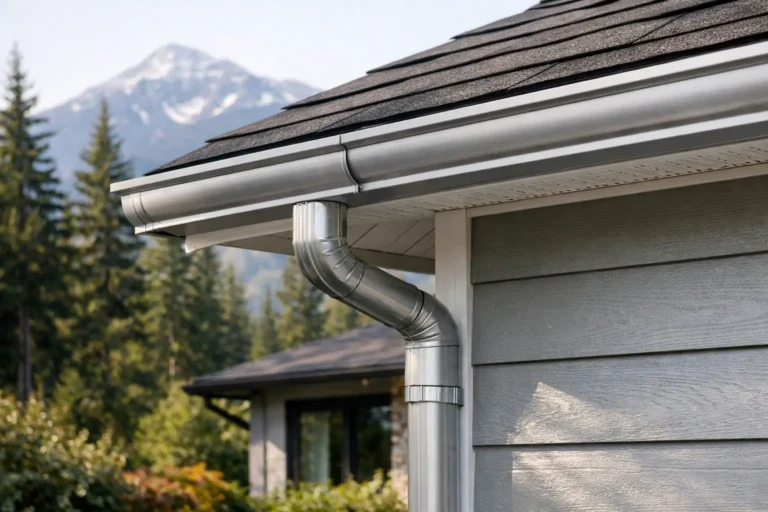
Fascia is the horizontal board at the edge of the roof. It gives the roofline a finished appearance, supports the gutter system, and helps protect the framing behind it. When gutters clog, leak, overflow, or pull away from the house, water repeatedly wets that board. Wood that cannot dry properly eventually softens, splits, and decays.
How to Prevent Fascia Rot Before Water Gets Behind the Gutter
The best defense is a complete roof-edge drainage system, not a quick patch after the wood has already failed. Gutters need to collect runoff, carry it to downspouts, and send it far enough from the foundation without spilling onto the fascia or siding.
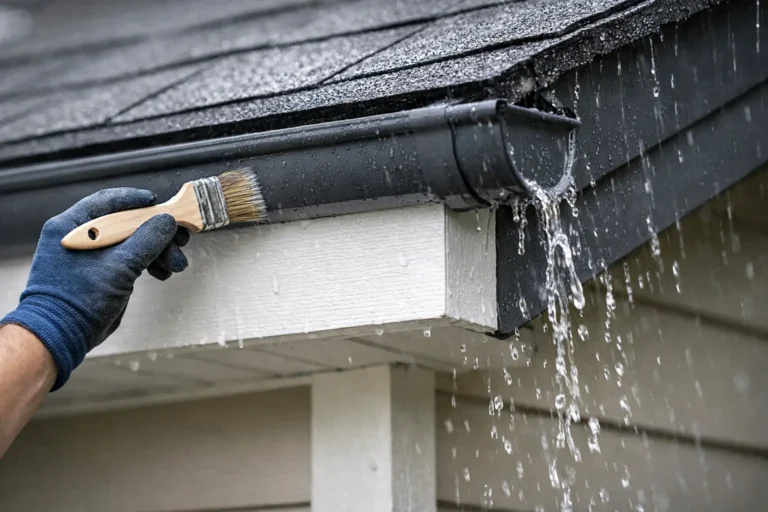
Start by watching your gutters during a steady rain. Water should enter the gutter rather than run behind it. It should move toward the downspouts without standing in the trough, pouring over the front edge, or dripping from seams and end caps. A small issue in a light rain can become a major overflow when a Pacific Northwest downpour hits a roof covered in fir needles.
Pay close attention to these warning signs:
- Water streaks, mildew, or peeling paint along the fascia or soffit
- Gutters that sag, tilt outward, or separate from the roofline
- Overflowing water near a downspout during rain
- Rusted fasteners, loose spikes, cracked seams, or leaking corners
- Soft wood when gently pressed near the gutter attachment points
- Darkened areas inside the attic near the eaves
Do not assume a gutter is working simply because it looks clean from the ground. Fine roof grit, shingle granules, moss, and small needles often settle at the outlet and form a blockage that is not visible from above.
Keep Gutters Clear of Needles, Grit, and Standing Water
In this region, gutter cleaning is not a one-time fall chore. Douglas fir and pine needles can collect through much of the year, while roof grit and moss fragments settle in the bottom of the gutter. Once debris catches at a downspout opening, leaves and needles build up quickly behind it.
For homes without gutter guards, inspect and clean the system at least twice a year. Homes under heavy tree cover may need more frequent checks, particularly after windstorms and during the late fall leaf drop. Cleaning should include the downspouts, not just the gutter trough. Flush each downspout and confirm water exits freely at the bottom.
Gutter guards can reduce the volume of debris entering the system, but product design and installation matter. Screens with large openings may allow small needles and roof grit inside. Cheap plastic covers can crack, warp, or create a surface where debris collects. A professionally installed stainless steel micro-mesh guard is designed to shed leaves and needles while allowing rainwater into the gutter, but it still needs to be fitted correctly to the roof edge and gutter system.
Guards are not a substitute for correcting a leaking, undersized, or poorly pitched gutter. They work best when installed over a sound system with properly flowing downspouts.
Make Sure the Gutter Is Sized, Pitched, and Secured Correctly
An undersized gutter can overflow even when it is completely clean. Roof size, roof pitch, valleys, and local rainfall all affect how much water reaches the gutter at once. A concentrated valley discharge can overwhelm a standard gutter run during a hard storm, sending water over the edge and onto the fascia.
Proper pitch matters as well. Gutters need a subtle slope toward the downspout so water does not sit in the trough. Standing water adds weight, accelerates corrosion on older steel systems, and can expose the fascia to moisture through seams and fastener holes. Too much pitch is also a problem because water may rush past the outlet or make the gutterline look visibly uneven.
Fastening is equally important. Older gutters are often held with long spikes that loosen over time, especially after repeated wet-dry cycles. As the gutter pulls away, the gap allows runoff to drain behind it. Hidden hangers secured into solid framing provide much stronger support and help maintain the correct position along the roofline.
Seamless aluminum gutters are a practical choice for many local homes because they are custom measured on-site and have fewer joints along the run. Fewer seams mean fewer potential leak points. They still require proper installation, but a well-built seamless system removes one of the common places where water can escape onto the fascia.
Check Flashing and the Roof Edge
Gutters cannot do their job if roof-edge flashing directs water behind them. The metal drip edge should guide roof runoff into the gutter. If it is missing, improperly installed, bent, or tucked behind the wrong material, water can wick back toward the fascia.
This issue is common on older homes and on homes where roofing or gutters were replaced at different times. A new gutter attached to damaged fascia does not fix the underlying flashing problem. Likewise, adding flashing without addressing a clogged gutter will not stop overflow.
Look for a consistent metal edge beneath the first course of shingles and above the gutter. You may also notice water marks directly behind the gutter after rain. If you are unsure whether the drip edge is functioning correctly, have a qualified exterior contractor inspect it. Roof-edge details can be difficult to judge from a ladder, and working near a wet roof is not a good DIY project.
Direct Downspout Water Away From the House
Fascia rot begins at the roofline, but poor drainage below can create problems that travel up the wall. Downspouts should carry water away from the foundation, walkways, and low spots near the home. A downspout that empties beside the house can contribute to wet siding, splashback, settlement, and basement or crawlspace moisture.
Make sure the discharge point remains open. Extensions get knocked loose, buried in mulch, or clogged with mud and debris. If your lot slopes toward the house or has chronic pooling, a more deliberate drainage solution may be needed. The right approach depends on the property, soil, landscaping, and local drainage requirements.
Repair Small Problems Before the Wood Fails
Fresh paint is not a repair for rotted fascia. Paint can slow surface weathering, but it cannot restore wood that has become soft or lost structural strength. Once decay is present, the affected board may need to be replaced before new gutters are installed.
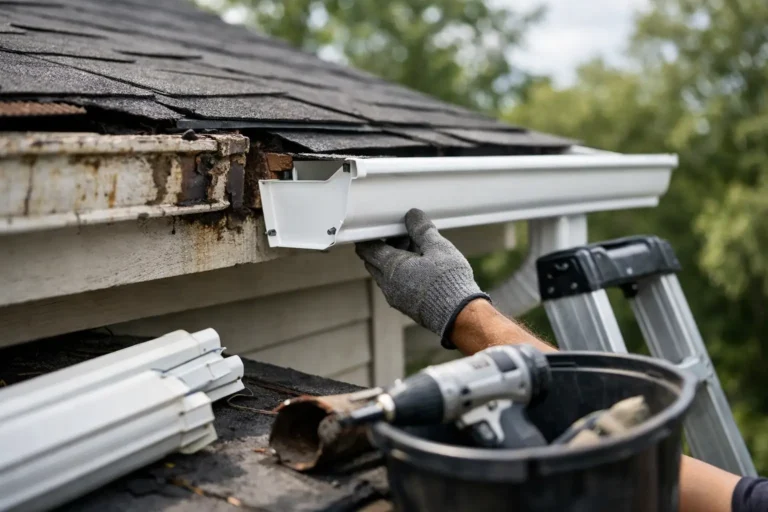
Early repairs are usually simpler. Re-sealing a leaking end cap, tightening a loose hanger, clearing a blocked outlet, or replacing a short damaged section of gutter can prevent repeated saturation. Waiting until gutters pull loose can turn a drainage repair into carpentry, painting, and possible roof-edge work.
When fascia replacement is necessary, the contractor should identify why the board failed before covering it with new material. Otherwise, the same overflow or behind-gutter leak can damage the replacement board. The goal is not just a clean-looking roofline. It is a roof edge that stays dry through the next season of wind-driven rain.
When It Is Time for a Professional Inspection
Call for an inspection when gutters overflow despite cleaning, when you see staining behind the gutter, or when the gutterline is sagging. Also act quickly if the fascia feels soft, fasteners no longer hold, or you see signs of moisture inside the attic. These conditions tend to worsen through the rainy months.
A proper assessment should look at gutter size, pitch, downspout capacity, attachment method, roof valleys, drip edge, and the condition of the fascia itself. At NW Gutter Protection, that practical approach is central to recommending a system that can handle local rainfall and needle-heavy debris rather than selling a one-size-fits-all fix.
The most useful time to address fascia protection is before a gutter failure makes itself obvious. A clean, correctly installed gutter system gives rain one clear path off the roof, away from the fascia, and away from the home.