Best Gutter Guards for Heavy Rain
When a hard Pacific Northwest rain hits, weak gutter protection shows itself fast. The best gutter guards for heavy rain are not the ones that look good in a brochure – they are the ones that can shed water quickly, resist clogging from needles and roof grit, and stay secure year after year.
That matters more here than it does in drier parts of the country. In Southwest Washington and the Portland metro, gutters do not just deal with rain. They also handle fir needles, pine needles, maple leaves, asphalt shingle grit, and long wet seasons that expose every installation shortcut. A guard that works in a light-debris climate can fail early here.
What makes the best gutter guards for heavy rain?
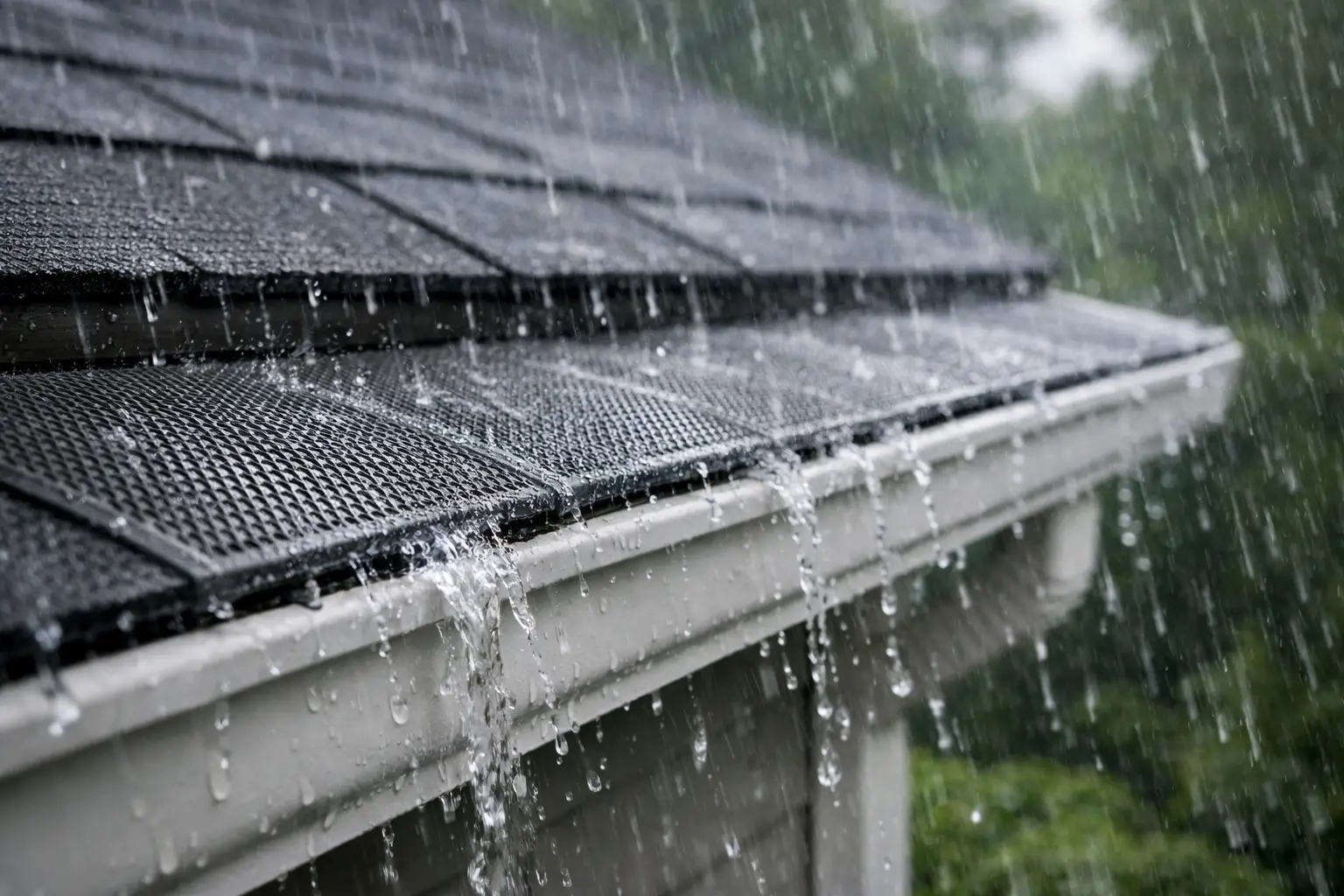
Heavy rain performance starts with water flow, but flow is only part of the picture. A good guard has to let large volumes of water enter the gutter without overshooting the front edge. It also has to keep debris on top so wind and natural drying can move it off, rather than letting it collect inside the trough.
Material quality matters just as much. Thin plastic systems can warp, become brittle, or shift over time. Basic reverse-curve designs can struggle when water comes off the roof fast, especially on steeper roof lines. Foam inserts and brush-style guards may look inexpensive up front, but they tend to trap debris inside the gutter system. In a region with frequent rain and evergreen debris, that usually means more maintenance, not less.
The strongest performers are typically micro-mesh systems made from stainless steel with a rigid frame. When designed correctly, the mesh openings are fine enough to block roof grit and small debris, but open enough to let water pass through efficiently. That balance is what separates a true long-term solution from a product that simply slows down the problem.
Why some gutter guards fail in heavy rain
Most failures come down to one of three issues: poor water handling, poor debris control, or poor installation. Sometimes it is all three.
Surface-tension or helmet-style products can work in certain conditions, but they are more sensitive to rain intensity and roof pitch. If water is moving too fast, some of it can shoot past the nose of the system instead of curling into the gutter. Homeowners usually notice this at corners, valleys, and straight runs below steep roof sections.
Large-hole screens have the opposite issue. They may let plenty of water through, but they also allow smaller debris inside. That means sediment builds up in the gutter over time, reducing capacity right when you need it most.
Then there is installation. Even a high-quality guard can underperform if the gutter is undersized, pitched incorrectly, attached loosely, or paired with too few downspouts. Heavy-rain protection is never just about the guard itself. It is about the whole system working together.
The main types of gutter guards compared
If you are trying to sort through options, it helps to look at how each type performs under real wet-weather pressure rather than marketing claims.
Micro-mesh gutter guards
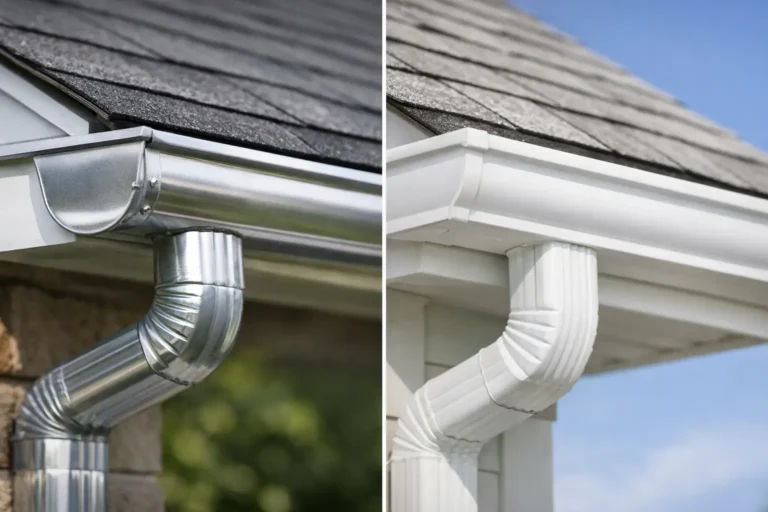
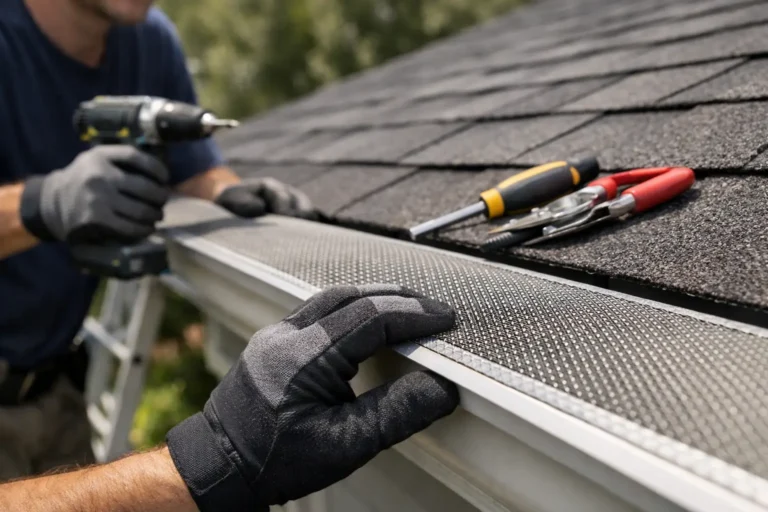
For homeowners dealing with heavy rain and fine debris, stainless steel micro-mesh is usually the best fit. It handles water well, blocks pine and fir needles better than larger-opening systems, and keeps roof grit out of the gutter. It also tends to hold up better over time when paired with an aluminum frame and professional fastening.
Not all micro-mesh systems are equal, though. Some cheaper versions use lighter mesh, weaker frames, or installation methods that can loosen over time. The better systems are engineered to sit securely under the shingles or roof edge and across the gutter with enough support to resist sagging.
Reverse-curve or surface-tension guards
These are designed to guide water around a curved edge and into the gutter while leaves fall off. They can perform reasonably well in some settings, but they are not always the best choice for intense rainfall and steep roofs. In heavy downpours, overshoot can become a real issue.
They also do not have the same advantage against small evergreen debris and roof granules. In the Pacific Northwest, that can turn into a maintenance problem sooner than many homeowners expect.
Screen guards
Basic metal or plastic screens are common because they are widely available and lower in cost. They can help with larger leaves, but they are usually not ideal for heavy rain and small debris conditions. If the openings are too large, debris gets through. If the openings are too small without a true mesh design, water can sheet over the top during stronger storms.
For short-term improvement, screens may be better than open gutters. For long-term reduction in maintenance, they are usually not the strongest answer.
Foam and brush inserts
These products sit inside the gutter and try to block debris while letting water filter through. In practice, they often become the place where debris collects. Once that happens, water flow drops and cleaning becomes messy.
For a region with frequent wet weather, they are hard to recommend as a serious long-term solution.
Best gutter guards for heavy rain in the Pacific Northwest
If your home is in Vancouver, Camas, Ridgefield, Portland, Beaverton, Tigard, Hillsboro, or Lake Oswego, the best gutter guards for heavy rain usually have three features: stainless steel micro-mesh, a rigid support structure, and professional installation on a properly sized gutter system.
That combination matters because Pacific Northwest homes face layered challenges. You are not just trying to move rain off the roof. You are trying to do it while needles, seed pods, leaves, and shingle grit are constantly testing the system. A guard that handles one problem but not the others is not really solving the issue.
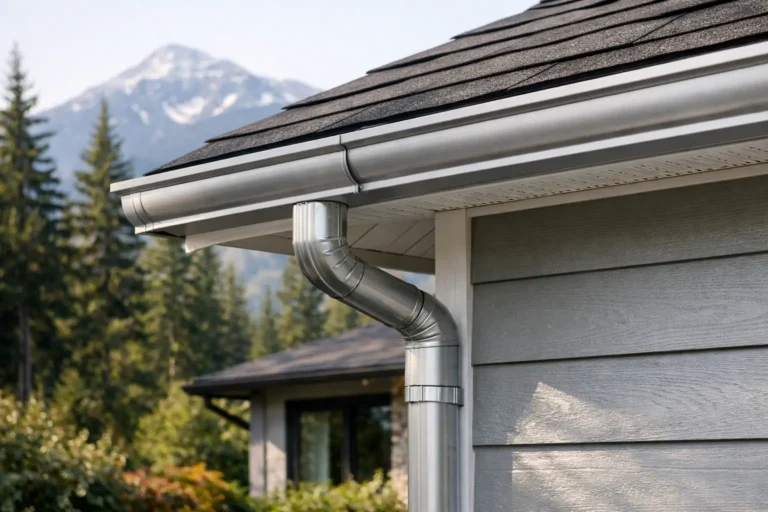
This is why premium stainless steel micro-mesh systems are often the top recommendation for this area. They are better suited to the fine debris common under firs and pines, and they do a better job of maintaining flow through long rainy stretches. When installed over strong seamless aluminum gutters with hidden hangers and correct pitch, they provide a much more dependable result.
Installation matters as much as the product
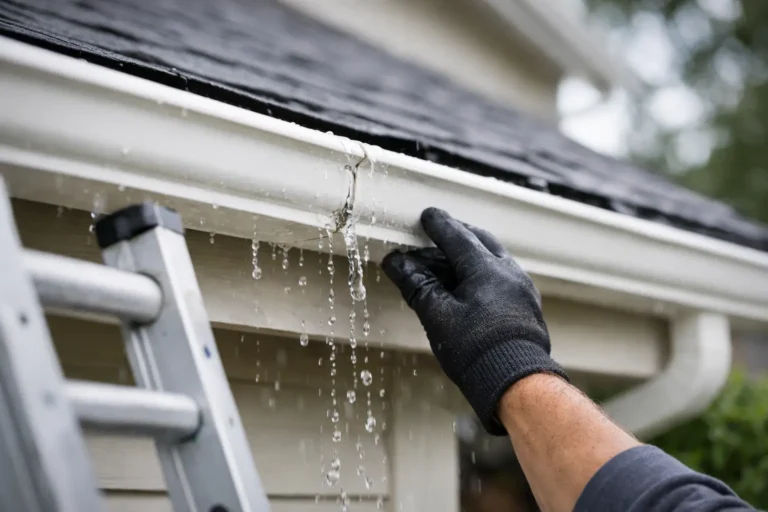
Homeowners often focus on the guard itself and overlook the gutter beneath it. That is a mistake. If the gutter is too shallow, poorly sloped, pulling away from the fascia, or draining through undersized downspouts, even the best cover will struggle in a serious storm.
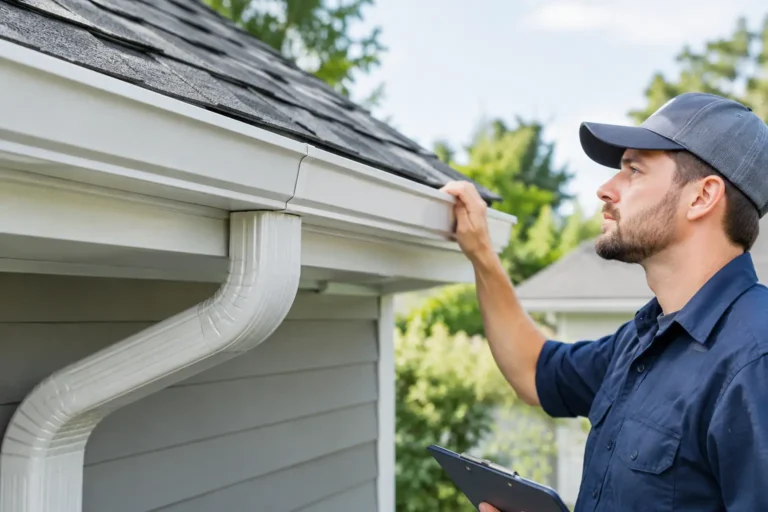
A proper installation starts with measuring the home correctly and checking runoff load by roof section. Valleys and long roof planes often need special attention because they concentrate water quickly. The installer should also inspect hanger spacing, fascia condition, and existing drainage layout before recommending a guard.
This is where a professional installer brings real value. A one-size-fits-all sales pitch does not help when your front elevation gets hammered by runoff from a steep roof valley and the back side sits under fir trees all year. Good recommendations come from understanding the house, not just quoting a product.
How to choose the right system for your home
If you are comparing options, ask practical questions. What debris are you dealing with most – broad leaves, pine needles, roof grit, or all three? How steep is your roof? Do you have valleys that dump water into short gutter runs? Are your current gutters in good enough condition to support a guard system, or do they need replacement first?
You should also ask about frame material, mesh type, warranty coverage, and who is doing the installation. A strong manufacturer warranty has value, but only if the system is installed correctly and the company behind the work is accountable. Local experience matters here because the wrong product choice is usually exposed by the first serious rainy season.
For many Pacific Northwest homes, a professionally installed stainless steel micro-mesh system on custom seamless gutters is the best long-term investment. It costs more than a basic screen, but it usually performs better where it counts – overflow prevention, reduced cleaning, and protection from avoidable water damage.
NW Gutter Protection focuses on that kind of climate-specific solution because this region is demanding enough that shortcuts do not stay hidden for long.
A good gutter guard should do more than reduce the number of times you climb a ladder. It should give you confidence when the rain is coming down hard, the trees are dropping debris, and your home still needs to stay protected.