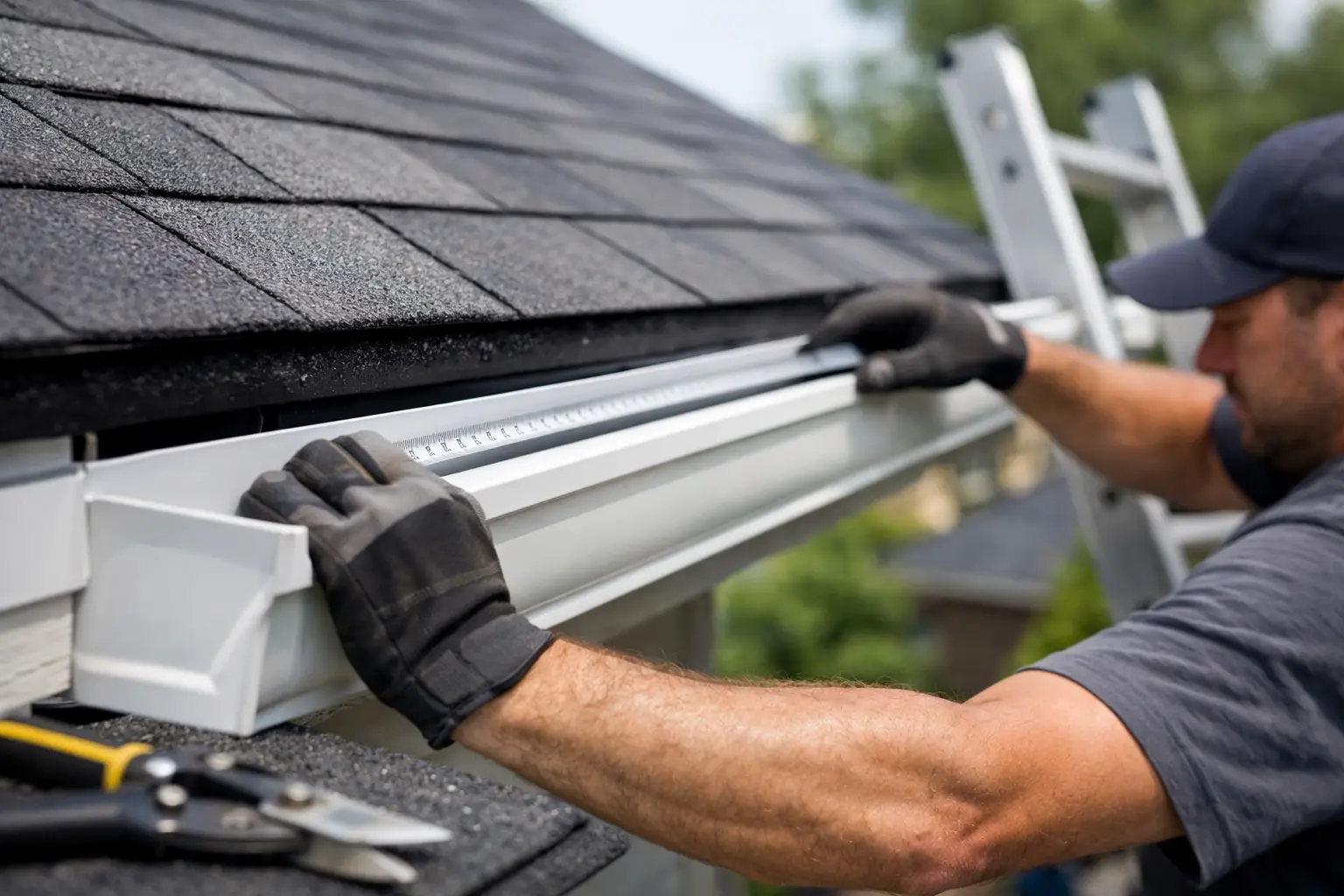
Custom Measured Gutter Installation That Fits
A gutter system can look fine from the sidewalk and still fail when a Pacific Northwest downpour hits. Water spilling over the front edge, pooling beside the foundation, or running behind the gutter usually points to a sizing, pitch, or fastening problem – not simply a need for cleaning. Custom measured gutter installation addresses those details before the first section is hung.
For homeowners in Southwest Washington and the Portland metro, gutters have to manage more than occasional rain. They deal with long wet seasons, roof grit, moss, fir needles, pine needles, and sudden heavy storms. A properly measured system gives water a clear path off the roof and away from the home without relying on undersized, pieced-together materials.
Why Standard Gutter Lengths Fall Short
Many homes have rooflines that appear simple until they are measured closely. Fascia boards may change height, roof edges may run long, and corners can create drainage challenges. Pre-cut gutter sections are limited by fixed lengths, which means more seams are needed to complete the run.
Every seam is a potential maintenance point. Sealant can age, seasonal movement can stress connections, and debris can collect around joints. That does not mean sectional gutters never work, but a home with long roof runs or high water volume usually benefits from fewer joints.
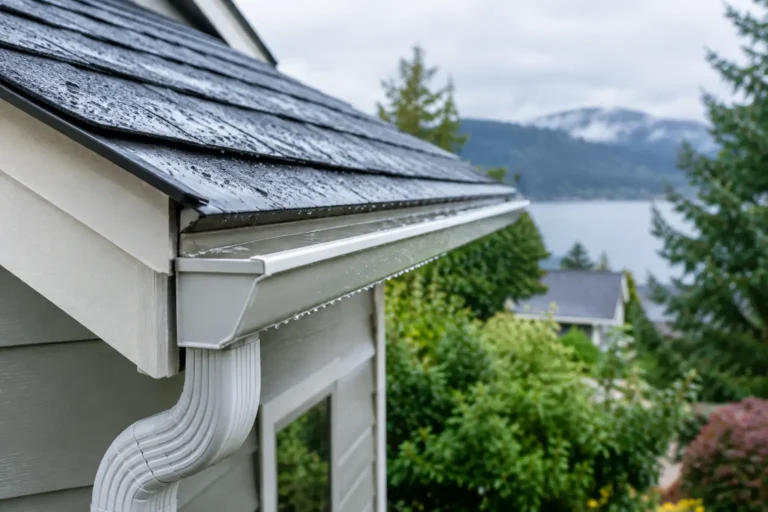
Custom-measured seamless aluminum gutters are formed to the exact length needed for each roofline. The result is a cleaner appearance and fewer locations where leaks can develop over time. More importantly, the system can be planned around how water actually moves across the roof rather than forcing the roofline to fit a stock product.
What Custom Measured Gutter Installation Includes
A professional measurement is more than taking a tape measure from one corner to another. The installer needs to evaluate the roof edge, fascia condition, drainage direction, existing downspouts, and the amount of water each gutter run will collect.
Measuring the roofline and drainage area
Long runs below large roof planes receive more water than short runs below a small porch roof. That matters when determining gutter size, downspout placement, and whether one downspout can handle the flow. In heavy rain, a system can overflow even when it is clean if the downspouts are too few or positioned poorly.
The installer should also look for valleys. A roof valley concentrates water into one area with considerable force, particularly during the kind of driving rain common around Vancouver, Camas, Portland, and the surrounding communities. Those locations may need a different downspout plan or extra attention to gutter mounting and guard design.
Setting the correct slope
Gutters need a slight pitch toward the downspout so water drains instead of sitting in the trough. The slope is subtle enough that the gutter should still look level from the ground, yet precise enough to move water and roof grit toward the outlet.
Too little slope can leave standing water, sediment, and debris in the gutter. Too much slope may make the installation look uneven and reduce the amount of water the high end can catch. This is one reason accurate measurement and experienced installation matter more than simply attaching aluminum to the fascia board.
Building the system on site
Seamless gutters are typically formed on site from a continuous coil of aluminum. This allows each section to match the measured roofline instead of being assembled from shorter stock pieces. Corners and downspout outlets still require connections, but the long straight runs have far fewer seams than a sectional system.
Aluminum is a practical choice for most residential homes because it resists rust, is lightweight, and is available in colors that complement common exterior finishes. The right material thickness and secure mounting are just as important as the color. Thin material or weak fastening can lead to sagging when gutters are loaded with wet debris and water.
The Installation Details That Protect the Home
A gutter system is only as dependable as the details behind it. Homeowners should expect an installer to inspect the fascia before installing new gutters. Rotten or loose wood cannot reliably hold fasteners, and covering up that issue creates a problem that will return later.
Hidden hangers are an important part of a durable installation. Unlike older spike-and-ferrule systems, quality hidden hangers secure the gutter from inside the trough and fasten it firmly to the fascia. Proper spacing helps the gutter stay straight and supported through heavy rain, wind, and the added weight of saturated evergreen debris.
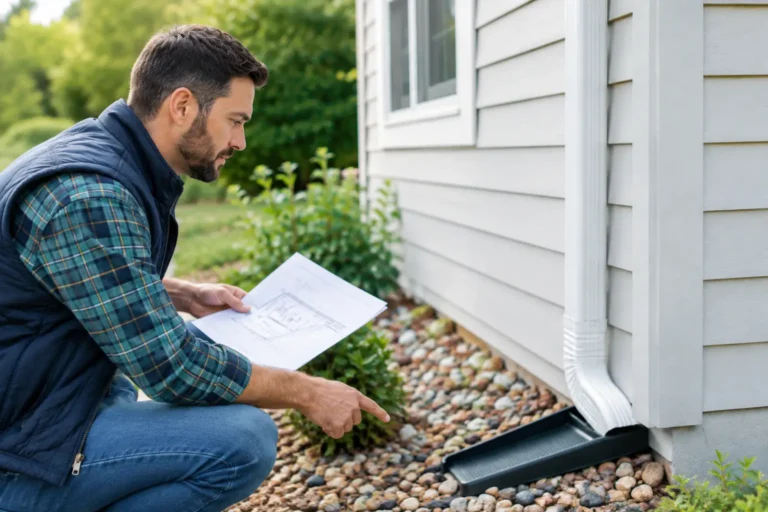
Downspouts deserve the same attention. They need to be sized and placed so water exits efficiently, then directed away from the foundation. A new gutter run that sends water into a short downspout or directly beside the house does not solve the underlying drainage concern. Extensions, elbows, and discharge locations should be chosen for the property, not treated as an afterthought.
Gutters and Gutter Guards Must Work Together
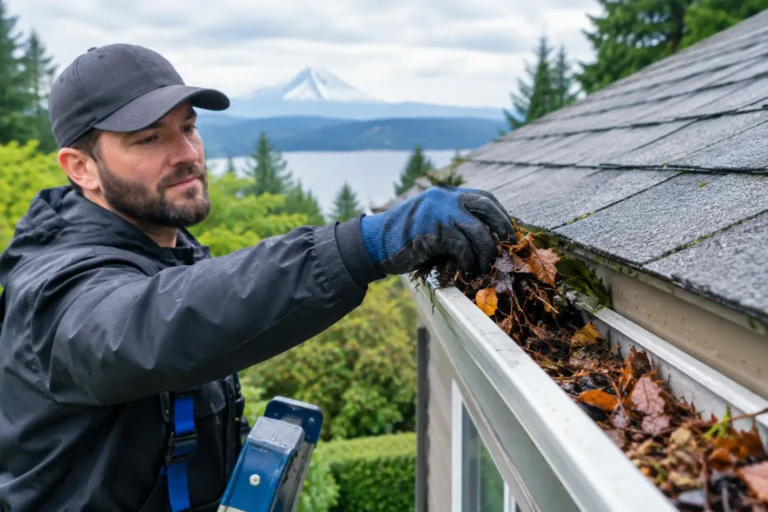
Custom gutters handle water, but they are vulnerable to clogs when debris is allowed to settle inside. In the Pacific Northwest, the issue is rarely just large leaves. Fine roof grit, moss fragments, pine needles, fir needles, and seed pods can create a dense layer that blocks outlets and holds moisture.
That is why the gutter guard should be considered during the gutter design process. A quality stainless steel micro-mesh guard is designed to keep most debris out while allowing rainwater into the gutter. It should be installed with the roof edge, gutter pitch, and water flow in mind. A guard that is poorly fitted can shed water over the gutter during a hard storm, while a weak screen may clog or bend under debris.
There is no honest claim that any guard makes exterior maintenance disappear forever. Roof surfaces and guard tops may still need occasional attention, especially beneath large evergreens. The goal is to greatly reduce the debris entering the gutter and eliminate the repeated, messy cleaning caused by clogged troughs and downspouts.
NW Gutter Protection installs custom-measured seamless gutters and premium micro-mesh gutter guards as a complete drainage solution for the conditions local homeowners face. Matching the components from the beginning avoids the common problem of installing a new gutter today, then trying to adapt an incompatible guard later.
When Replacement Is Better Than Repair
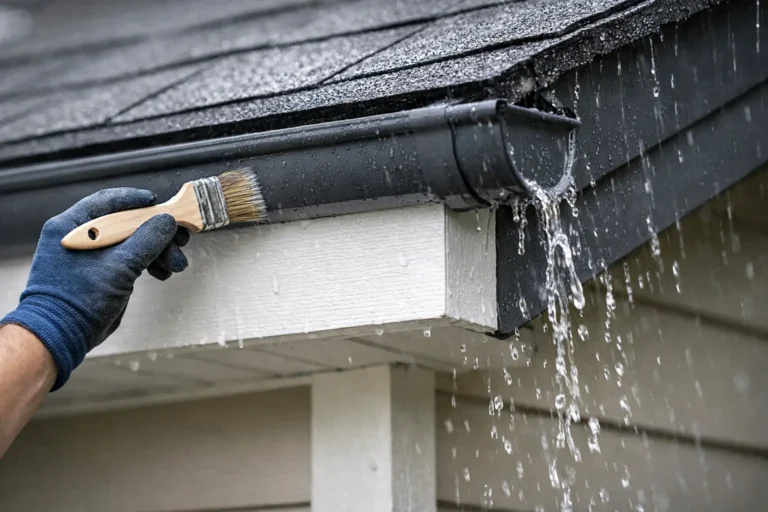
Small repairs can make sense when a gutter is otherwise sound. Re-sealing a single joint, replacing one damaged elbow, or correcting a minor fastener issue may extend the life of a newer system. But repeated leaks, visible sagging, widespread corrosion, loose spikes, and chronic overflow usually indicate a larger problem.
Replacement is often the better long-term value when the existing layout is undersized or poorly planned. Adding sealant to several old seams will not improve drainage capacity. Reattaching a sagging gutter without addressing fascia damage or hanger spacing will not make it dependable in the next storm.
A straightforward on-site assessment should explain what can reasonably be repaired and what should be replaced. The answer depends on the condition of the system, the roofline, and how the property handles water. Homeowners should not be pushed into replacing usable components, but they also should not be sold a patch that delays a necessary fix.
What to Expect From a Professional Installation
Before work begins, the installer should confirm measurements, gutter color, downspout locations, and any needed repairs or add-ons. Clear expectations matter, particularly if the project includes old gutter removal or work around landscaping, decks, and walkways.
On installation day, the crew removes the old material as needed, prepares the mounting area, forms and installs the new gutter runs, and connects downspouts. Many standard residential projects can be completed in one day, though larger homes, difficult access, fascia repairs, or more complex rooflines may require additional time.
After installation, the system should be checked for alignment, secure fastening, and proper drainage. The finished gutters should sit cleanly against the fascia, follow a controlled slope toward the downspouts, and give the home a finished appearance rather than looking like an added-on utility component.
A Better Fit Starts With Better Measurements
The value of custom measured gutter installation is not limited to a cleaner roofline. It is the confidence that the gutter size, slope, fastening, and downspout layout were selected for the home in front of the installer – and for the rain and debris that home will face year after year.
If your gutters overflow, pull away from the fascia, or need frequent cleaning beneath trees, start with a professional measurement instead of another temporary repair. A well-planned system gives rainwater one job: move safely away from your home.