A Guide to Seamless Gutter Sizing for Wet Climates
A gutter that looks undersized usually did not fail because of one dramatic storm. It failed during ordinary Pacific Northwest rain, when wet fir needles, roof grit, and leaf debris narrowed the water path just enough to make water run over the front edge. This guide to seamless gutter sizing explains what actually determines capacity, why a 5-inch system is not always enough, and what homeowners should look for before replacing gutters.
Why Gutter Size Matters More in the Pacific Northwest
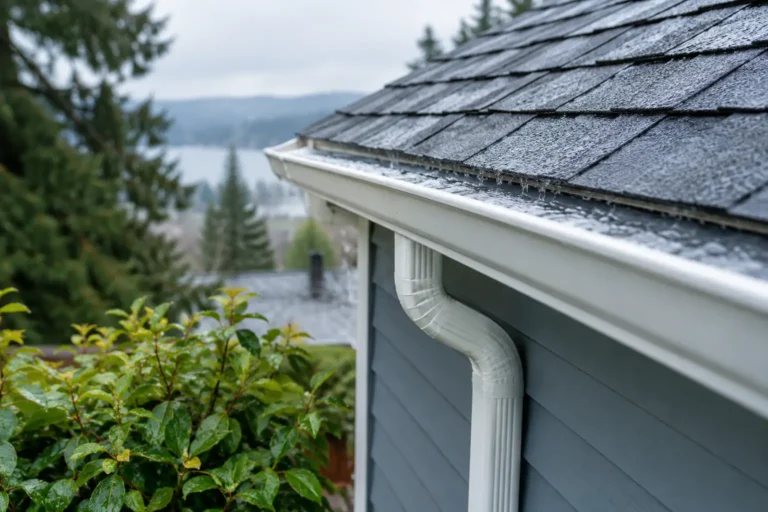
Gutters have one job: move roof runoff away from the home before it can damage fascia boards, siding, landscaping, foundations, or walkways. In Southwest Washington and the Portland metro area, that job is demanding. Long rainy seasons keep gutters wet for extended periods, while pine and fir needles can collect in corners, outlets, and downspouts.
When a gutter is too small, water does not wait for a major downpour to overflow. It can spill over during a steady rain because the trough is full of debris, the outlet is restricted, or the roof delivers more runoff than the system can carry. Overflow at the front is easy to see. Water behind the gutter, where it can soak the fascia and roof edge, is often more damaging and easier to miss.
Proper sizing is about more than choosing a wider gutter. The gutter profile, roof area, roof pitch, downspout size, outlet placement, hanger spacing, and drainage path all work together. A well-built system accounts for the full picture rather than treating every roof the same.
Guide to Seamless Gutter Sizing: Start With the Roof
The right gutter size begins with the roof section feeding it. Each section, or drainage area, should be considered separately. A simple single-story ranch home may have long, straightforward runs. A two-story home with dormers, valleys, and intersecting rooflines can concentrate a surprising amount of water into a short section of gutter.
The basic question is how much roof surface drains toward a particular gutter run. A larger roof plane collects more rain, and a steeper roof can move water to the edge more quickly. Valleys deserve special attention because they combine runoff from two roof planes into one concentrated stream. Even a properly sized gutter can overflow where a fast valley discharge hits it if the outlet capacity or gutter configuration is inadequate.
A professional measurement typically considers these factors:
- The square footage of each roof plane draining into the gutter
- Roof pitch and the speed at which runoff reaches the eave
- Valleys, dormers, and other areas that concentrate water
- The length of the gutter run and available locations for downspouts
- Local rainfall intensity and the likelihood of needle and leaf buildup
Homeowners do not need to calculate every variable themselves. Still, understanding these basics makes it easier to spot a quote that relies on assumptions instead of a real site assessment.
Why roof valleys change the equation
Valleys are frequent trouble spots in the Northwest. They gather water, moss, small branches, shingle grit, and conifer debris, then send it toward one section of gutter. If that section uses the same sizing and downspout layout as a quiet, open roof edge, it may not keep up.
The fix depends on the roof design. It may call for a larger gutter, an additional downspout, a strategically placed outlet, or a diverter that directs water into the trough instead of allowing it to shoot past it. A diverter is not a substitute for capacity, but it can help where valley water overshoots the gutter during hard rain.
5-Inch vs. 6-Inch Gutters
For many homes, 5-inch aluminum gutters are a practical standard. They fit common rooflines, handle moderate roof areas well, and provide an economical replacement option when drainage demands are straightforward. That does not mean they are the right choice for every house.
A 6-inch gutter has substantially more carrying capacity than a 5-inch system. The difference is especially useful on homes with large or steep roof planes, long gutter runs, major valleys, and limited downspout locations. It also provides more room for water to continue moving when small amounts of debris are present.
In the Pacific Northwest, 6-inch gutters are often worth considering even when a home has not had obvious overflows. If the existing system regularly needs cleaning, has water marks on the fascia, or dumps water over the edge during heavy rain, a larger trough may solve a capacity problem that repeated cleaning cannot.
There is a trade-off. A larger gutter costs more, and it can look oversized on a small, simple roof. It should be selected because the roof and drainage layout justify it, not because bigger always means better. The cleanest-looking installation is one that matches the home while providing enough capacity for real weather conditions.
Gutter profile affects capacity too
Most residential aluminum systems use either K-style or half-round gutters. K-style gutters are common because their shape provides good volume for their visible size and works well with typical residential fascia boards. Half-round gutters can suit certain architectural styles, but they generally require a different sizing approach and are less common on standard Northwest homes.
Material thickness matters separately from gutter width. Heavier-gauge aluminum resists denting and waviness better than thin material, particularly on long runs. It does not make a gutter carry more water, but it contributes to a straighter, more durable finished system.
Downspouts Are Part of the Sizing Decision
A wide gutter with too few downspouts is still a bottleneck. Downspouts move collected water from the trough to the ground-level drainage area, and their capacity needs to match the roof section they serve.
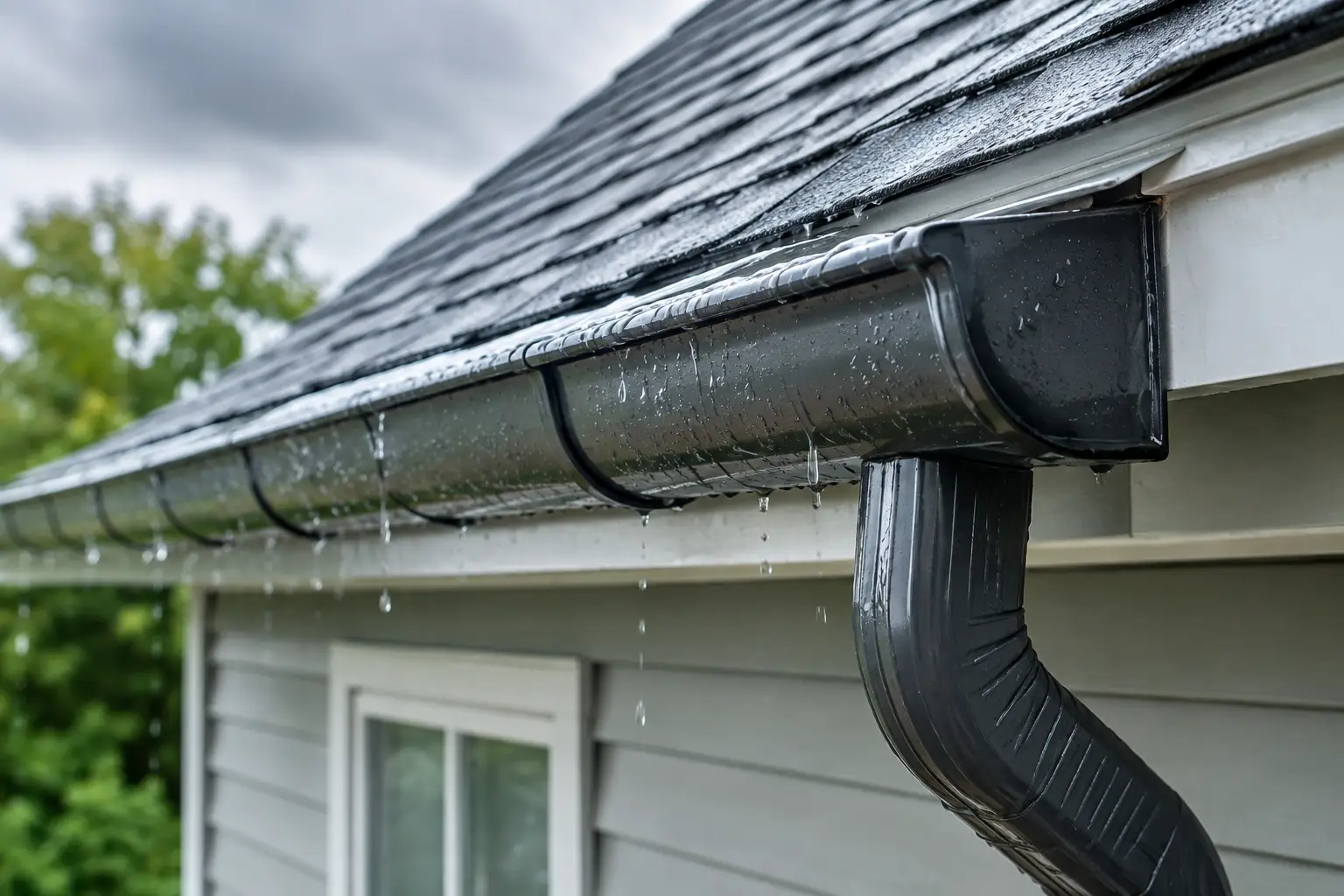
For many homes, standard rectangular downspouts work well when they are correctly sized and placed. Larger downspouts provide more flow capacity and are often a smart upgrade on 6-inch gutters, long runs, and areas below roof valleys. The outlet where the downspout connects to the gutter must also be large enough. A small outlet can restrict water before it ever reaches the downspout.
Placement is just as important as size. A long gutter run may need downspouts at both ends, or an additional downspout near a valley, rather than relying on one outlet to carry everything across the entire length. This also reduces standing water inside the gutter and helps limit debris buildup near a single outlet.
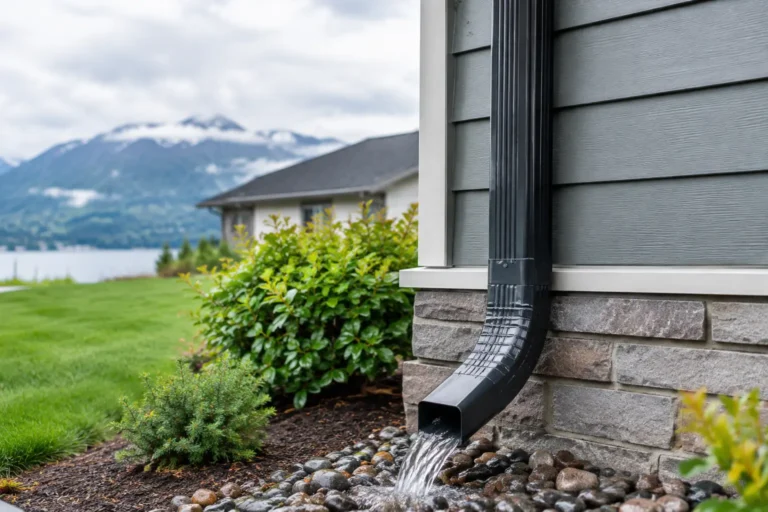
Downspouts should discharge water away from the foundation. Extensions, underground drain connections, splash blocks, and proper grading all have a role. A correctly sized gutter system cannot protect a foundation if the downspout empties directly beside it.
Slope, Hangers, and Installation Quality
Gutters need a controlled slope toward their outlets. Too little slope can leave standing water and sediment in the trough. Too much slope can look uneven from the ground and may cause water to collect too quickly at one end. The goal is a subtle, consistent fall that keeps water moving without making the gutter line appear crooked.
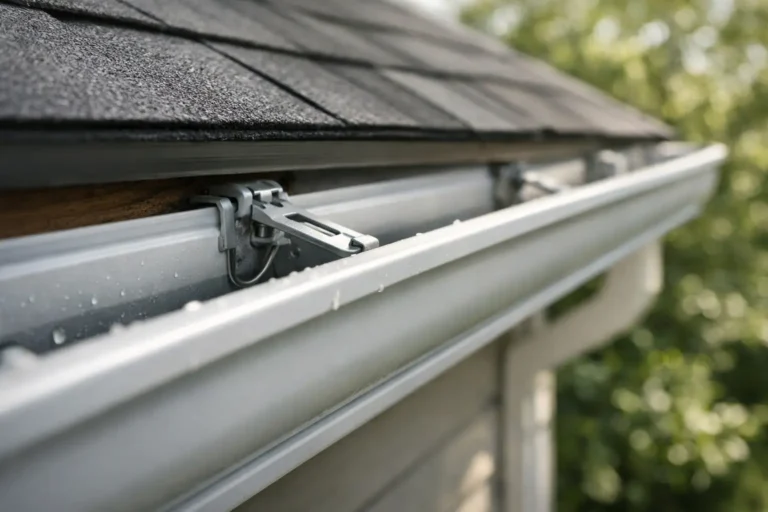
Hanger strength matters because a gutter full of water and wet debris is heavy. Hidden hangers installed at proper intervals support the gutter from within and help maintain its position against the fascia. Weak, widely spaced, or poorly secured hangers can allow the system to sag, changing the slope and creating low spots where debris collects.
This is one reason custom-measured, continuous aluminum runs are a strong fit for residential homes. Fewer joints mean fewer places for leakage to develop over time, while site-formed lengths allow the installer to fit each roof edge accurately. The benefit is not just appearance. It is a drainage system built around the actual dimensions of the home.
Do Gutter Guards Change the Required Size?
Gutter guards reduce the debris that enters the trough, but they do not increase a gutter’s water capacity. A guard should never be used as an excuse to install undersized gutters or too few downspouts.
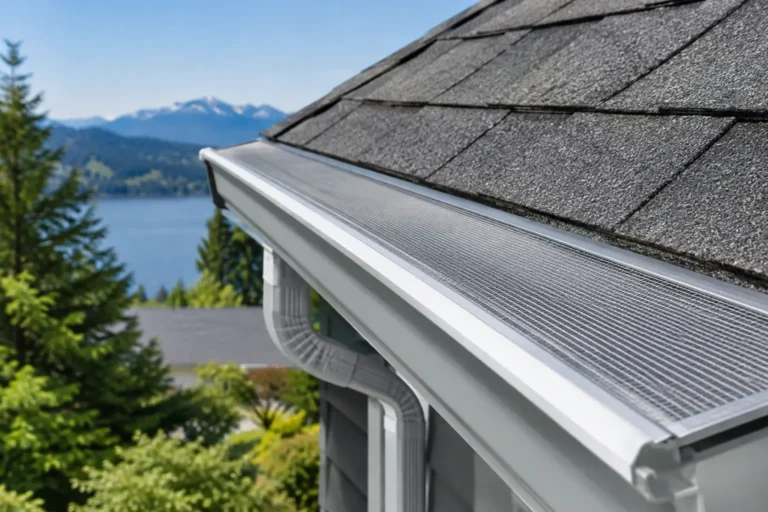
The right guard can make capacity more dependable by keeping pine needles, leaves, and roof grit from filling the water channel and clogging outlets. In this region, fine stainless steel micro-mesh is often a better fit than large-hole screens or bulky covers that allow needles to enter or create a ledge where debris collects.
Guard performance still depends on installation. The guard needs to be secured correctly, integrated with the roof edge without damaging shingles, and pitched to shed debris. Water should enter the system cleanly instead of racing over the front during heavy rain. For homes under firs or pines, product selection should be based on the actual debris around the property, not a generic promise that one style works everywhere.
Signs Your Current Gutters Are Undersized
Overflow is the clearest sign, but it is not the only one. Look for staining on fascia boards, dirty vertical streaks on siding, washed-out mulch below roof edges, erosion near downspouts, or water pooling near the foundation. Gutters that hold water days after rain may have poor slope, clogs, or sagging, even if their width is adequate.
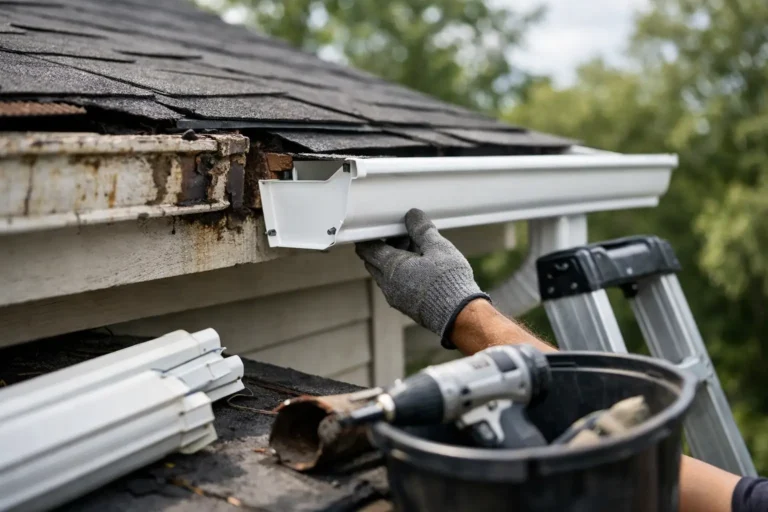
Also pay attention to where the problem occurs. Water spilling near a valley points to a different solution than water overflowing along an entire long run. A contractor should inspect the roofline, not simply replace the existing gutter with the same size and configuration.
A careful on-site evaluation should result in clear recommendations: where 5-inch gutters make sense, where 6-inch capacity is warranted, how many downspouts are needed, and how the finished system will direct water away from the house. At NW Gutter Protection, that practical approach is central to designing systems for the rain and evergreen debris homeowners deal with every year.
The best time to address gutter sizing is before the next season of steady rain exposes the weak points. A system that is measured for the roof, supported correctly, and matched with the right downspout layout gives water a reliable path away from the home – exactly where it belongs.