Roof Runoff Drainage Guide for Wet Northwest Homes
A hard Pacific Northwest rain can put hundreds of gallons of water on a roof in a short time. If that water does not move cleanly from the roof edge to a safe discharge area, it can spill over gutters, saturate soil beside the foundation, wash out landscaping, and create problems that are expensive to correct. This roof runoff drainage guide explains what homeowners should look for and how a complete system should work in the real rain, fir needles, moss, and roof grit common around Portland and Southwest Washington.
Start With the Path Water Takes
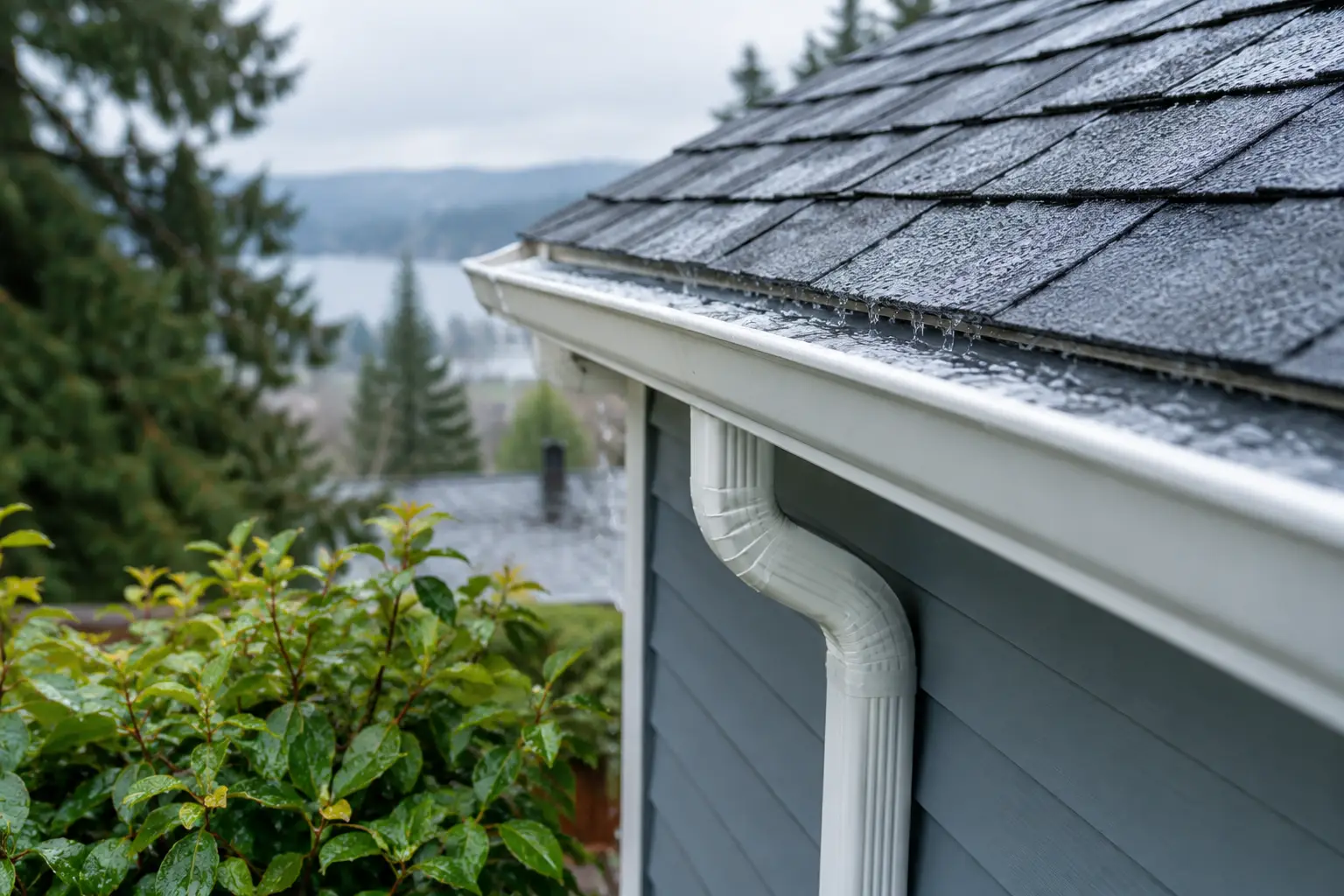
Roof drainage is not just a gutter issue. It is a connected path: roof surface, gutters, downspouts, extensions or underground drains, and the area where water finally exits. A weak point anywhere in that path can cause an overflow.
A gutter can be clean and correctly pitched, for example, but still overflow if the downspout is undersized or its outlet is blocked. Likewise, a downspout can carry water perfectly but create foundation trouble if it empties directly next to the house. The goal is not simply to catch water. The goal is to move it away from the home reliably during heavy rain.
The amount of water involved surprises many homeowners. A roof section measuring 1,000 square feet sheds roughly 623 gallons during one inch of rainfall. During a strong storm, that volume reaches the gutter system quickly. Roof size, roof pitch, valley locations, and the intensity of local rain all affect how much capacity your system needs.
Gutters Must Be Sized and Installed for the Roof
Standard residential gutters often work well, but there is no one-size-fits-all answer. A large or steep roof may need larger gutters, additional downspouts, or both. Roof valleys deserve special attention because they concentrate water from two roof planes into one fast-moving channel. If a valley empties near a corner or over a short gutter run, that section can be overwhelmed even when the rest of the system performs well.
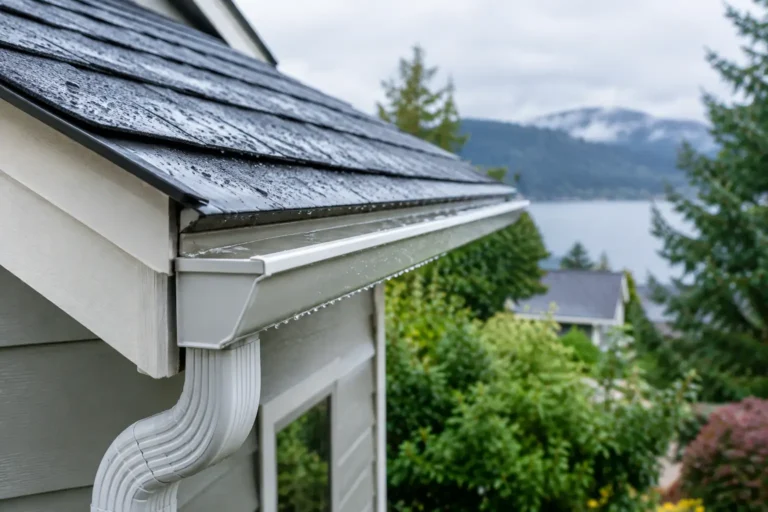
Proper slope matters, but excessive slope is not the answer. Gutters should have a controlled pitch toward the downspout so standing water does not remain in the trough. At the same time, the gutter line should look straight from the ground. A professional installation balances drainage performance with clean appearance.
Fastening is equally important in the Northwest. Gutters hold water, wet debris, and sometimes snow or ice. Weak fasteners can pull loose over time, changing the gutter pitch and opening gaps behind the system. Hidden hangers secured into solid framing provide better support than a lightly fastened system that relies on the gutter itself to carry the load.
Downspouts Are Where Many Drainage Problems Begin
Downspouts need enough capacity to accept the water arriving from the gutter. A frequent problem is having too few downspouts on a long gutter run, especially where roof valleys add a heavy surge. Water reaches the outlet faster than the downspout can move it, backs up in the gutter, and spills over the front edge.
Placement matters as much as quantity. Downspouts should generally be positioned where they can receive water efficiently without creating awkward discharge points near walkways, driveways, or entry doors. They should also be secured well enough to resist wind, accidental bumps, and the weight of water moving through them.
At ground level, every downspout needs a plan. Water should discharge onto a properly graded surface, into a suitable extension, or into a functioning drainage system that carries it away. Local rules and site conditions vary, so underground drainage should never be assumed to be working just because a downspout disappears into a pipe.
Keep Water Away From the Foundation
The ground around a home should slope away from the foundation. If it slopes toward the house, even a well-functioning gutter system may feed water into the wrong place. Soil can settle over the years, mulch beds can build up too high, and landscaping changes can trap water against siding or foundation walls.
As a practical rule, downspout discharge should be directed several feet away from the structure. The exact distance depends on grading, soil, hardscape, and where the water can safely go without affecting a neighbor’s property or creating a slick area. The key is to avoid dumping roof water into a small pocket of soil beside the home.
Watch for warning signs after rain: puddles near the foundation, water running across a walkway, mulch washing away, damp crawlspace odors, or soil erosion beneath a downspout. These are drainage signals, not cosmetic issues to ignore until the next season.
Gutter Guards Help Only When They Match Local Debris
In the Portland metro and Southwest Washington, drainage capacity can be lost quickly to pine needles, fir needles, seed pods, moss, roof granules, and decomposing leaves. A gutter guard can reduce gutter cleaning and keep the trough clearer, but the product and installation details matter.
Large-hole screens may keep out bigger leaves while allowing fine evergreen debris through. Some covers can also create a drainage problem if water sheets past the front edge during hard rain or if debris builds up on top. The right system needs to shed debris, admit water, and remain securely installed without damaging the roof or gutter.
Premium stainless steel micro-mesh guards are designed to address the fine debris that causes recurring trouble in this region. They are not a promise that a roof will never need attention again. Roof valleys, shingles, and the guard surface may still need occasional inspection. But a properly fitted micro-mesh system can prevent the gutter channel and downspout openings from becoming packed with the debris that drives overflows.
Use This Roof Runoff Drainage Guide After a Storm
The best time to spot drainage problems is during a steady rain or shortly afterward. You do not need to climb a ladder to learn a lot. Walk the property carefully and look for where water is going, not just whether the gutter looks clean from the ground.
Check these conditions around the home:
- Water spilling over the gutter front or running behind the gutter
- Heavy streams leaving a roof valley and jumping past the gutter
- Downspouts that drip weakly while water overflows higher up
- Extensions that have come loose, crushed, or shifted toward the house
- Standing water, washed-out soil, or splash marks near the foundation
- Water entering or backing up from an underground drain connection
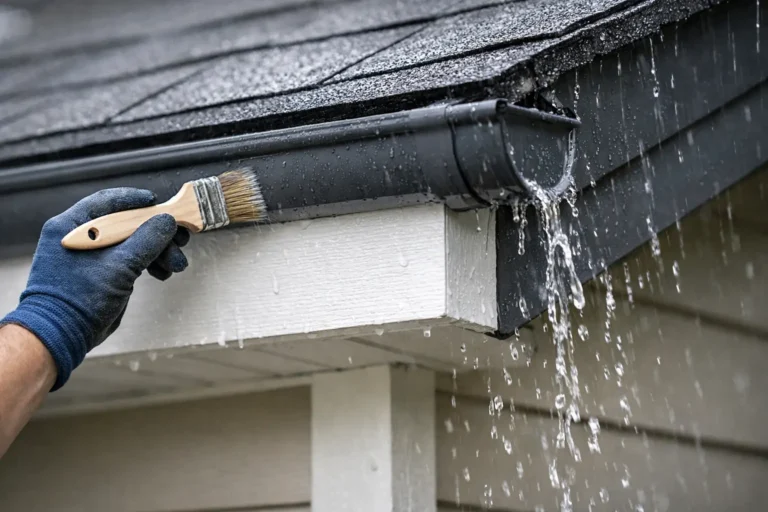
If you see overflow in one location, do not assume the gutter needs replacement immediately. The cause could be a clog, poor pitch, an undersized downspout, a valley that needs added capacity, or a failed underground line. A good assessment follows the entire water path before recommending a fix.
When Repair Makes Sense and When Replacement Is Smarter
A localized issue can often be repaired. Refastening a loose section, correcting a short extension, clearing a blockage, or replacing a damaged downspout may restore proper drainage. Repairs make sense when the gutters are otherwise solid, correctly sized, and free of widespread corrosion or sagging.
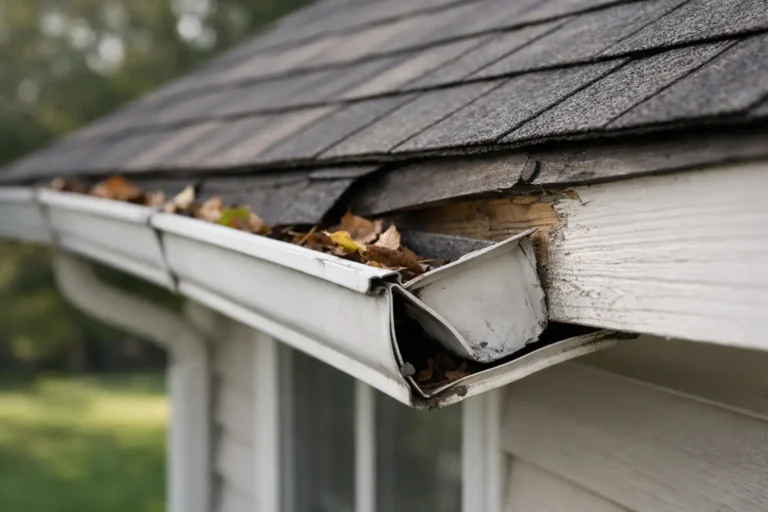
Replacement is often the better long-term choice when gutters have repeated leaks, separated seams, damaged hangers, persistent standing water, or a layout that cannot handle the roof’s runoff. Seamless aluminum gutters reduce the number of joints where leaks can develop, while custom sizing and downspout placement allow the system to be built around the home rather than forced into a generic layout.
For homeowners dealing with recurring overflows, NW Gutter Protection evaluates the gutter system, debris conditions, and runoff path together. That matters because installing guards on poorly pitched gutters or adding a downspout without addressing drainage at the ground does not solve the whole problem.
Plan for Maintenance, Even With Better Protection
A dependable drainage system still deserves a seasonal check. Fall is especially important before the heaviest rain arrives, and spring is a good time to look for storm damage, loose extensions, or drainage changes caused by winter weather. Homes beneath tall evergreens may need more frequent visual checks, particularly after windstorms.
Keep roof debris from collecting in valleys, confirm downspout outlets remain clear, and avoid piling mulch or soil against siding. If you use underground drains, pay attention to slow discharge or water backing up at the connection. A buried pipe can clog, collapse, or become root-filled without any obvious sign until a storm exposes the problem.
Water will always find the easiest route. A well-designed gutter and drainage system makes sure that route is away from your foundation, away from your walkways, and away from the repairs you would rather not face next winter.