Best Gutter Materials for Homes in the Pacific Northwest
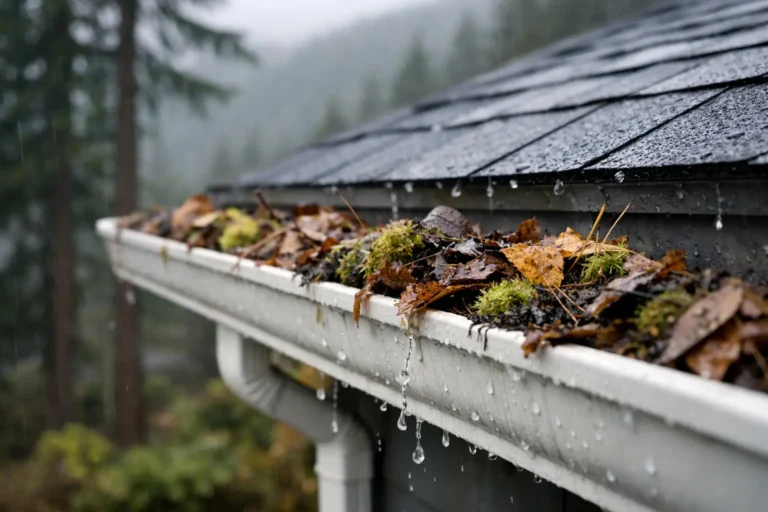
A gutter system can look fine from the ground and still fail when the first hard fall storm hits. In Southwest Washington and the Portland metro, gutters must handle steady rain, roof grit, moss, and a constant supply of fir and pine needles. The best gutter materials for homes are not simply the most expensive ones. They are the materials that fit the home, the roofline, the local debris load, and the level of maintenance a homeowner is willing to take on.
For most homes in the Pacific Northwest, seamless aluminum is the practical standard. It offers dependable corrosion resistance, manageable cost, and the ability to be custom-formed on site for a precise fit. Other materials can make sense in specific situations, but the installation details matter just as much as the metal itself.
What Makes a Gutter Material Right for Your Home?
Rainfall is only part of the decision. A gutter material also needs to hold its shape under the weight of standing water and wet debris, resist corrosion, and remain securely attached through changing seasons. On a tree-covered property, a material that performs well on an open suburban lot may not be the best choice.
The roof matters, too. Asphalt shingles shed granules over time. Metal roofs can send water down quickly. Cedar roofs may create different runoff and debris patterns. A good gutter recommendation starts with the roof, the slope, the eaves, the downspout layout, and the trees surrounding the home.
Appearance and budget are valid considerations, but they should not override performance. A beautiful gutter system that overflows, pulls loose, or needs constant repair will not protect the home the way it should.
Seamless Aluminum: The Best All-Around Choice
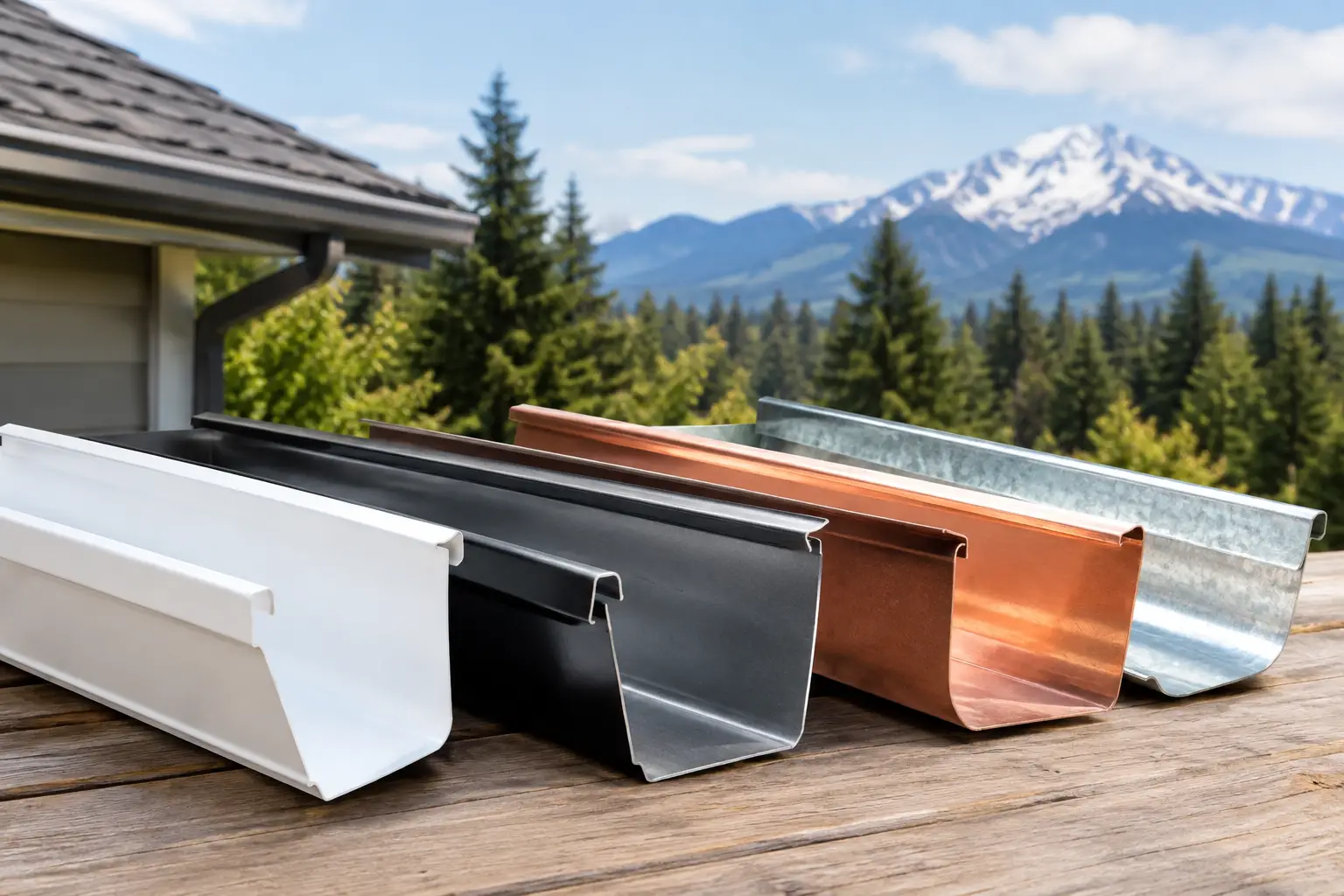
For most local homeowners, seamless aluminum is the best balance of durability, value, and low-maintenance performance. Aluminum does not rust, which is a significant advantage in a wet climate. It is also light enough to work well on most homes without putting unnecessary weight on the fascia board.
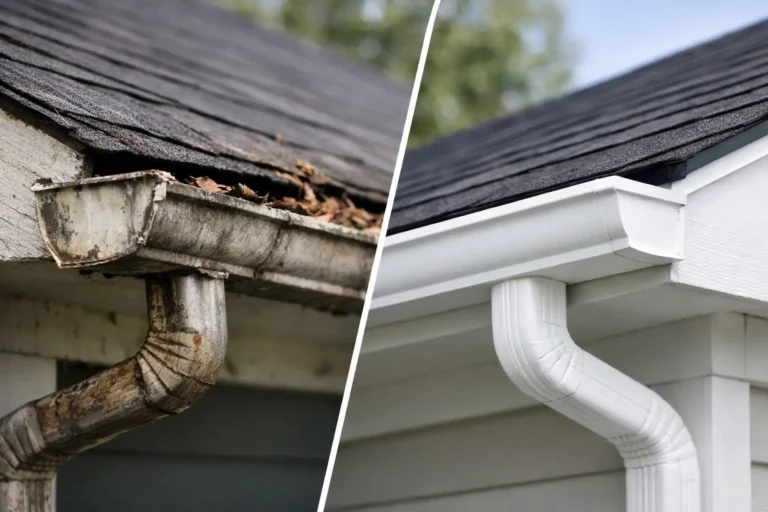
The key word is seamless. Traditional sectional gutters are assembled from pre-cut pieces, creating joints along the run. Those joints can eventually leak, collect debris, or separate as the system ages. Seamless aluminum gutters are custom-measured and formed to the length of each roof edge on site. They still have necessary connections at corners and downspouts, but they eliminate many of the weak points found in sectional systems.
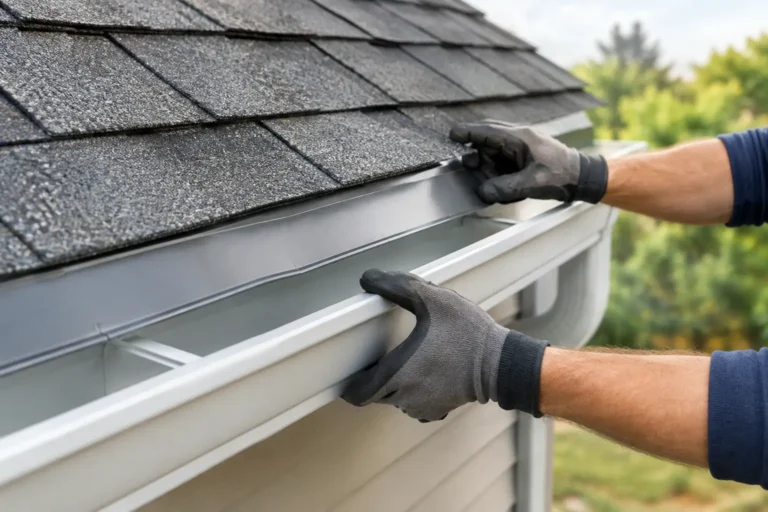
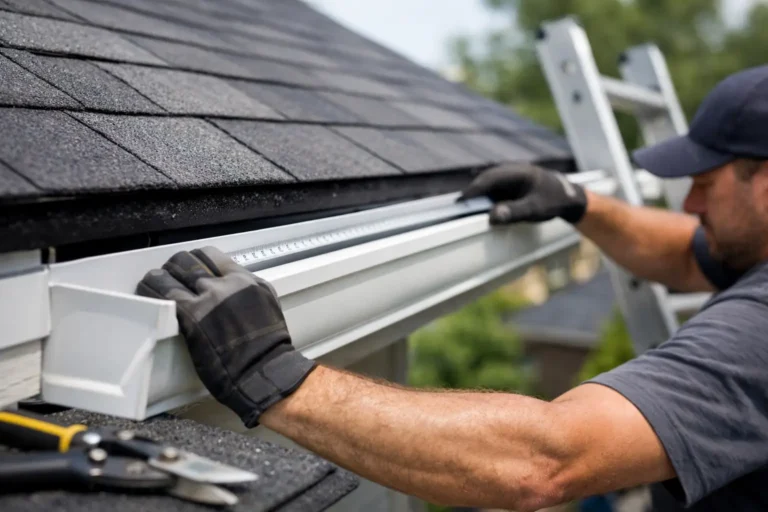
Quality installation makes a major difference. A properly pitched seamless aluminum gutter needs strong, well-spaced hidden hangers so it stays aligned when it is carrying heavy water or damp evergreen debris. It should also have correctly sized downspouts and secure outlets to move runoff away from the foundation.
Aluminum can dent more easily than steel if struck by a ladder or branch. That is a real trade-off. For the vast majority of residential properties, however, its corrosion resistance and custom-fit installation make it the sensible long-term choice.
Why Aluminum Works So Well in the Pacific Northwest
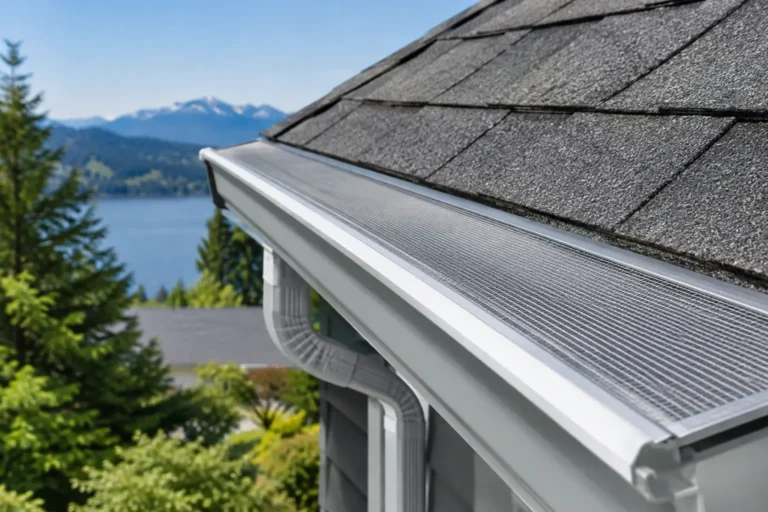
Aluminum handles regular exposure to rain without developing rust. It is available in a range of baked-on colors, allowing homeowners to match trim and siding without repainting the gutters every few years. It also pairs well with professionally installed micro-mesh gutter protection, which is especially useful where pine needles, fir needles, and roof grit are recurring problems.
A seamless aluminum system is not maintenance-free. Gutters and guards should still be checked periodically, especially after windstorms or major seasonal debris drops. But it can dramatically reduce the risk of routine joint leaks and frequent clog-related overflow.
Steel Gutters: Strong but Not Always the Best Fit
Galvanized steel gutters are strong and can resist dents better than aluminum. In some applications, that extra rigidity may appeal to homeowners who have large roof areas or are concerned about impact damage.
The drawback is corrosion. Galvanized steel has a protective zinc coating, but once the coating wears, scratches, or fails at seams and cut edges, rust can become a concern. In the Pacific Northwest, where gutters stay wet for long stretches, that risk deserves serious consideration.
Painted steel systems can provide an attractive appearance, but scratches and chips need attention. Steel is also heavier, which puts more demand on the fascia and hanger system. It can be a workable material when properly specified and maintained, but it is rarely the first recommendation for a homeowner seeking the best long-term value with minimal upkeep.
Copper Gutters: Long Life With a Premium Price
Copper gutters are durable, distinctive, and capable of lasting for decades when installed correctly. Over time, copper develops a natural patina that many homeowners appreciate, particularly on historic homes, high-end custom properties, and traditional architectural styles.
Copper does not rust, but it comes at a substantially higher material and labor cost than aluminum. Installation requires specialized skill because copper systems are typically soldered rather than assembled like standard aluminum gutters. Repairs and additions can also be more expensive.
For a home where architectural character is the priority and the budget supports it, copper can be an excellent choice. It is not necessary, however, for reliable rain control. A professionally installed seamless aluminum system will protect most homes just as effectively at a more practical price point.
Zinc Gutters: Durable but Specialized
Zinc is another premium material known for longevity and a natural weathered appearance. Like copper, it is often chosen for custom or architect-designed homes rather than standard residential replacements. Zinc can form a protective surface layer over time, helping it resist corrosion.
It is not widely used for typical gutter replacement projects because the cost is high and qualified installation is more specialized. Homeowners should also consider compatibility with other roofing and flashing metals. Zinc is a quality option, but it is generally a design-driven choice rather than the most cost-effective answer for wet Northwest conditions.
Vinyl Gutters: Low Upfront Cost, Higher Risk of Replacement
Vinyl gutters are often marketed as an inexpensive do-it-yourself option. They do not rust and are easy to find at big-box stores. For a small shed or a temporary application, vinyl may be adequate.
For a primary residence, vinyl has limitations. It is typically sold in sections with multiple seams, and those connections can leak or separate. The material can become brittle over time, sag under the weight of water and debris, and expand or contract with temperature changes. Color fading is also common.
In an area with recurring rainfall and heavy seasonal debris, a low initial price can turn into repeated repairs or early replacement. Vinyl is usually not the best choice for homeowners looking for a permanent, professionally performing system.
The Material Is Only Half the System
Choosing among the best gutter materials for homes is only one part of protecting the property. Even high-quality aluminum can fail if the gutter is undersized, installed without proper slope, attached to damaged fascia, or paired with too few downspouts.
For many homes, a wider gutter profile provides more capacity during heavy rain. Downspouts must be placed where they can efficiently collect runoff, then direct water away from the foundation, walkways, and landscaping. If water is spilling over one section during a storm, the problem may be debris, but it can also be a capacity or drainage issue.
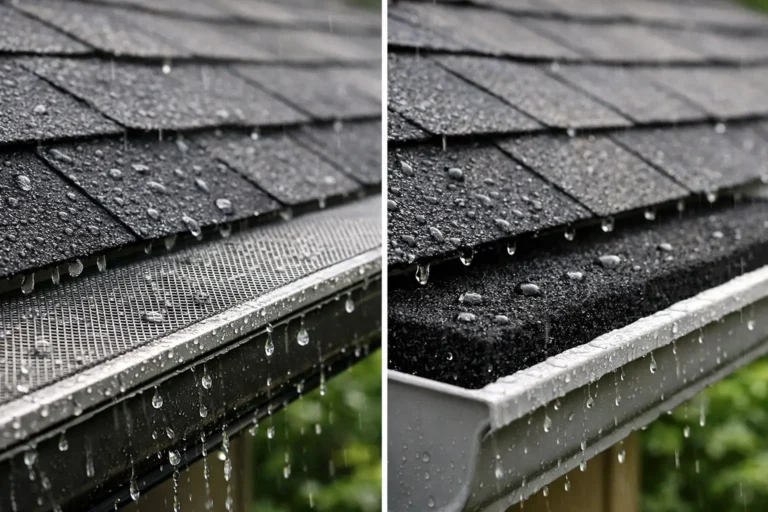
Gutter protection should be evaluated as part of the whole system. Open gutters under fir trees may need frequent cleaning regardless of the gutter material. A well-installed stainless steel micro-mesh guard can keep out needles, leaves, and larger debris while allowing water to enter the gutter. The guard must be properly fitted to the roof edge and gutter, not simply laid on top as an afterthought.
A Practical Recommendation for Local Homeowners
For most homes in Vancouver, Camas, Ridgefield, Portland, and surrounding communities, custom seamless aluminum gutters with strong hidden hangers offer the best combination of performance and value. Add properly sized downspouts and a quality micro-mesh guard where tree debris is a concern, and the system is better prepared for the conditions homeowners deal with every year.
NW Gutter Protection focuses on that complete approach: materials selected for local weather, measured installation, and details that keep water moving where it belongs. The right system should not require a sales pitch full of gimmicks. It should be clearly designed around your home and installed to last.
Before choosing a material, look at your roofline after a heavy rain and pay attention to where water collects, overflows, or reaches the ground. Those details will tell you far more about what your home needs than a display sample ever will.