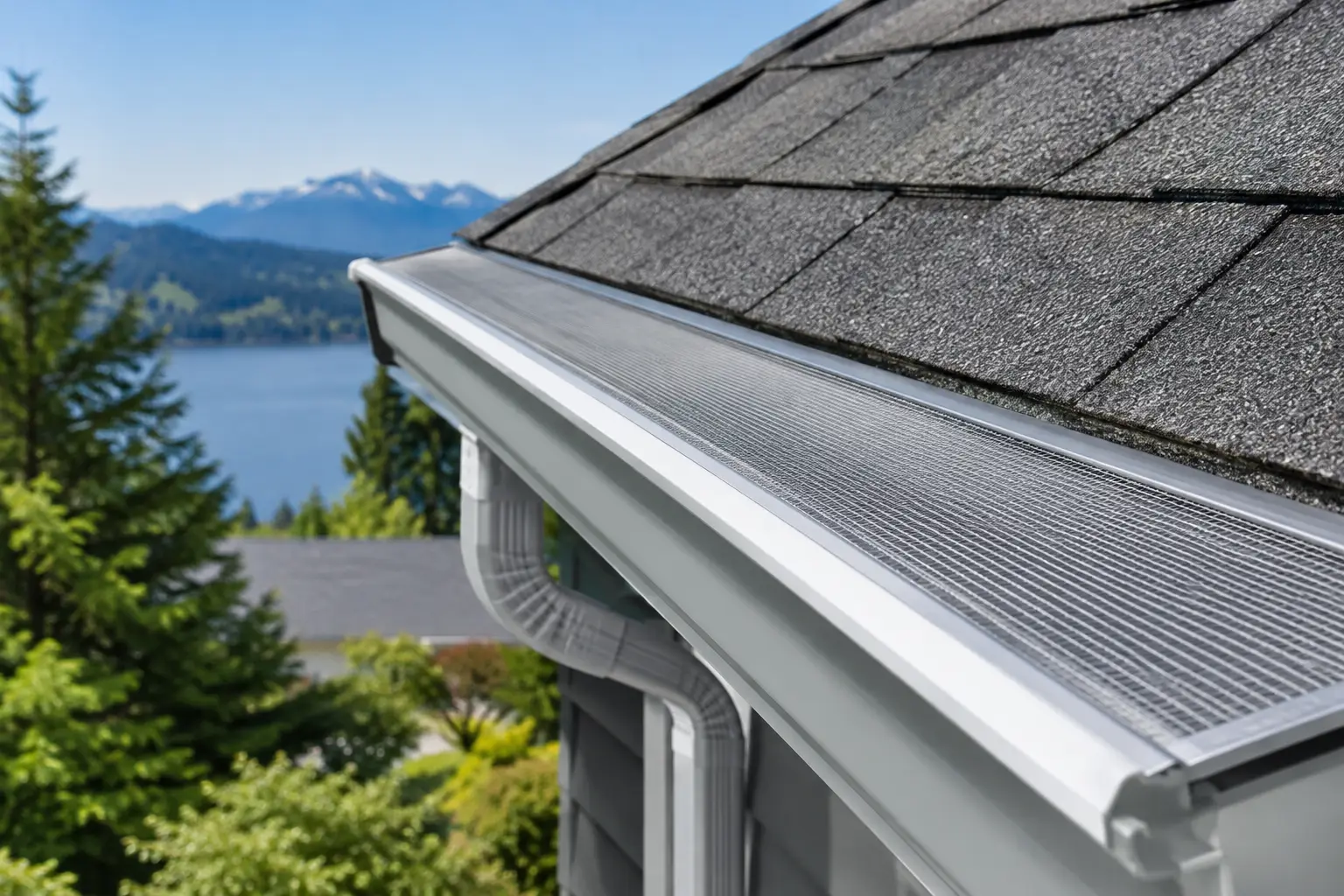
Micro Mesh Gutter Covers Review for PNW Homes
A good micro mesh gutter covers review needs to answer one question before anything else: can the guard handle a Pacific Northwest roof in November? Around Portland and Southwest Washington, gutters do not just collect leaves. They deal with fir needles, pine needles, moss, roof grit, seed pods, shingle granules, and long stretches of hard rain. A gutter cover that performs well in a mild climate can struggle here if the material, fit, or installation is wrong.
For many homes, stainless steel micro-mesh gutter guards are one of the strongest options available. They are not magic, and they do not eliminate every maintenance task forever. But a quality system installed correctly can keep the vast majority of debris out of the gutter while allowing water to enter and move safely through the downspouts.
What Micro-Mesh Gutter Covers Actually Do
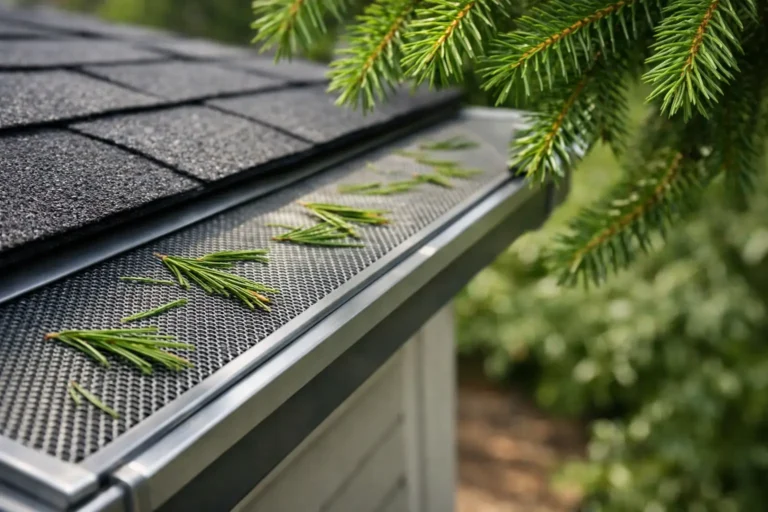
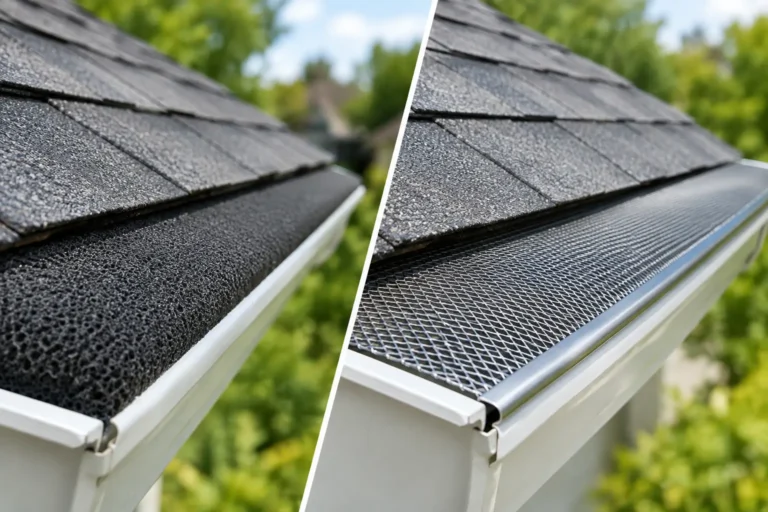
Micro-mesh guards use a very fine stainless steel screen mounted over a rigid frame. The openings are small enough to block pine needles, roof grit, and other fine debris that can pass through larger perforated guards or basic screens. Rainwater is intended to flow through the mesh and into the gutter, while debris dries and blows away or sheds over the front edge.
That basic design is why micro-mesh has become a preferred choice for homes surrounded by evergreens. Standard guards with larger holes may keep out broad leaves but still allow needles to build up inside the gutter. Once needles collect at an outlet or downspout elbow, water has nowhere to go except over the gutter edge.
The mesh alone is not the whole product. A dependable guard needs a strong support frame, secure attachment to the gutter, and a profile that manages water coming off the roof. Thin mesh laid loosely across a gutter can sag, trap debris, or pull away over time. A professionally installed system should feel like a permanent part of the gutter assembly, not an accessory clipped on as an afterthought.
Micro Mesh Gutter Covers Review: Where They Perform Best
The biggest advantage of micro-mesh is fine-debris filtration. On a home with pine, fir, cedar, or maple trees nearby, that matters more than a guard’s appearance from the driveway. Fine mesh can prevent the small material that creates the most stubborn clogs from reaching the gutter channel in the first place.
They also help reduce the repeated cycle of ladder work. Homeowners may still want to inspect their roofline and guards periodically, especially after a windstorm, but they are far less likely to need frequent gutter scooping. That is a meaningful benefit for two-story homes, steep lots, and homeowners who would rather not climb a ladder several times a year.
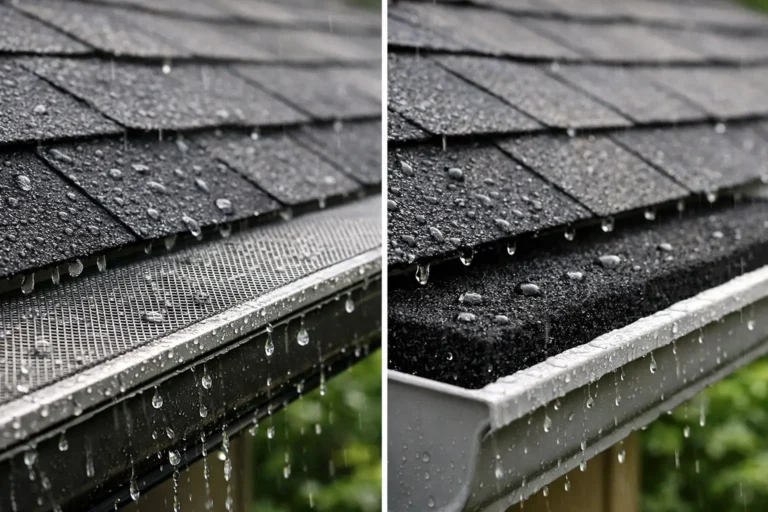
Quality micro-mesh systems are also well suited to heavy rain when they are sized and installed properly. The guard must sit at the correct angle relative to the roof and gutter. It should not create a dam at the roof edge, and the gutter itself must have adequate capacity, proper slope, and clear downspouts. Guards cannot correct undersized gutters, failing fascia, or a roof valley that sends a concentrated sheet of water into one short section.
For homes with older gutters, installation is often the right time to address those underlying issues. A guard installed over a loose, sagging gutter only protects a gutter system that already needs repair.
The Trade-Offs Homeowners Should Know
Micro-mesh is a premium option, and it generally costs more than basic plastic screens or snap-in aluminum covers. The price reflects the material, the frame, custom fitting, and the labor required to install the system correctly. For a home with little tree coverage, a less expensive option may be enough. For a heavily wooded property in Camas, Ridgefield, Lake Oswego, or the hills above Portland, cheap guards can become an expensive repeat purchase.
No guard is completely maintenance-free. Pollen, moss spores, fine roof sediment, and wet debris can occasionally rest on the surface. In many cases, normal wind and rainfall clear it. In shaded areas beneath dense trees, an occasional brush-off or professional inspection may still be needed. That is not a failure of the system. It is a realistic part of exterior maintenance in a wet, tree-covered region.
Roof conditions also matter. If a roof has excessive granular loss, moss growth, damaged shingles, or a valley that dumps water directly onto the guard, those conditions should be addressed as part of the overall plan. A reputable installer will point out those concerns instead of promising that one product solves every water-management problem.
Installation Quality Matters as Much as the Guard
The same micro-mesh material can produce very different results depending on who installs it. This is where homeowners should look beyond a product brochure.
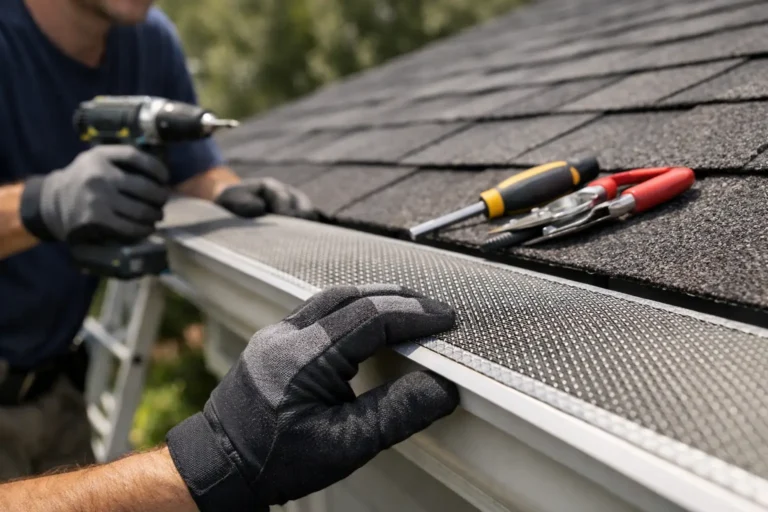
A proper installation starts with cleaning and checking the existing gutters. The installer should confirm that gutters are securely fastened, correctly pitched, and capable of moving water toward the downspouts. Hidden hangers are especially valuable because they strengthen the gutter run without leaving visible spikes or creating weak points along the front edge.
The guard should then be custom measured and fitted to the roofline. Corners, end caps, valleys, and transitions require attention. Gaps around these areas are invitations for debris to enter. Sections also need to be attached securely enough to handle years of rain, temperature changes, and wind without lifting or rattling.
Be cautious with one-size-fits-all claims. A home with a low-slope roof, metal roofing, deep gutters, or heavy roof valleys may need a different installation approach than a simple ranch home. The right contractor explains what the house needs and why.
What to Look for Before You Buy
When comparing quotes, ask what the guard is made of and how it is supported. Stainless steel micro-mesh is generally preferred over plastic because it holds up better against UV exposure and fine debris. Ask whether the system is fastened to the gutter and fascia, tucked beneath shingles appropriately, or simply clipped in place.
You should also ask whether the existing gutter system will be inspected and repaired before guard installation. If water is already overflowing because of poor slope or undersized downspouts, guards alone will not fix it. A complete recommendation may include seamless aluminum gutters, larger downspouts, or additional outlets where roof water is concentrated.
Warranty terms deserve a close read as well. A long manufacturer warranty is valuable, but homeowners should understand what it covers, whether it transfers to a future owner, and whether installation is included. For example, Gutter Glove Pro systems can carry a 50-year transferable manufacturer warranty, giving homeowners added confidence in the product when it is professionally installed.
Finally, pay attention to the sales process. A gutter protection project should not require pressure tactics or a same-day decision. A clear quote, a direct explanation of materials, and a realistic discussion of your home’s conditions are better signs than a dramatic discount that disappears when the salesperson leaves.
Are Micro-Mesh Guards Worth It for Pacific Northwest Homes?
For many local homeowners, yes. Micro-mesh guards make the most sense where evergreen needles, roof grit, and frequent rain make open gutters a recurring problem. They can reduce clogs, protect fascia and landscaping from overflow, and cut down on risky ladder work. They are particularly worthwhile when paired with properly sized, well-secured seamless gutters and functioning downspouts.
They may be less necessary for a lightly treed property with easy, safe access to the gutter line. Even then, the decision comes down to how much ongoing cleaning you want to avoid and how long you plan to stay in the home.
The best next step is not to choose a guard from a photo. Have the roofline, gutters, drainage, and nearby trees evaluated together. NW Gutter Protection takes that practical approach because the right answer is a system that manages water reliably through real Pacific Northwest weather, year after year.