Why Gutter Guards Freeze During Winter Storms
A hard overnight freeze after days of Pacific Northwest rain can leave a roofline covered in ice. Homeowners often ask whether gutter guards freeze because they see ice on top of the mesh, water dripping from the edge, or a gutter that appears packed solid. The direct answer is yes: gutter guards can freeze. So can open gutters. The real question is what caused the ice, whether it is creating a drainage problem, and what can be corrected before it damages the home.
A quality gutter guard is designed to keep leaves, fir needles, roof grit, and other debris out of the gutter. It is not designed to make water or snow immune to freezing. In our climate, where cold rain, wet snow, and quick temperature swings can happen in the same week, understanding that distinction matters.
Why Gutter Guards Freeze
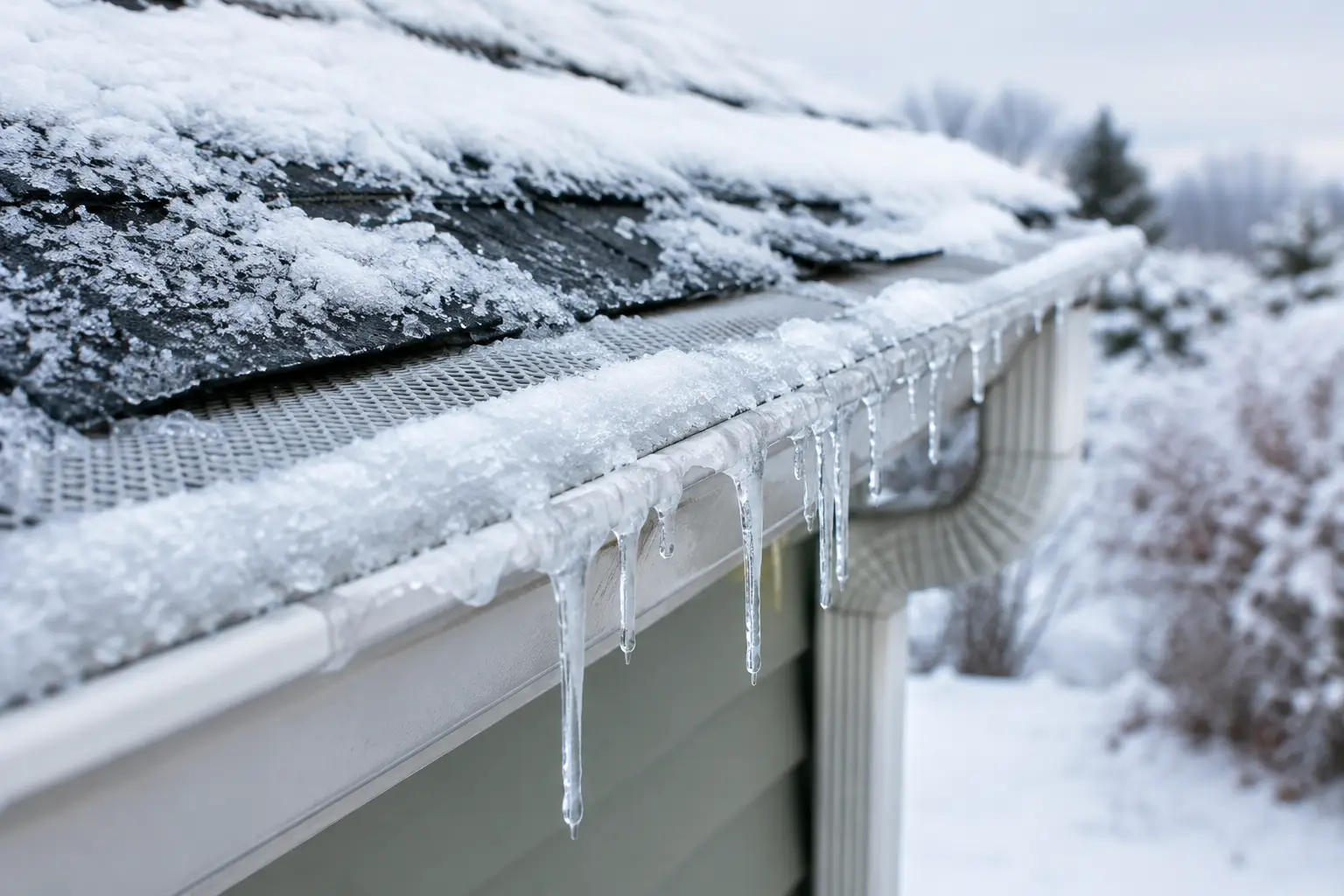
Ice forms when water reaches a surface that is below 32 degrees. That may happen on the roof, in the gutter, across the guard, or at the downspout outlet. A guard does not create freezing weather, but its surface can hold a thin layer of water long enough for that water to freeze during the right conditions.
The most common cause is meltwater or rainwater refreezing at the roof edge. Heat escaping from the home can warm the upper portion of a roof and melt snow or ice. As that water runs down to the colder eaves, it refreezes. This process creates ice dams, which can build up behind the gutter and force water back beneath shingles.
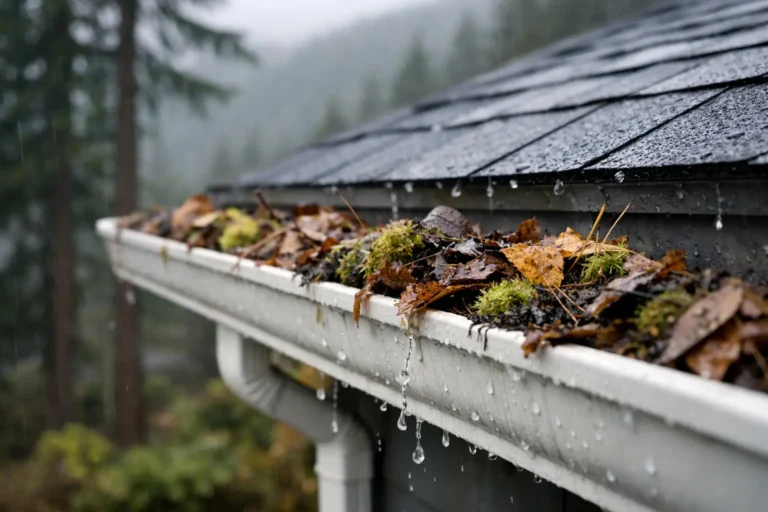
A clogged or poorly draining gutter makes the problem worse. When water cannot move freely through the gutter and downspout, it has more time to freeze. Debris is often the culprit in an open system. In a guarded system, poor installation, an undersized downspout, a blocked underground drain, or an existing low spot in the gutter may be the issue.
Do Gutter Guards Make Ice Dams Worse?
Not necessarily. A properly installed gutter guard does not cause an ice dam. Ice dams begin with snow and ice conditions on the roof, usually combined with heat loss, inadequate attic insulation, poor ventilation, or all three.
However, any material at the roof edge can collect frost or ice during freezing weather. A micro-mesh guard may look iced over after a storm because it is a visible horizontal surface. That does not automatically mean it has failed or that water is trapped beneath it. Once temperatures rise, a properly sloped gutter and clear downspout should drain normally.
The trade-off is straightforward. Without guards, wet leaves, pine needles, and roof grit can fill a gutter and hold standing water where it will freeze. With guards, the gutter stays much cleaner, but the top surface can still frost over in a true freeze. For most homes in Southwest Washington and the Portland metro area, keeping the system free of debris is the more dependable long-term advantage.
Signs the Problem Needs Attention
A little frost on the guard after a cold night is usually not a reason to worry. Repeated heavy ice, overflowing water during a thaw, or water appearing inside the home deserves a closer look.
Pay attention if you see thick ice lifting the gutter away from the fascia, long ice formations near a downspout, water spilling over the front of the gutter during rain, or staining on siding below the roofline. These signs can point to drainage issues, loose hangers, a blocked downspout, or an ice dam higher on the roof.
Also look inside the attic after a freeze-thaw event. Damp insulation, frost on roof decking, mildew odor, or visible water stains are often signs that the larger issue is roof heat loss rather than the gutter guard itself. Gutters are where the water becomes visible, but they are not always where the problem started.
How to Reduce Freezing at the Roofline
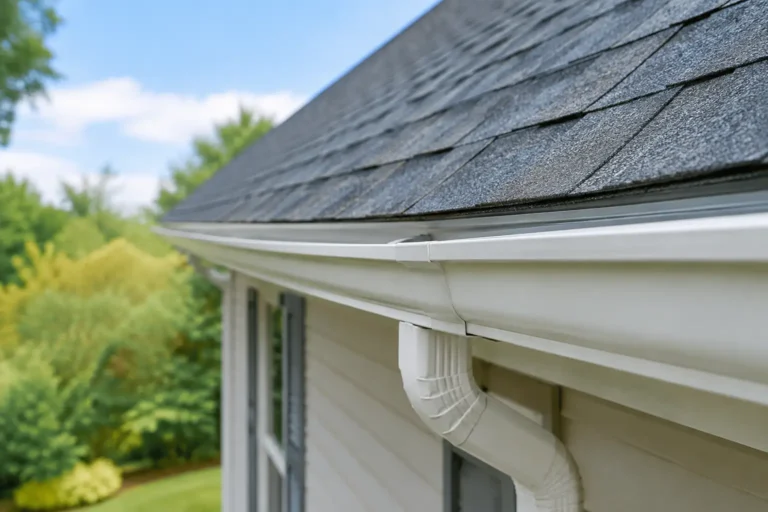
The best approach addresses both drainage and roof conditions. Start with the gutter system. Gutters should be securely fastened, properly pitched, and sized for the roof area. Water needs a clear route through the trough, outlet, downspout, and discharge point. A premium stainless steel micro-mesh guard can help keep that route clear by blocking evergreen needles and roof debris while allowing water into the gutter.
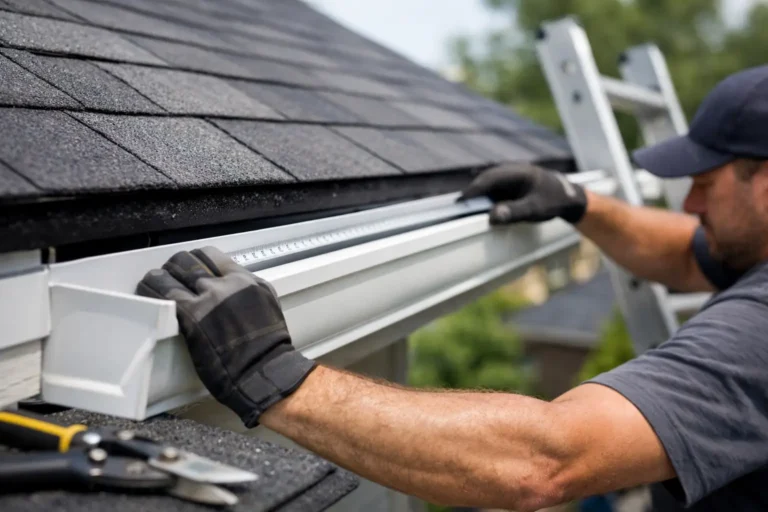
Installation details matter as much as the guard itself. Guards should be fitted to the roof edge and gutter, not loosely laid across the top. Gutters need enough hidden hanger support to handle the weight of heavy rain and occasional snow load. Downspouts should be free of blockages and positioned so water is carried away from the foundation.
Next, consider the home itself. If ice returns to the same area every winter, have the attic insulation, air sealing, and ventilation evaluated. Warm air leaking into the attic can create uneven roof temperatures. Correcting that condition is often the real solution for recurring ice dams.
Homeowners should also keep roof valleys and lower roof areas reasonably clear of heavy leaf buildup before winter. A guard protects the gutter interior, but large piles of debris sitting above the gutter can still slow water and hold moisture at the roof edge.
What Not to Do When Ice Builds Up
Do not chip at ice with a shovel, hammer, pry bar, or sharp tool. It is easy to puncture a gutter, tear a guard, damage shingles, or pull the system away from the fascia. Avoid pouring hot water onto a frozen gutter as well. The rapid temperature change can create more refreezing farther down the system and can be unsafe on a ladder.
Salt products should be used cautiously. Products intended for roofs may help in limited situations when applied according to the manufacturer’s directions, but standard rock salt can damage metal, landscaping, and surrounding surfaces. Never climb onto an icy roof to spread a melting product.
If ice is heavy, persistent, or causing water to back up into the home, call a qualified roofing or exterior professional. The immediate goal is to manage the water safely. The next step is identifying whether the issue is drainage, roof heat loss, or a combination of both.
Are Micro-Mesh Guards a Good Fit for Pacific Northwest Winters?
For homes surrounded by firs, pines, and deciduous trees, micro-mesh guards are often a practical choice because they address the maintenance issue that is present far more often than snow and ice. Our winters bring plenty of cold rain, windblown needles, mossy roof grit, and leaf debris. An unprotected gutter can clog long before a true freeze arrives.
No guard can promise that ice will never form in freezing weather. Be cautious of any contractor who says otherwise. What a well-designed, professionally installed guard can do is keep the gutter channel cleaner, reduce standing water caused by debris clogs, and support more consistent drainage through the many wet months of the year.
That is why an on-site evaluation is worthwhile. Roof pitch, tree cover, gutter condition, drainage layout, and attic history all affect the right recommendation. NW Gutter Protection evaluates the complete system rather than treating a gutter guard as a one-size-fits-all fix.
When the next freeze arrives, a thin layer of ice on the roof edge may simply be part of winter. What should not be part of winter is a gutter full of needles, water spilling against the house, or an unresolved ice dam sending moisture where it does not belong.