Premium Gutter Guard Systems Review for PNW Homes
A gutter guard can look fine on a dry day and still fail when a November downpour hits a roof covered in fir needles. That is the real standard behind a premium gutter guard systems review for homeowners in Southwest Washington and the Portland metro. The product has to keep debris out while allowing heavy roof runoff into the gutter – without creating overflow, sagging, or a new maintenance problem.
Premium does not simply mean expensive. It should mean better materials, a design suited to the debris around your home, and installation that works with your roofline and gutter system. For Pacific Northwest properties, those details matter more than a glossy sales presentation.
What Makes a Gutter Guard System Premium?
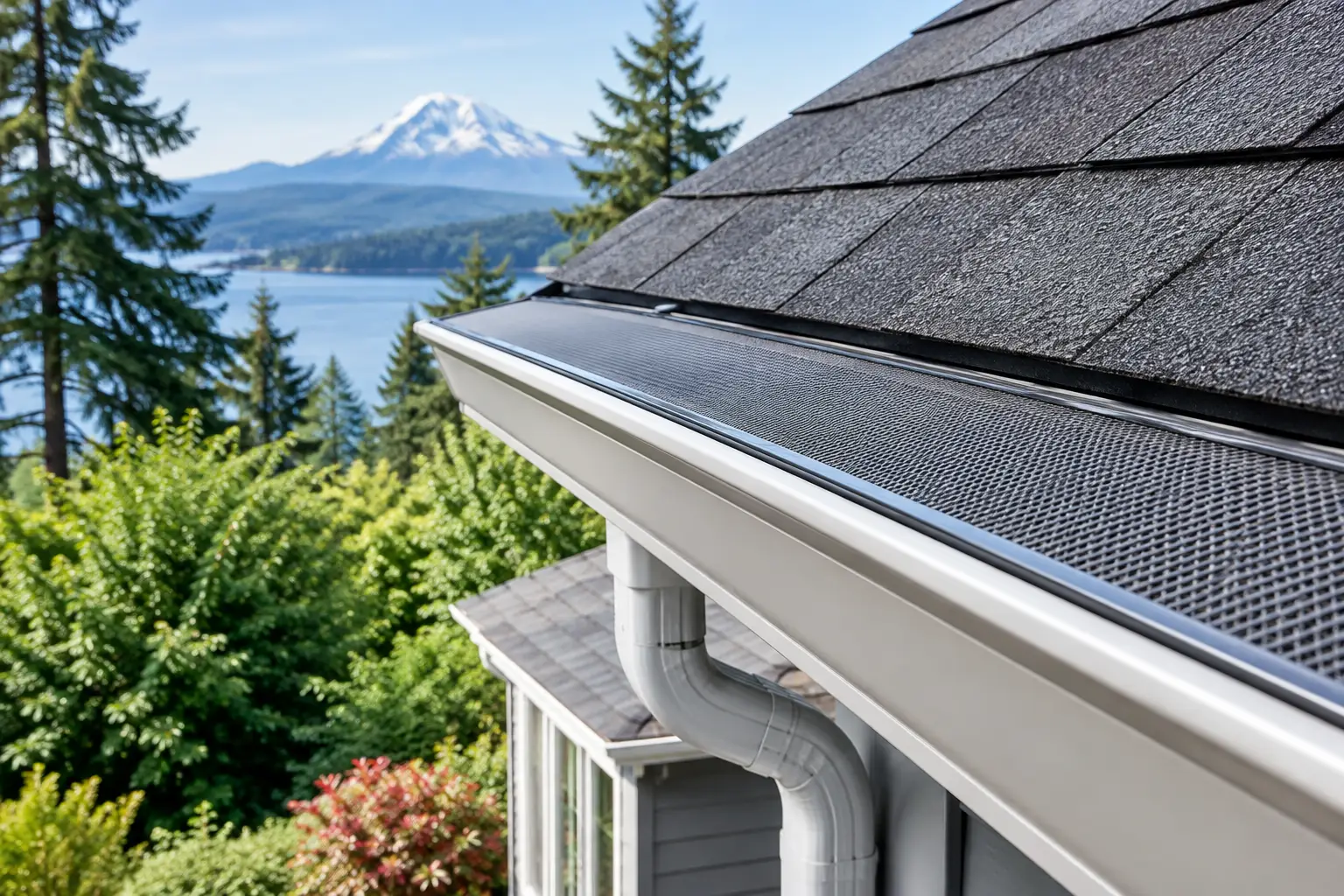
A premium system starts with durable materials. Stainless steel micro-mesh is a strong option because it resists corrosion and filters out small debris, including many pine and fir needles that pass through larger openings. The mesh needs a rigid support frame, however. Thin mesh laid loosely over a gutter can deform under wet debris or lose its fit over time.
The system should also manage water, not just block leaves. In our region, guards regularly face steady rain, wind-driven rain, roof grit, moss fragments, maple helicopters, and evergreen needles. A quality guard is designed to shed debris across its surface while pulling water through the mesh and into the gutter below.
The final piece is the connection to the gutter and roof edge. A guard that is fastened poorly can lift, buckle, trap debris at the edge, or interfere with normal drainage. Premium performance comes from the system as installed, not a product sample held up at the kitchen table.
Premium Gutter Guard Systems Review: Comparing Designs
There is no single guard that fits every roof, tree canopy, and existing gutter condition. The right choice depends on the debris your property sees, the slope and material of the roof, and whether the gutters themselves are still worth keeping.
Stainless steel micro-mesh guards
For homes surrounded by conifers, a stainless steel micro-mesh guard is often the most practical premium choice. The fine mesh blocks small needles and roof grit better than basic screens, while the raised, textured surface helps leaves and larger debris move off the top. It is especially useful for homeowners tired of pulling compacted pine needles from gutter corners and downspout openings.
Micro-mesh is not maintenance-free. Fine particles, moss debris, and roof sediment can collect on top of any guard, particularly beneath heavy tree cover. In most cases, that debris dries and blows away or can be brushed off from the ground or roofline as part of normal exterior care. The difference is that the gutter channel is far less likely to fill with packed debris and stop draining.
Not all micro-mesh products are equal. Look for stainless steel rather than flimsy plastic mesh, a reinforced frame, and a design that does not rely on large open gaps at the gutter edge. Gutter Glove Pro, for example, uses surgical-grade stainless steel micro-mesh and carries a 50-year transferable manufacturer warranty when professionally installed.
Perforated aluminum screens
Perforated aluminum guards are stronger than many bargain plastic options and can work well where debris is mostly broad leaves. Their larger holes generally move water easily during heavy rain, but those openings can also allow smaller evergreen needles, seed pods, and roof grit into the gutter.
For a lightly wooded property, this style may offer reasonable protection at a lower price point. For a Vancouver, Camas, or Portland-area home under firs and pines, it may reduce cleaning without eliminating the most common clogging material. That trade-off should be discussed plainly before installation.
Reverse-curve or surface-tension guards
Reverse-curve systems are built to guide water around a curved edge and into a narrow slot while debris falls away. They can perform well in certain conditions, but installation precision is critical. If the pitch or placement is off, water can overshoot during hard rainfall. The visible profile can also be a concern for homeowners who prefer a less noticeable roofline.
These systems may suit some homes, particularly where large leaves are the primary issue. They are typically less appealing where fine needles and roof grit are constant concerns, since the narrow intake channel still needs to remain clear.
Foam and brush inserts
Foam inserts and gutter brushes are inexpensive and easy to place inside an existing gutter. They are not usually a premium long-term solution for wet Pacific Northwest conditions. Debris can settle into the material, organic buildup can hold moisture, and the insert occupies space that should be carrying water.
They may make sense as a short-term stopgap, but homeowners seeking fewer cleanouts and dependable drainage should consider a mounted guard system instead.
Installation Is the Difference Most Reviews Miss
A gutter guard review that focuses only on the product leaves out the most important variable: who installs it and how. Even a high-quality guard cannot correct gutters that are undersized, loose, improperly pitched, or pulling away from the fascia.
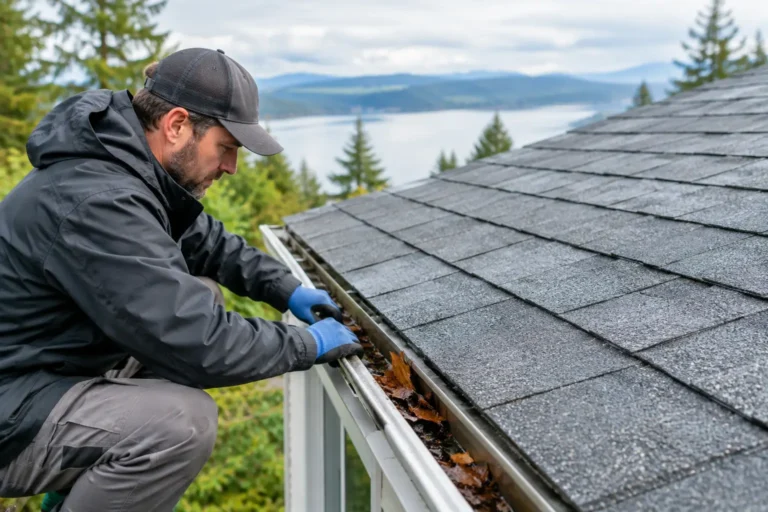
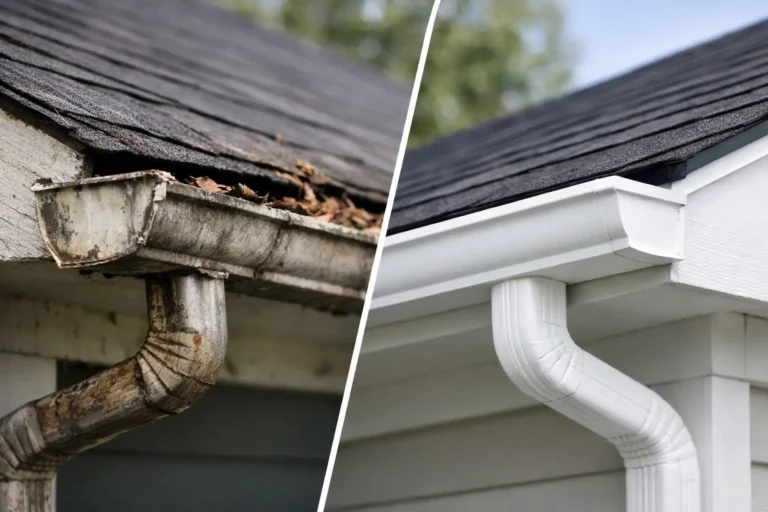
Before guards go on, the installer should inspect the gutter run, downspouts, hangers, corners, and fascia condition. Existing debris must be removed, and the gutter needs to drain correctly. If water is already standing in the gutter, covering it with a guard will not solve the underlying problem.
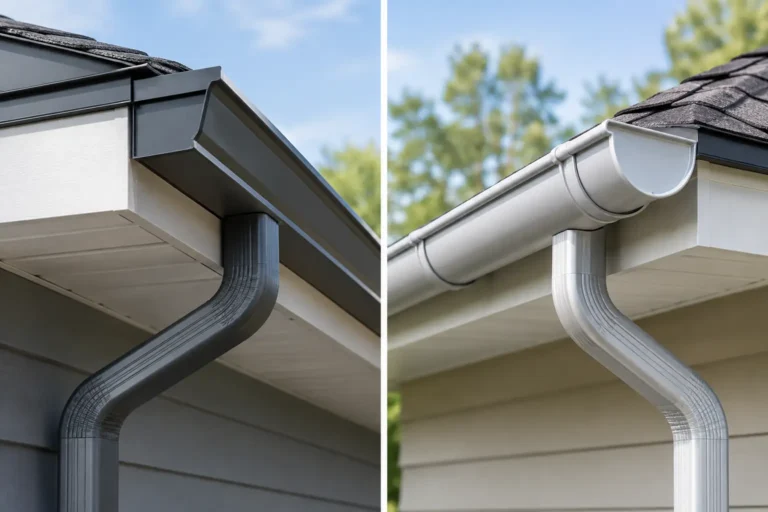
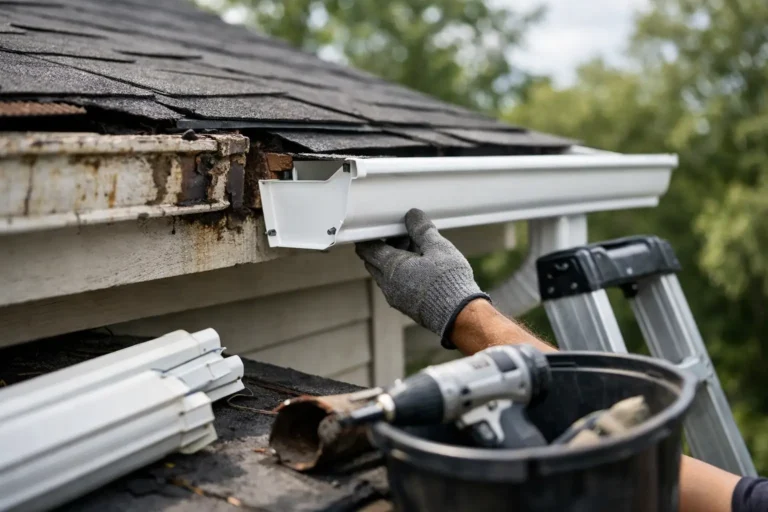
For homes that need replacement gutters, custom-measured seamless aluminum gutters are often the better foundation. Fewer seams mean fewer potential leak points, and properly spaced hidden hangers provide the strength needed for long wet seasons. Guards should be fitted to the gutter system and roof edge, not treated as an afterthought.
Many projects can be completed in one day when the scope is straightforward. That does not mean the work should be rushed. It means a prepared local crew can measure, form, clean, secure, and test the system without leaving the homeowner with an open-ended project.
How Premium Guards Perform in Pacific Northwest Weather
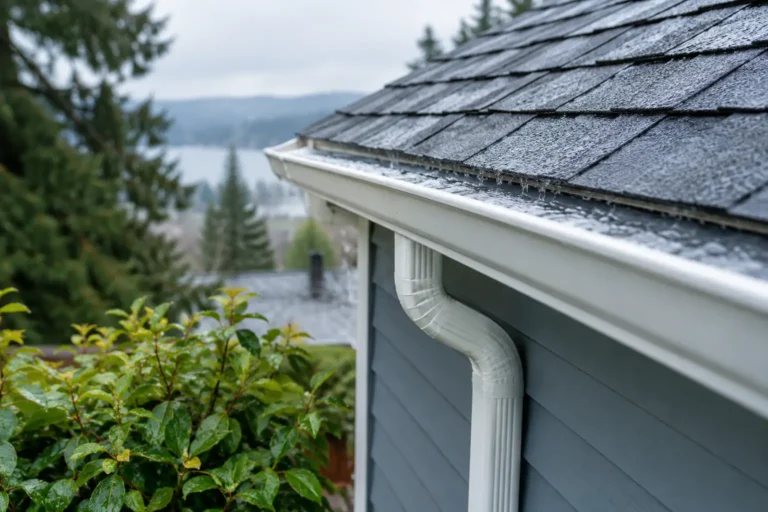
The Pacific Northwest presents a specific combination of challenges. Long periods of rain test water intake. Tall evergreens create needle buildup. Asphalt roofs release granules as they age. Moss and lichen can break loose in damp weather. A guard that performs well in a dry, deciduous climate may not be the best fit here.
The goal is not to promise that gutters will never need attention again. No honest contractor should make that claim. The goal is to keep the gutter interior and downspouts flowing, reduce ladder-based cleaning, and prevent the overflow that can damage fascia, siding, landscaping, and foundations.
Homeowners should also understand that roof condition affects guard performance. Heavy moss growth, deteriorating shingles, and branches resting over the roof can create debris faster than any guard can shed it. Trimming back overhanging limbs and maintaining the roof remain part of protecting the drainage system.
Cost, Value, and What to Ask Before Buying
Premium gutter guard pricing varies based on linear footage, roof height, access, gutter condition, and whether new gutters or downspouts are needed. A quote that seems low may exclude gutter repair, reinforcement, cleaning, or the material quality required for needle-heavy areas. A higher quote is not automatically better either. The scope should be clear enough that you know exactly what will be installed and why.
Before choosing a contractor, ask these questions:
- What guard material and mesh size are being installed?
- How will the system handle pine and fir needles on my property?
- Will you inspect gutter pitch, fasteners, downspouts, and fascia before installation?
- What warranty covers the product, and what workmanship warranty covers the installation?
- Who will be available if I have a concern after the job is complete?
A local contractor should be able to answer without pressure tactics or vague claims. At NW Gutter Protection, the focus is on matching the guard and gutter setup to the home rather than forcing every property into the same package.
A Better Standard for Your Gutter System
The best premium gutter guard is the one that fits your roof, handles the debris you actually have, and is installed on gutters that can carry water where it needs to go. If your home sits beneath evergreens or you are seeing overflow during heavy rain, start with a full gutter assessment instead of choosing based on a one-size-fits-all advertisement. A clear quote and an honest explanation of the trade-offs will tell you far more than a sales pitch ever will.