
How to Improve Roof Drainage in the Pacific Northwest
Water spilling over a gutter during a hard Portland-area rainstorm is not just a nuisance. It can soak fascia boards, stain siding, flood planting beds, undermine soil near the foundation, and create problems that become expensive over time. Learning how to improve roof drainage starts with looking at the whole water path: the roof, gutters, downspouts, discharge point, and the grade around your home.
In Southwest Washington and the Portland metro, roof drainage has to handle more than an occasional heavy downpour. Long wet seasons, mossy roof surfaces, roof grit, fir needles, and pine needles can slow or block the system at several points. A durable solution is not simply adding a guard or replacing one downspout. It is making sure every part of the system is sized, secured, and installed to move water away from the house.
How to Improve Roof Drainage From Roof to Ground
The goal is straightforward: capture water at the roof edge, move it through a clear gutter, direct it down quickly, and discharge it far enough from the home that it cannot return to the foundation. When one part of that chain fails, water finds another route – usually over the gutter, behind the gutter, or toward the house.
Start by observing the system during steady rain if it is safe to do so. Water overflowing at one location may point to a local clog, while water overtopping the entire gutter run can indicate undersized gutters, improper slope, or too much roof area draining into one section. Water coming from behind the gutter may signal loose fasteners, failed flashing, or a gutter that has pulled away from the fascia.
Keep the roof edge and gutters clear
Debris is the most common cause of poor drainage, but Pacific Northwest debris is not all the same. Large leaves can form a visible blockage. Pine and fir needles are more persistent because they can lie flat, bridge across an opening, and collect into a dense mat after repeated rain. Roof granules and moss can add fine sediment that settles in gutter bottoms and downspout elbows.
Cleaning gutters regularly helps, but it is a maintenance task with limits. If your home is surrounded by evergreens, a gutter can clog again soon after cleaning. Homeowners should also avoid pushing debris into the downspout opening, where it can create a blockage that is harder to reach.
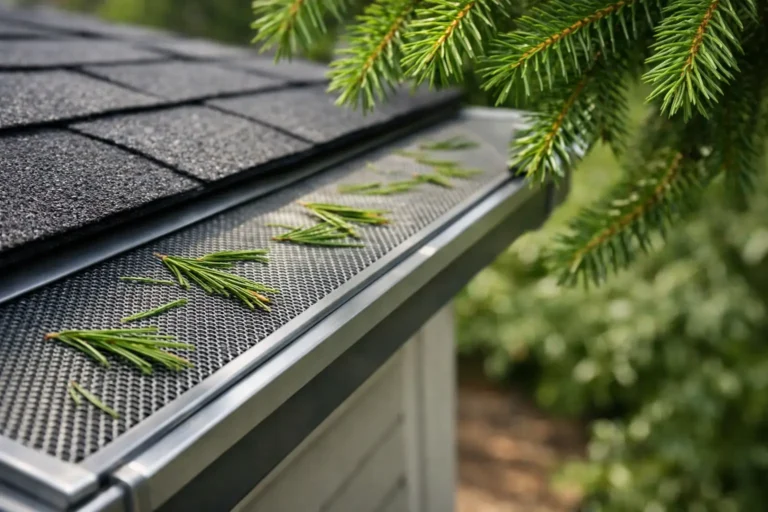
A professionally installed stainless steel micro-mesh gutter guard can reduce the amount of debris entering the gutter while allowing rainwater to pass through. The quality of the guard and the installation both matter. A guard that is not secured properly, does not integrate correctly with the roof edge, or has openings that are too large for local needle debris may not solve the underlying problem.
Make sure gutters are large enough for the roof
Many drainage problems come from gutters that were installed as a basic builder-grade component rather than designed for the roof’s water load. A long roof valley, a steep roof plane, or a large section of roof draining into one corner can send a surprising amount of water into a short length of gutter.
Five-inch gutters may work well on some homes, but they are not the right answer for every roof. Larger 6-inch seamless aluminum gutters provide more carrying capacity and can be a better fit where roof area, pitch, or valley runoff creates heavier flow. This is especially worth considering when gutters overflow during hard rain even though they are clean and appear to be in good condition.
Seamless gutters also eliminate the joints that typically occur along a gutter run. Fewer seams mean fewer places for leaks to develop as the system ages. They still need proper pitch and support, but a custom-measured seamless system gives an installer a stronger starting point than pieced-together sections.
Correct gutter pitch and support
A gutter should slope gently toward its downspout. Too little pitch leaves standing water, sediment, and debris in the channel. Too much pitch can look uneven from the ground and may reduce effective capacity at the high end. The correct slope is subtle, but it is essential.
Support is equally important in a rainy climate. Gutters filled with water and wet debris are heavy. Weak spikes, poorly placed fasteners, or inadequate hanger spacing can allow the gutter to sag. Once a low spot forms, water pools there instead of moving toward the downspout. That standing water adds weight, worsens the sag, and can eventually affect the fascia behind it.
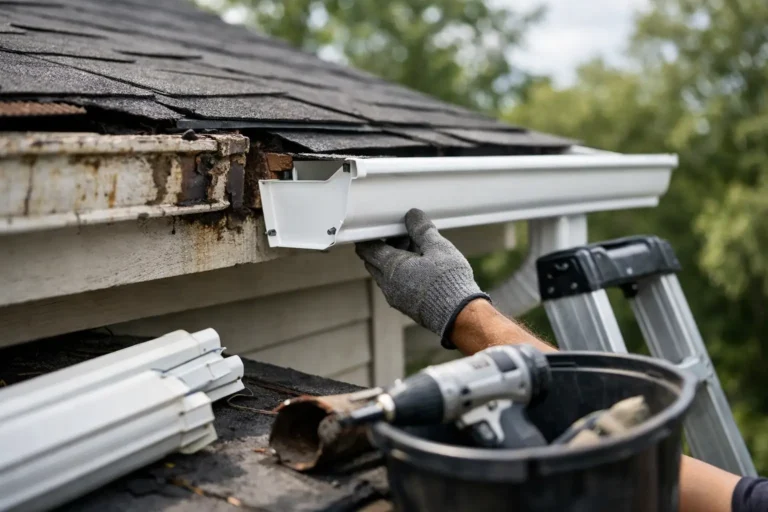
Hidden hangers installed at appropriate intervals help keep a gutter system straight and secure. If you can see a gutter pulling away from the roofline, dipping between fasteners, or holding water days after a storm, repair or replacement should not wait until the next rainy season.
Improve Downspout Capacity and Placement
A clean, properly pitched gutter cannot perform if the downspouts are too small, too few, or clogged. Downspouts are the exits for the entire system, and water backs up quickly when they cannot keep pace.
A typical warning sign is a gutter that fills and overflows near a downspout during a heavy shower. The cause may be a compacted clog in the elbow, but it can also mean that one downspout is handling too much roof area. Adding a downspout can be more effective than replacing otherwise sound gutters, particularly on long runs or beneath valleys.
Downspouts should be securely fastened and routed so they do not dump water immediately beside the foundation. Extensions, splash blocks, or underground drain connections can carry water farther away. The best choice depends on the property’s layout, soil, landscaping, sidewalks, and local drainage options.
Be cautious with underground downspout lines. They keep the exterior neat, but they can clog with sediment, roots, or debris if they are not designed with cleanouts and proper slope. If a buried line is blocked, water may back up into the downspout and overflow at the gutter. For some homes, a visible extension that can be inspected and cleared easily is the more practical solution.
Address the Ground Around the Foundation
Roof drainage and yard drainage work together. Even perfectly functioning gutters cannot protect a foundation if the ground slopes back toward the house.
Soil around the foundation should generally slope away from the structure so surface water moves outward rather than collecting against the wall. Settling soil, landscape edging, mulch buildup, and patios added after construction can all change the original grade. Look for puddles near the foundation after rain, soft soil along exterior walls, or downspout discharge that runs straight back toward the home.
Do not pile mulch or soil high against siding. Besides trapping moisture, it can obscure the lower wall and make drainage issues harder to see. If water is consistently pooling near the house, regrading may be needed. On more complicated sites, particularly those with flat lots or clay-heavy soils, a drainage professional may recommend a swale, catch basin, or French drain as part of a broader solution.
Check the Details That Cause Hidden Water Damage
Some roof drainage failures are visible only after damage has started. Inspect fascia boards for peeling paint, dark staining, soft spots, or gaps behind gutters. Check siding beneath roof edges for water marks. In crawlspaces and basements, watch for damp smells, moisture on walls, or recurring wet spots after storms.
Roof valleys deserve special attention because they concentrate runoff. A valley that terminates over a short gutter section may need a larger gutter, added downspout capacity, or a carefully installed diverter. The right fix depends on the roof design. Improvised diverters and sealants can create new problems if they direct water under shingles or trap debris.
Also consider the roof itself. Missing shingles, failed flashing, and excessive moss can send water where it does not belong before it ever reaches the gutter. Gutter improvements are most effective when the roof edge, flashing, and drainage system are evaluated together.
When Professional Gutter Work Makes Sense
Routine cleaning may be enough when gutters are structurally sound and clog only occasionally. Professional help becomes the practical choice when water overflows repeatedly, gutters sag, seams leak, fascia shows damage, or evergreen debris makes cleaning frequent and risky.
A proper evaluation should account for roof size, roof pitch, valleys, existing gutter condition, downspout locations, surrounding trees, and how water moves across the property. There is no one-size-fits-all gutter upgrade for every home. The right system may involve new seamless gutters, additional downspouts, durable hidden hangers, micro-mesh protection, or a combination of those measures.
For homeowners in Southwest Washington and the Portland metro, NW Gutter Protection focuses on systems built for the rain and needle debris that local homes face. The useful question is not whether a gutter guard or larger gutter is best in isolation. It is whether the complete drainage path will stay clear, carry the expected water volume, and move it safely away from your home.
The next time rain is in the forecast, take a few minutes to watch where the water goes. A small correction now – before overflow reaches the fascia or foundation – can protect the parts of your home that are far more difficult to repair.