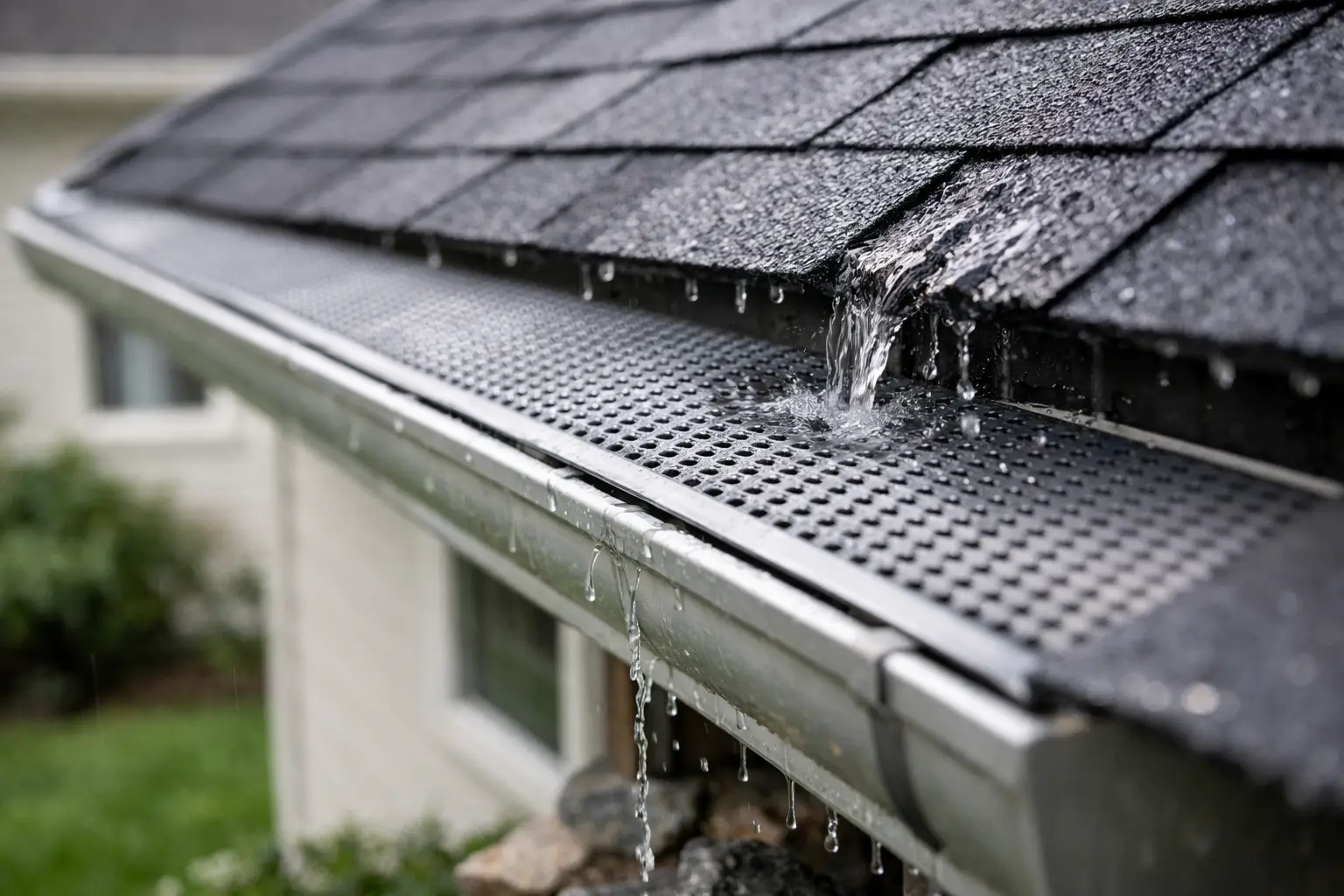
Gutter Guards to Prevent Water Damage at Home
A gutter overflow in a Pacific Northwest downpour is not a minor inconvenience. Water can run behind the gutter, soak the fascia board, spill beside the foundation, and saturate landscaping in a single storm. Properly chosen gutter guards to prevent water damage help keep rain moving through the gutter system instead of over its edge, where it can affect some of the most expensive parts of your home.
For homeowners in Southwest Washington and the Portland metro, the challenge is not just rain. Fir needles, pine needles, moss, seed pods, leaves, roof grit, and shingle granules all find their way into gutters. A guard has to handle that debris while still accepting heavy roof runoff. That is why material, design, and installation matter as much as the guard itself.
How Gutter Guards Prevent Water Damage
Gutters work by collecting water at the roof edge and directing it through downspouts to a controlled drainage area. When the trough or downspout is clogged, water follows the path of least resistance. Often, that means spilling over the front or back of the gutter.
Overflowing water can create several problems. It can stain siding, rot fascia and soffit materials, damage painted trim, and contribute to mold-prone damp areas around the roofline. At ground level, repeated overflow can erode soil, flood planting beds, and place excess moisture near the foundation. A wet basement or crawl space may have more than one cause, but poorly managed roof runoff should never be ignored.
Gutter guards reduce the amount of debris that reaches the gutter interior. With less material collecting in the trough, water has a clearer route to the downspouts. The goal is not to make a gutter system maintenance-free. The goal is to prevent routine debris from creating the kind of blockage that turns a normal rainstorm into a water-management problem.
Why Pacific Northwest Homes Need the Right Guard
Not every gutter guard performs the same way in a wet, evergreen-heavy climate. Large-hole screens may keep out leaves while allowing needles and roof grit to enter the gutter. Solid covers can work in certain conditions, but their performance depends heavily on roof pitch, water volume, and the geometry of the gutter system. A guard that looks good in a showroom may not be the best fit for a steep roof under heavy rain.
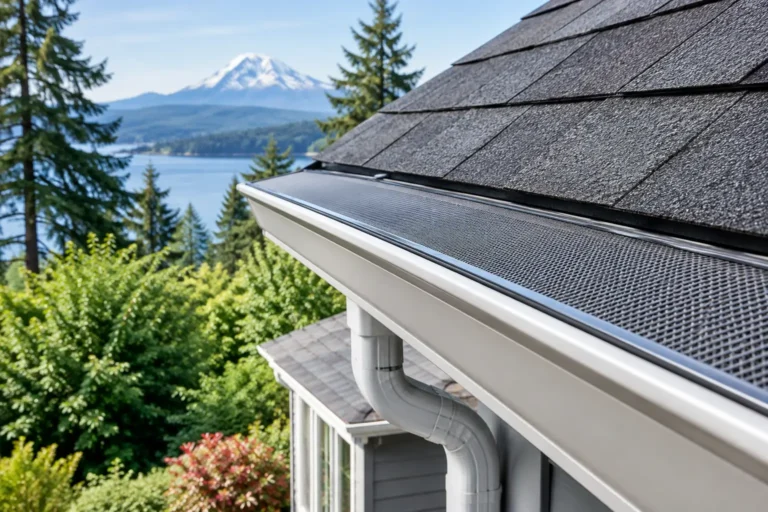
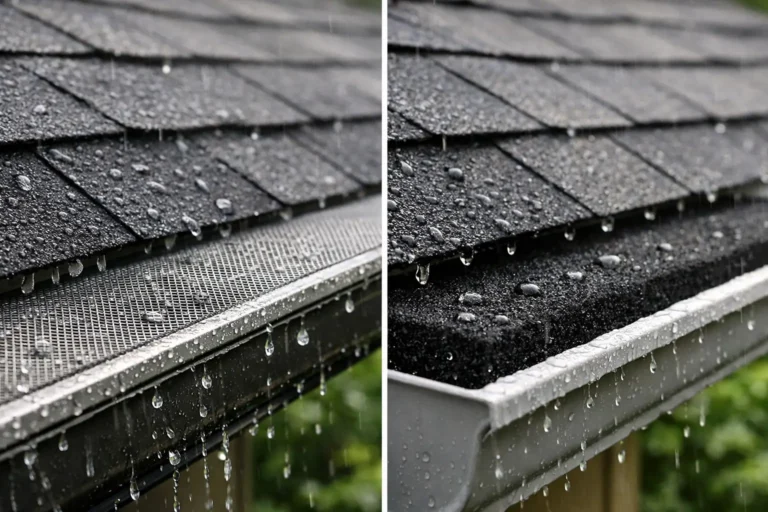
For many local homes, stainless steel micro-mesh is a practical choice. Fine mesh helps block small debris, including pine and fir needles, while allowing water to pass through the guard and into the gutter. The stainless steel surface also stands up well to long-term exposure and does not rely on a large opening that can invite debris into the system.
That does not mean every home needs the same product. Roof valleys can send concentrated sheets of water toward a short section of gutter. Low-pitch roofs, metal roofs, roofs with heavy moss growth, and homes surrounded by mature evergreens each deserve a closer look. A good recommendation starts with the roofline, debris load, existing gutter condition, and drainage layout, not a one-size-fits-all sales pitch.
The Gutter System Still Has to Be Sound
Guards cannot correct gutters that are undersized, improperly pitched, loose, or damaged. If water already sits in the trough after a storm, a guard will not solve the underlying drainage issue. Likewise, a downspout that drains too slowly can still cause backups, even when the top of the gutter is protected.
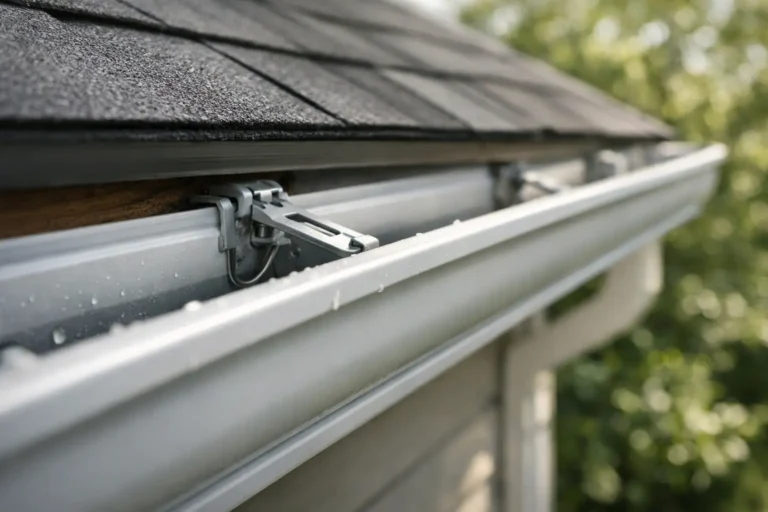
Before guards are installed, the gutter system should be checked for proper slope toward the downspouts, secure attachment to the fascia, and adequate capacity for the roof area. Seamless aluminum gutters are often a strong upgrade when an older sectional system has leaking seams, sagging sections, or recurring overflow. Hidden hangers provide additional support and help keep the gutter line stable under the weight of water and wet debris.
What to Look for in Gutter Guards to Prevent Water Damage
The best guard is one that matches the conditions around your house and is installed as part of a complete drainage system. Homeowners comparing options should focus less on broad promises and more on a few practical details.
First, consider the mesh or opening size. In areas with evergreen trees, the guard must stop needles without becoming a surface where debris simply piles up and blocks water. Fine stainless steel micro-mesh is designed to shed much of that debris while filtering water into the gutter.
Second, look at the frame and attachment method. A guard should be firmly secured and should not loosen with seasonal expansion, wind, or cleaning activity. The installation should protect the roof edge and avoid creating an unnecessary concern with shingles or flashing.
Third, ask whether the existing gutters are large enough and properly supported. Guard performance is tied directly to gutter capacity. During a hard Portland or Vancouver rain, a narrow, poorly sloped gutter can overflow regardless of how clean the inside is.
Finally, pay attention to warranty terms and who will stand behind the work. A long manufacturer warranty has value when the product is installed correctly by a contractor who understands local roof and drainage conditions. NW Gutter Protection installs Gutter Glove Pro micro-mesh systems with a 50-year transferable manufacturer warranty, along with custom-measured gutter solutions where the existing system needs more than a guard.
Installation Details That Affect Performance
Professional installation is not just about fastening material to the top of a gutter. The installer should assess roof runoff patterns, especially at valleys and transitions where water volume is highest. They should also check for gaps behind the gutter, deteriorated fascia, loose hangers, and downspout restrictions before covering the system.
A properly fitted guard sits securely along the gutter edge and roofline, with a consistent angle that supports water entry and debris shedding. Sections should be cut cleanly around corners, roof penetrations, and end caps. Small gaps at these areas can become entry points for needles and seeds, so finish work matters.
Many guard projects can be completed in one day, depending on the size and condition of the home. If gutters need replacement, the process may include removing the old system, forming seamless aluminum gutters to the home’s measurements, securing them with hidden hangers, adding downspouts, and then installing the guard. The result should be a drainage system that looks clean, moves water efficiently, and is built for years of weather exposure.
Gutter Guards Reduce Cleaning, Not Responsibility
A reputable contractor should be clear about this point: no gutter guard eliminates every maintenance task. Wind can deposit debris on top of any guard. Moss from a roof can break loose after a wet season. Roof valleys may need occasional attention when a property is surrounded by trees.
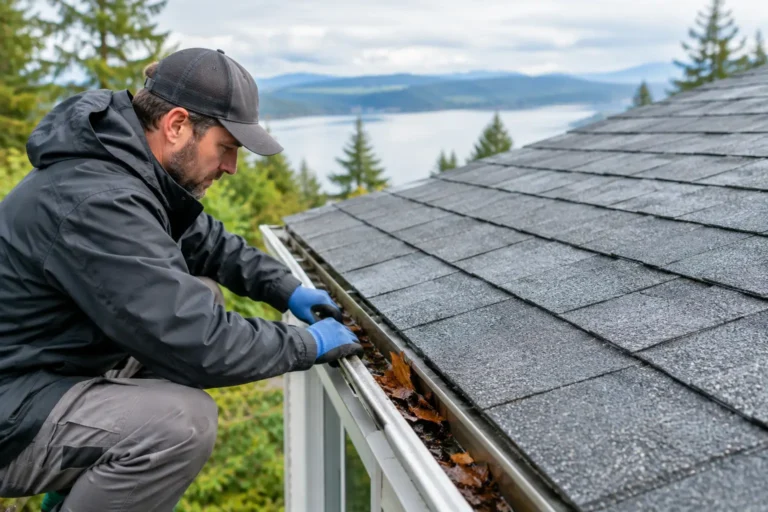
The difference is that a quality guard greatly reduces the amount of debris that reaches the inside of the gutter, where clogs are more difficult and risky to remove. Homeowners may still need to brush or blow loose material from the guard surface periodically, particularly after storms or during heavy needle drop. They should also make sure downspout outlets and underground drainage routes remain clear.
This is a worthwhile trade-off. Instead of repeated ladder work and full gutter cleanouts, maintenance becomes a simpler inspection and light surface cleanup. More importantly, the gutter system is far less likely to be packed with wet organic material when the next heavy rain arrives.
When a Guard May Not Be the Only Answer
If water is overflowing even with clean gutters, the issue may be capacity rather than debris. Larger gutters, additional downspouts, splash control, or improved drainage away from the home may be needed. A roof valley that concentrates runoff may require a different solution than the rest of the roofline.
Similarly, gutters cannot solve every foundation moisture issue. Grading, groundwater, plumbing leaks, and poor drainage at the base of the home can all contribute to damp conditions. Still, managing roof runoff is one of the most direct steps a homeowner can take to stop preventable water from being dumped near the structure.
A dry, protected home starts at the roof edge. When gutters are sized correctly, securely installed, and protected from the debris common in this region, they can do the quiet work they were designed to do through every long stretch of Pacific Northwest rain.