A Homeowner’s Guide to Replacing Old Gutters
Water spilling over a gutter during a Portland downpour is not always a simple clog. It can be a sign that the gutter has reached the end of its service life. This guide to replacing old gutters helps homeowners separate routine maintenance issues from system failures that can put siding, landscaping, foundations, and roof edges at risk.
In Southwest Washington and the Portland metro, gutters work hard. Months of steady rain, fir needles, pine needles, moss, roof grit, and windblown debris create conditions that expose weak seams, undersized downspouts, loose hangers, and poorly planned drainage. Replacing an aging system is not just a cosmetic project. Done correctly, it is a practical investment in keeping water where it belongs.
Signs Your Gutters Need Replacement, Not Another Repair
A small leak at one seam can often be sealed. A loose spike may be replaced with a proper hanger. But repeated patches usually mean the system is no longer worth repairing. The key is to look at the whole gutter run, not just the most visible problem.
Sagging is one of the clearest warning signs. Gutters should maintain a consistent slope toward the downspout. If sections bow, pull away from the fascia, or hold standing water after rain, the system may have lost its structural support. Water is heavy, especially when combined with wet evergreen debris. Older spike-and-ferrule systems commonly loosen over time, allowing the gutter to separate from the roofline.
Rust, pinholes, cracked seams, and peeling paint are also signs of material decline. Steel gutters can rust, while older aluminum sections may develop leaks at joints. You may also see water stains on siding, soil erosion below the roof edge, mildew near the foundation, or washed-out mulch. These are drainage symptoms, even if the gutter itself looks acceptable from the ground.
Pay attention to how often you clean the gutters. If they overflow shortly after cleaning, the issue could be poor pitch, inadequate downspout capacity, roof runoff volume, or a gutter profile that does not suit the home. In heavily wooded areas of Camas, Ridgefield, Hillsboro, and similar communities, recurring needle buildup can make an open-gutter system a constant maintenance task.
What to Consider Before Replacing Old Gutters
The best replacement system depends on the roof, the drainage layout, nearby trees, and the condition of the fascia. A contractor should inspect these details before recommending a material or price. A quick measurement from the ground may miss the issues that determine whether a new system performs properly.
Start With the Fascia and Roof Edge
Gutters need a sound mounting surface. If fascia boards are rotted, split, or soft from years of overflow, they should be repaired before new gutters are installed. Attaching new gutters to damaged wood only hides the underlying problem and can lead to premature failure.
The roof edge matters as well. Proper installation should account for drip edge placement so water flows into the gutter rather than behind it. Water running behind the gutter can damage fascia and soffits even when the gutter appears to be working.
Choose Materials That Fit the Climate
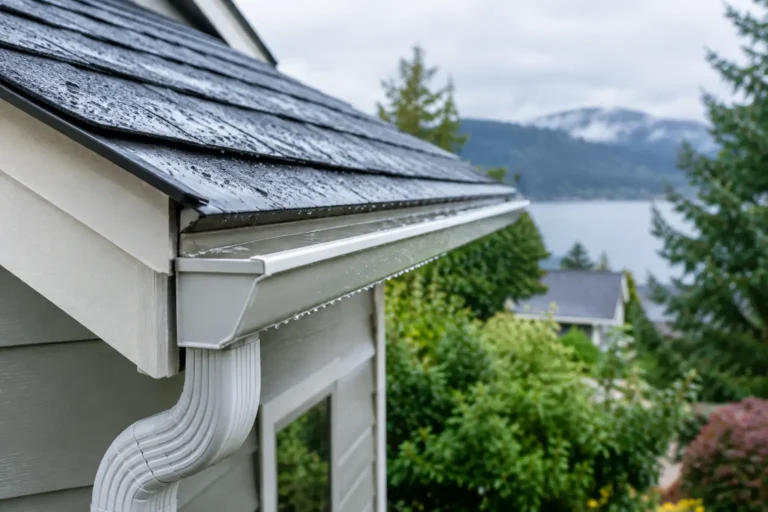
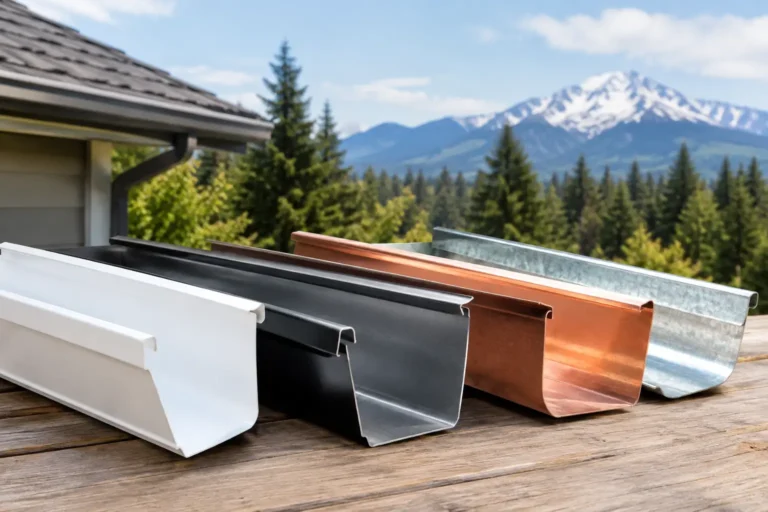
Seamless aluminum is a practical choice for most Pacific Northwest homes. It resists rust, is available in colors that complement the exterior, and eliminates the long horizontal seams found in sectional gutter systems. Fewer seams mean fewer common leak points.
Material thickness matters, but it is not the only factor. A well-installed aluminum gutter with strong hidden hangers, proper spacing, and correct slope will outperform a heavier system installed carelessly. Copper has a long lifespan and a distinct appearance, but it costs substantially more and is not necessary for every home. Vinyl is inexpensive, yet it is generally a poor long-term choice for homeowners who want strength, a clean fit, and dependable performance through seasonal weather changes.
Size the Gutters and Downspouts for Real Runoff
Many homes use 5-inch K-style gutters, which can work well on modest roof areas. Larger or steeper roofs may need 6-inch gutters, larger downspouts, or additional downspout locations to handle runoff without overflow. This is especially relevant where a roof valley concentrates a large amount of water into one section.
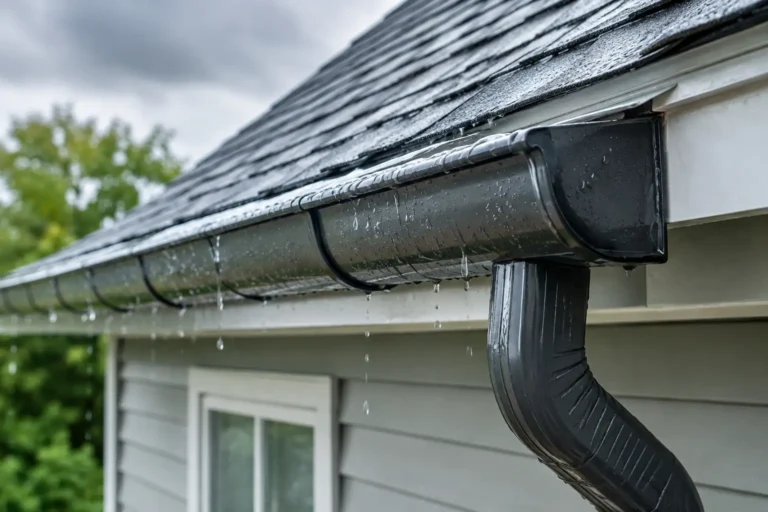
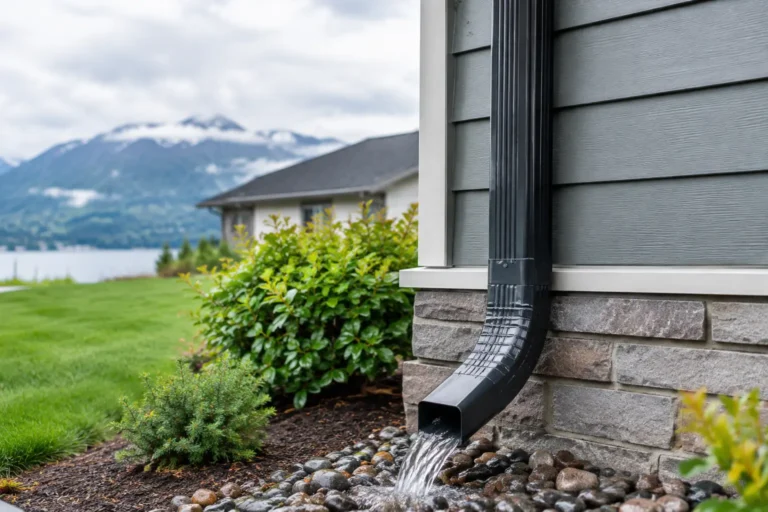
Downspouts deserve as much attention as the gutters themselves. A gutter can be perfectly installed and still overflow if too little water can exit the system. Downspouts should be positioned to move water away from walkways, driveways, and the foundation. Extensions or buried drainage may be appropriate, but the right approach depends on lot grading and local drainage conditions.
Why Seamless Gutters Are Usually Worth It
Sectional gutters are assembled from pre-cut pieces. Every connection is another potential place for leaking, debris collection, or separation. Seamless gutters are formed on-site to the exact length of each roofline, with seams limited mainly to corners and end caps.
That does not mean seamless gutters are maintenance-free. Leaves and roof grit can still collect, and corners still need careful sealing. But custom-formed runs create a cleaner system with fewer weak points than a series of joined sections. For homeowners planning to stay in the home, the added durability and appearance are usually worth the investment.
Installation quality is what makes the material perform. Look for secure hidden hangers, proper fastener spacing, a consistent pitch, sealed corners, and downspouts that are firmly attached. The gutter should sit correctly beneath the roof edge without interfering with shingles or trapping water against the fascia.
Should You Add Gutter Guards During Replacement?
Replacing gutters is the most efficient time to consider gutter protection. Installing guards later is possible, but a full replacement gives the installer a chance to build the gutter and guard system together around the roofline, drainage needs, and local debris conditions.
Not all guards perform the same way in the Pacific Northwest. Large-hole screens may keep out leaves while allowing fir needles, roof grit, and shingle particles into the gutter. Some solid covers can move water too quickly past the opening during heavier rain if they are not designed and installed correctly. Cheap foam inserts often trap organic material and can become a maintenance issue of their own.
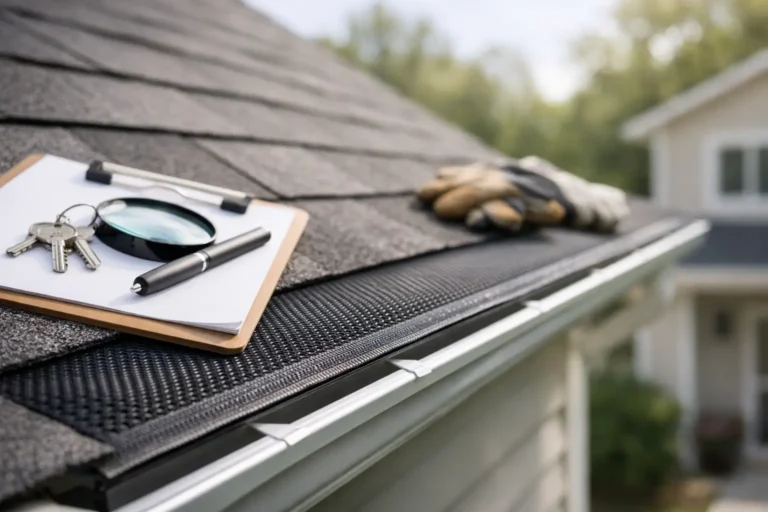
Fine stainless steel micro-mesh guards are often a better fit for homes surrounded by conifers because they filter smaller debris while allowing water to enter. Performance still depends on roof pitch, the volume of runoff, and installation details. A guard is not a substitute for properly sized gutters and downspouts, and occasional visual checks are still sensible. It should, however, significantly reduce the repeated cleaning burden for many homeowners.
NW Gutter Protection installs custom-measured seamless aluminum gutters and stainless steel micro-mesh protection designed for the rain and evergreen debris common across this region. The goal should be a system that works together, not a guard added to an already failing gutter.
What a Professional Gutter Replacement Should Look Like
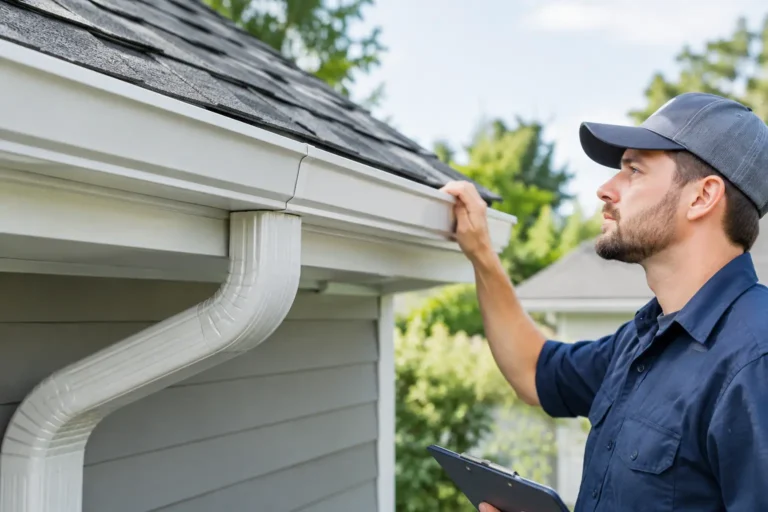
A straightforward replacement begins with an on-site assessment. The installer should measure roof runs, identify valleys and high-flow areas, inspect the fascia, discuss downspout placement, and ask about recurring overflow or drainage concerns. This is where a homeowner gets useful answers, not a high-pressure sales presentation.
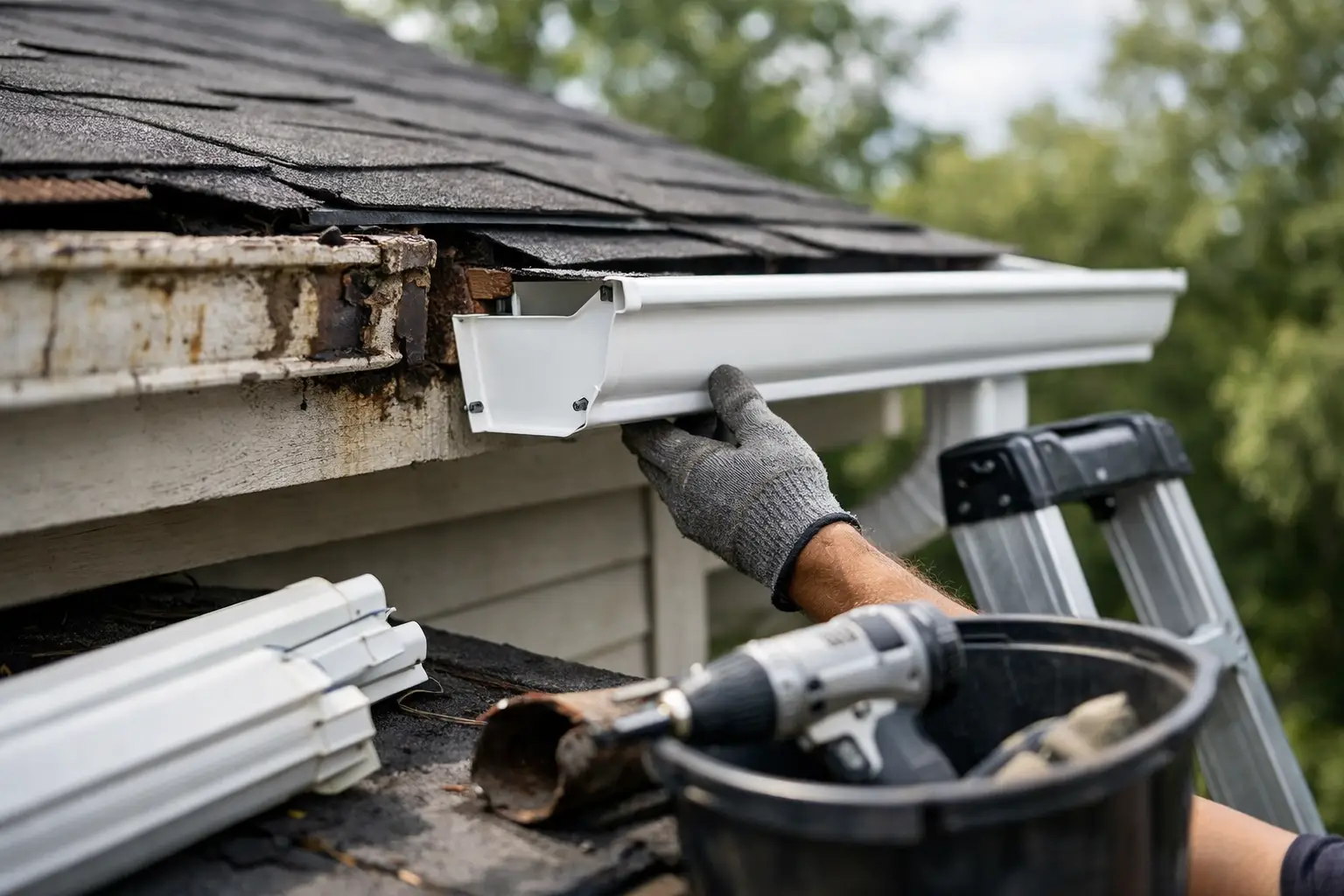
On installation day, the crew should remove old materials without damaging the roof edge or landscaping. New seamless gutters are formed to fit the home, mounted with hidden hangers, pitched toward downspouts, and tested for drainage. The work area should be cleaned before the crew leaves, including old gutter pieces and fasteners.
Many standard residential projects can be completed in one day. Larger homes, fascia repairs, complex rooflines, or drainage upgrades may take longer. The important point is not speed by itself. It is whether the work is measured, secured, and finished correctly the first time.
A Few Questions to Ask Before You Hire
Before choosing a contractor, ask what gutter size is recommended and why, how hangers are installed, whether the system is seamless, and how downspout locations will be determined. Ask what happens if fascia damage is found and what warranty applies to both materials and workmanship.
You should also ask whether the proposed gutter guard is suited to pine and fir needles, rather than assuming every guard offers the same level of protection. Clear answers are a good sign. If a contractor cannot explain the drainage plan in plain language, it is reasonable to keep looking.
A new gutter system should do more than make the roofline look finished. It should move water reliably through the heaviest rain, stay secure under wet debris, and give you one less exterior maintenance problem to worry about when the next storm arrives.