How Gutters Protect Roof Edges From Water Damage
A roof can look perfectly sound from the street while water is quietly damaging the boards at its lower edge. In Southwest Washington and the Portland metro area, months of steady rain can expose small drainage problems quickly. Understanding how gutters protect roof edges helps homeowners spot when a gutter system is doing its job and when it is putting the roofline at risk.
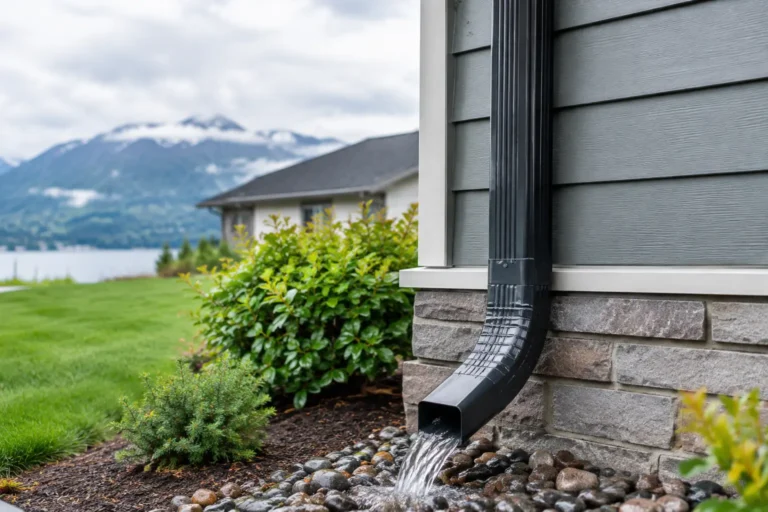
Gutters are not just there to keep water off the driveway. They collect runoff at the eaves, move it through downspouts, and discharge it away from the house. When that process works properly, the roof edge, fascia, soffit, siding, foundation, and landscaping all stay drier. When it does not, water follows the path of least resistance – often behind or over the gutter.
How Gutters Protect Roof Edges in Heavy Rain
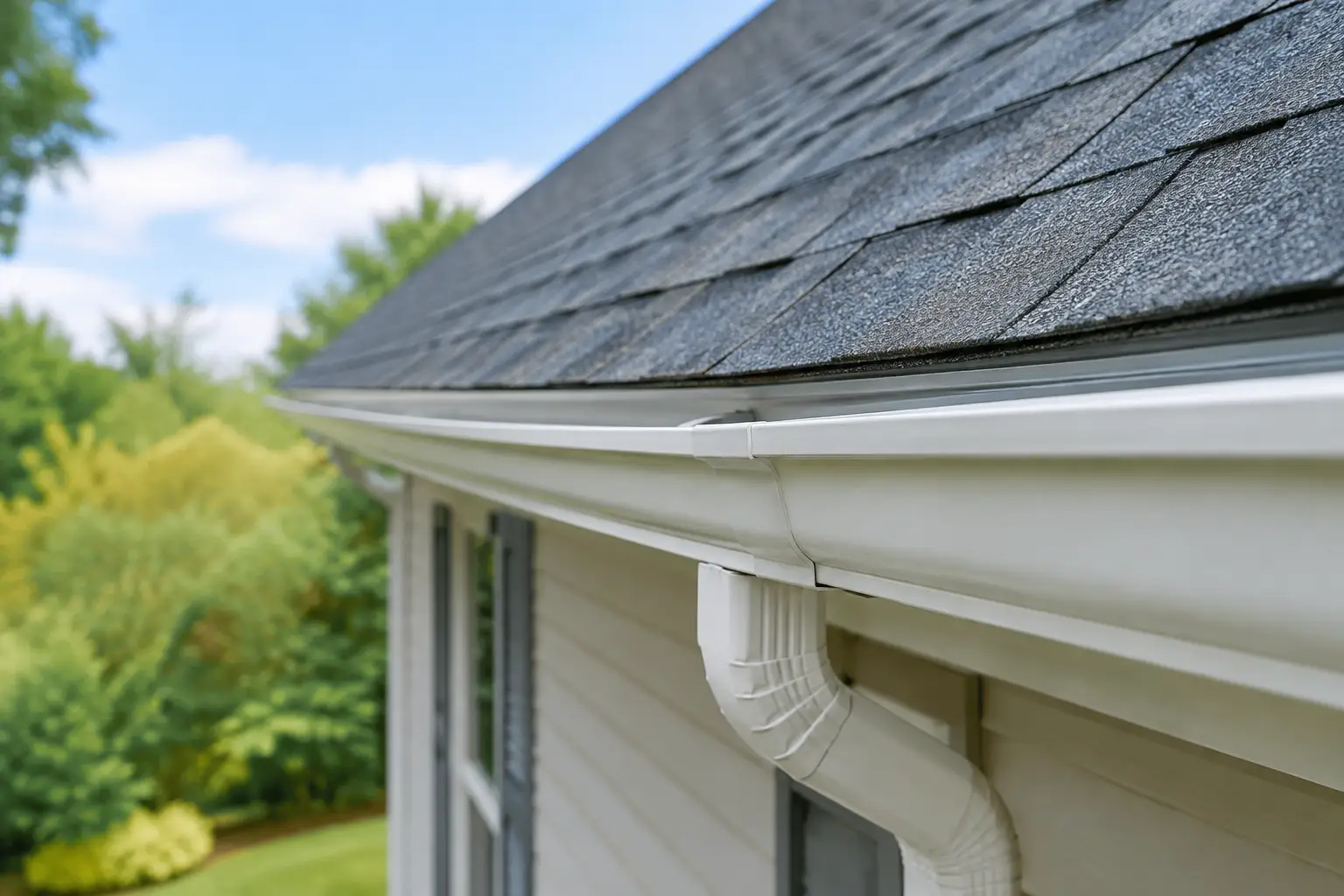
The roof edge is where shingles, roof decking, metal flashing, fascia boards, and gutters meet. It is an exposed transition point, and it receives every gallon of rain that runs down the roof. A properly sized and installed gutter catches that runoff before it can cascade over the eaves.
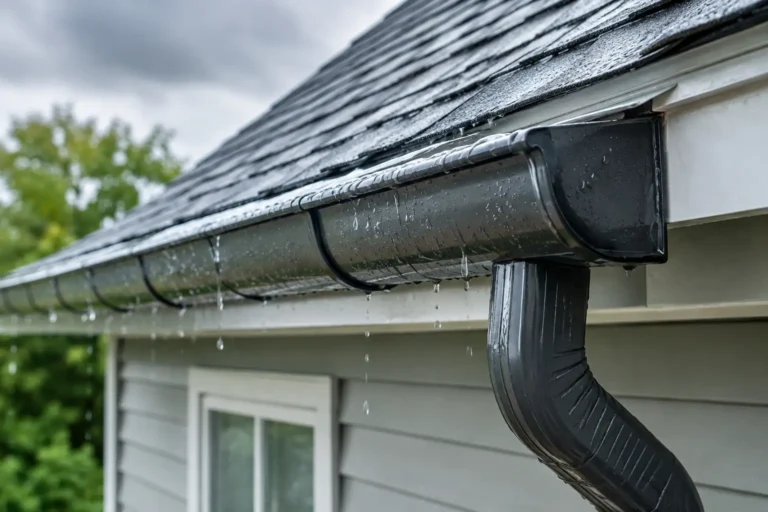
Instead of pouring directly onto the fascia board, water enters the gutter trough and travels to a downspout. This limits repeated wetting of the wood behind the gutter and reduces splashback against the roofline. In a region with frequent rainfall, that controlled drainage matters far more than it might in a dry climate.
Gutters also help prevent the concentrated sheets of water that can wash away soil below the eaves. As soil erodes, it can expose foundation areas, undermine planting beds, and create muddy channels alongside the home. The problem may start at the roof edge, but the effects can spread across the property.
The Fascia Is Often the First Part to Fail
Fascia is the horizontal board mounted at the end of the rafters. It gives the roof edge a finished appearance and provides the mounting surface for most gutter systems. Because it sits directly behind the gutter, it is especially vulnerable when water backs up or spills over.
A clogged gutter can hold standing water against the fascia. Overflow can soak the board from the front, while water that gets behind the gutter can wet it from the back. Over time, painted wood may peel, soften, and rot. Once the fascia loses strength, gutter fasteners can begin to pull loose under the combined weight of water, wet debris, and snow or ice.
This is one reason hidden hangers and solid attachment points matter. A gutter should not simply look straight on installation day. It needs to remain securely pitched and supported through years of rain, leaf buildup, and seasonal debris. In the Pacific Northwest, pine and fir needles make that demand more serious because they can form dense mats that hold moisture and block water flow.
Gutters Help Keep Water Out of the Roof Assembly
Roof shingles and underlayment are designed to shed water downward. At the eaves, flashing and drip edge direct that water into the gutter. When the gutter is positioned correctly beneath the drip edge, runoff has a clear path out of the roof system.
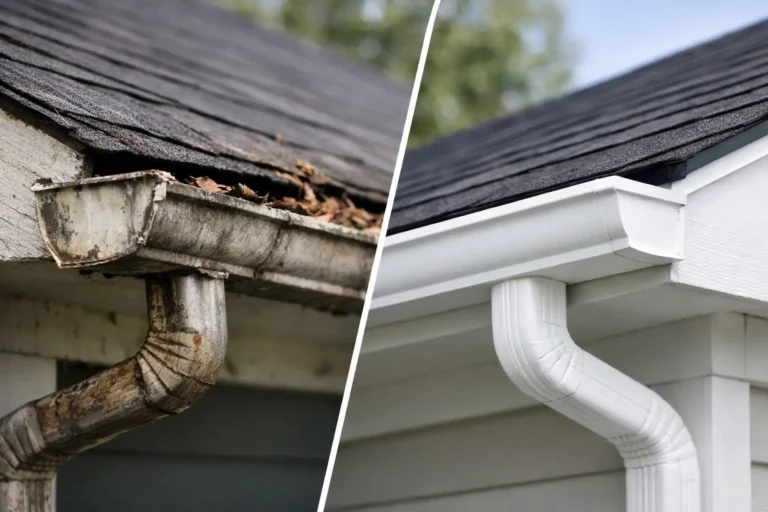
If a gutter is installed too low, too far from the fascia, or without proper flashing details, water can miss the trough or run behind it. That can lead to staining, rot, and moisture intrusion around the roof deck. In more advanced cases, homeowners may notice sagging gutter sections, peeling trim paint, dark stains on soffits, or a persistent damp smell near exterior walls.
The fix depends on the cause. Sometimes a gutter needs cleaning and a pitch adjustment. Other times, the existing system is undersized, improperly installed, or attached to fascia that has already deteriorated. Replacing only a visibly damaged section may not solve the drainage issue if the rest of the system still directs water poorly.
Drip Edge and Gutters Work as a Team
Drip edge is the metal flashing at the lower edge of a roof. Its job is to guide water away from the roof deck and toward the gutter. It is a small detail with a large role in protecting the edge of the roof.
A correctly placed gutter should receive water from the drip edge without interfering with the roof covering or trapping water against the fascia. There is no one-size-fits-all placement for every roof. Roof pitch, shingle condition, eave construction, and the size of the gutter all affect the right installation approach.
This is where experienced measurement and installation make a difference. The goal is controlled drainage, not simply hanging a metal channel below the roofline.
Overflow Is More Than a Gutter Cleaning Problem
When water spills over the front of a gutter during a hard rain, the immediate issue may seem obvious: the gutter is clogged. That is often true, especially beneath evergreen trees. But overflow can also point to a system that does not have enough capacity, lacks enough downspouts, has poor slope, or has a blocked underground drain connection.
Watch for water spilling over at the same location every time it rains. A single overflow point may indicate a clogged downspout or a low spot in the gutter. Overflow across a long section can suggest inadequate gutter size or insufficient drainage outlets. Water running behind the gutter is particularly urgent because it threatens the fascia attachment area.
Homeowners should also pay attention to gutters that appear full long after the rain stops. Standing water is a sign that the gutter is not draining correctly. It adds unnecessary weight, invites corrosion and debris buildup, and leaves the roof edge exposed to repeated moisture.
Gutter Guards Can Protect the Roofline by Keeping Water Moving
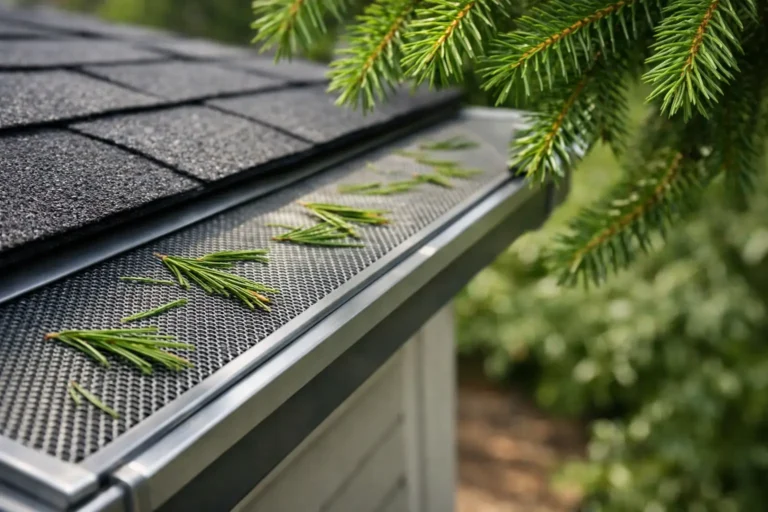
Gutter guards do not replace a properly designed gutter system. They help preserve its performance by keeping leaves, roof grit, pine needles, and other debris from collecting inside the trough. For many homes in Vancouver, Camas, Ridgefield, Portland, and nearby communities, that can mean fewer clogs and fewer times water is forced over the gutter edge.
The guard material and installation method matter. Large-hole screens may allow small needles, shingle grit, and seed pods into the gutter. Some covers can shed water poorly during heavy rainfall if they are not suited to the roof pitch and local rain intensity. A quality stainless steel micro-mesh guard is designed to filter fine debris while allowing water into the system, but it still needs correct fitting at the roofline.
There is also a practical trade-off. Even high-quality guards need occasional visual checks, particularly after windstorms or heavy pollen and needle drop. The difference is that maintenance becomes a matter of checking the system and clearing the roof surface, rather than repeatedly digging wet debris from inside the gutter.
Installation Details That Protect Roof Edges
A dependable gutter system starts with accurate measurements and proper pitch. Gutters need enough slope to move water toward each downspout, but not so much that they look noticeably crooked along the fascia. Downspout locations should match roof runoff volume and the layout of the home, not just the easiest place to install them.
The attachment method is equally important. Strong hidden hangers placed at appropriate intervals help keep the gutter aligned and stable. This is especially valuable on long runs and homes surrounded by trees, where wet debris can add substantial weight before it is cleared.
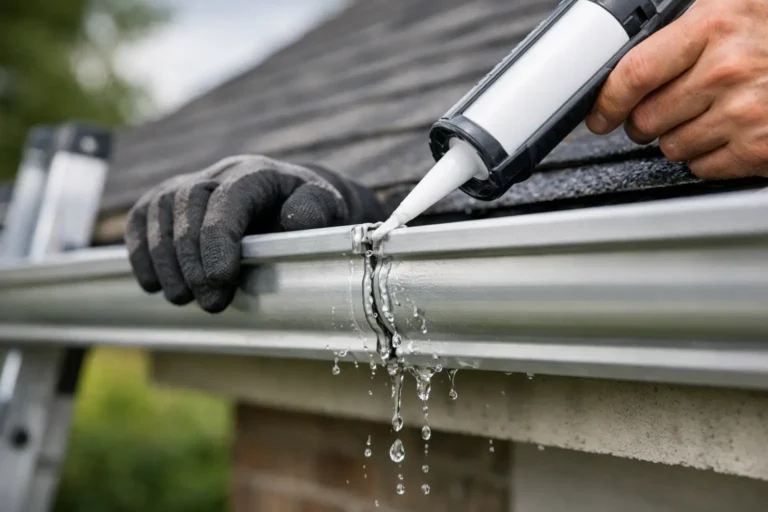
Material choice also affects long-term performance. Custom-formed aluminum gutters reduce the number of joints along a run, which reduces potential leak points. However, even a well-made gutter can fail early if it is installed over rotted fascia, pitched incorrectly, or paired with inadequate downspouts. The system has to work as a whole.
At NW Gutter Protection, that means looking beyond the visible gutter line and considering the roof edge, water flow, debris load, and the conditions the home faces through a Northwest winter.
Signs Your Roof Edges Need Attention
A quick look during or shortly after rain can reveal a lot. Check for water running behind the gutters, spills over the front edge, sagging sections, loose spikes or fasteners, peeling paint on fascia, and dark streaks on soffits or siding. Look at the ground below as well. Deep splash marks, washed-out mulch, and channels in the soil show that runoff is not being controlled.
If you see any of these signs, do not assume the solution is always a simple cleaning. Clearing a clog is worthwhile, but recurring overflow deserves a closer look at capacity, slope, downspout placement, and fascia condition. Catching the issue before wood rot spreads is usually less disruptive and less expensive than repairing a damaged roofline later.
A gutter system should make hard rain uneventful. When water is collected, directed, and discharged where it belongs, the roof edge stays drier, the exterior holds up better, and you can spend the next storm listening to the rain instead of watching for leaks.