Foam Guards Versus Mesh Guards for Gutters
A gutter guard that looks fine in a dry showroom can fail quickly under a Pacific Northwest roof. Our rain is frequent, our evergreens shed year-round, and roof grit has a way of finding every small opening. When homeowners compare foam guards versus mesh guards, the real question is not which option is cheapest today. It is which one can keep water moving when fir needles, moss, shingle granules, and wet leaves arrive together.
Foam inserts and mesh screens both aim to reduce gutter cleaning. They do it in very different ways, and those differences matter on homes in Vancouver, Camas, Portland, Beaverton, and throughout the region. Here is a practical look at what each guard is designed to do, where it falls short, and why installation quality should be part of the decision.
How Foam Gutter Guards Work
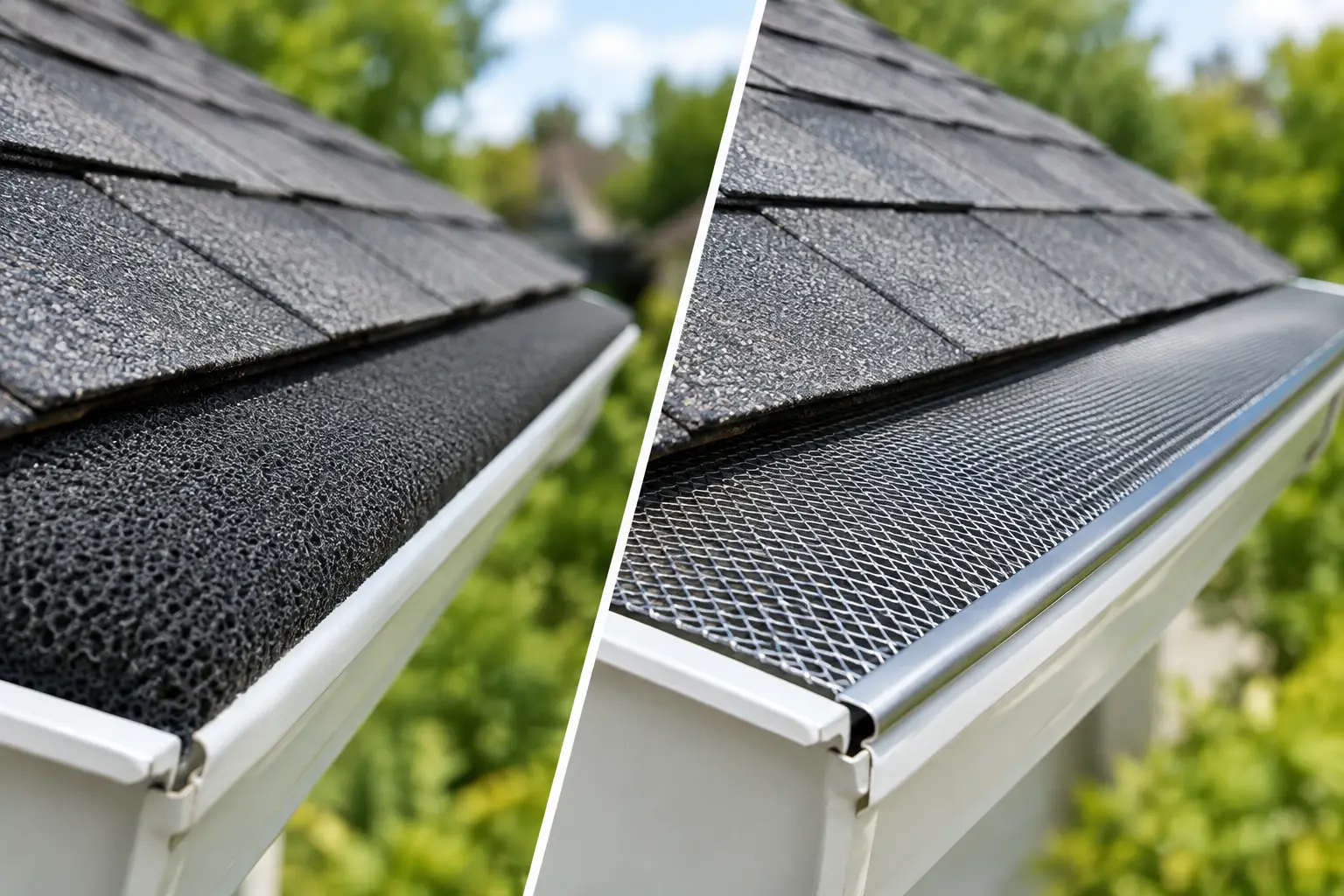
Foam guards are porous wedges or blocks that sit inside the gutter trough. Rainwater is intended to pass through the foam and into the gutter, while leaves and larger debris stay on top and eventually blow away or break down.
Their main advantage is simple installation. A foam insert can often be placed in an existing gutter without fasteners, cutting, or changes to the roof edge. That makes foam guards a common do-it-yourself option and a lower-cost choice upfront.
For a home with a few broadleaf trees and light debris, foam can reduce the amount of large material collecting inside the gutter. It can also be useful as a temporary measure when a homeowner needs some immediate protection before a larger gutter project.
The issue is that foam is not a filtering surface that separates debris from water. It is the material water must travel through. Once the pores begin holding roof grit, organic matter, algae, or decomposing needles, drainage capacity can decline. In a long, soaking rain, water needs a clear path into the gutter and downspout. A clogged or saturated foam insert can interfere with that path.
How Mesh Gutter Guards Work
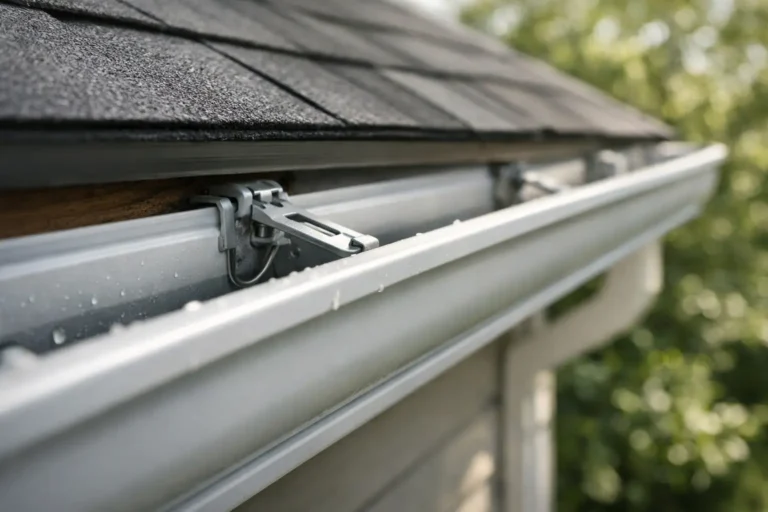
Mesh guards cover the gutter opening with a fine filtering surface. Water enters through the mesh, while leaves, needles, and larger debris remain above it. A properly designed micro-mesh guard is supported by a rigid frame and installed securely along the gutter and roofline.
The key difference is separation. Rather than asking water to move through a thick absorbent material, mesh creates a barrier over the gutter. Debris is kept outside the trough, where wind and normal weather can help move it off the roof edge. The gutter remains open beneath the guard to carry runoff toward the downspouts.
Not all mesh products are equal. A loose screen with large openings may allow pine needles and roof grit through. A light plastic screen can sag or become brittle. For Pacific Northwest conditions, stainless steel micro-mesh with a durable frame is generally the more dependable design because it can filter fine debris without relying on foam that can hold moisture and organic buildup.
Foam Guards Versus Mesh Guards in Heavy Rain
Heavy rain exposes the biggest practical difference between the two systems. Foam can initially accept water well, but performance changes as the insert becomes dirty. Fine shingle granules, pollen, moss particles, and decayed material work down into the pores. The foam may look relatively clean from the ground while water is actually being slowed at the gutter opening.
Mesh guards can also collect debris on top, especially beneath pine, fir, cedar, and maple trees. No gutter guard makes exterior debris disappear. The advantage of a quality micro-mesh design is that the debris stays on the surface instead of embedding throughout the gutter guard material. Water still has thousands of small entry points across the guard, provided the mesh is clean and correctly pitched.
Roof pitch, gutter size, and installation detail matter here. Water moving quickly off a steep roof must be directed into the gutter, not allowed to overshoot it. The guard needs to sit at the correct angle, attach securely, and work with the home’s fascia and drip edge. A good product installed poorly can still allow runoff problems.
Pine Needles, Roof Grit, and Organic Buildup
Pine and fir needles are a major reason homeowners seek professional gutter protection in this area. They are narrow enough to slip through many basic screens, and they tend to lock together into dense mats when wet. Foam guards may stop some needles at the surface, but needles can also press into the foam and hold damp debris against it.
That damp environment is not ideal over time. Foam can retain moisture, collect sediment, and provide a place for organic material to break down. Depending on sun exposure and tree coverage, homeowners may still need to remove and rinse the inserts or replace them when they no longer drain well.
Fine stainless steel mesh is better suited to stopping needles and roof grit before they reach the gutter interior. The surface will still need occasional visual checks, particularly after a major windstorm or a heavy leaf drop. But surface maintenance is different from pulling saturated material out of a gutter channel that is meant to be carrying water.
Moss deserves attention as well. Moss growth on a roof should be addressed at the roof level, since gutter guards cannot correct a roof maintenance issue. Still, a guard that keeps moss fragments, grit, and needle debris out of the gutter can help protect downspouts from the dense clogs those materials create.
Durability and Long-Term Maintenance
Foam guards are usually considered a consumable product. Heat, ultraviolet exposure, moisture, and debris can cause the material to degrade over time. The exact lifespan varies with the product and the conditions around the home, but replacement should be expected rather than treated as an exception.
Mesh systems cost more upfront because they use stronger materials and require more careful fitting. A professionally installed stainless steel micro-mesh guard should be fastened to remain stable through seasonal weather and built to work with the gutter system instead of simply resting inside it. That durability matters when you are trying to reduce repeated maintenance, not just delay the next cleaning.
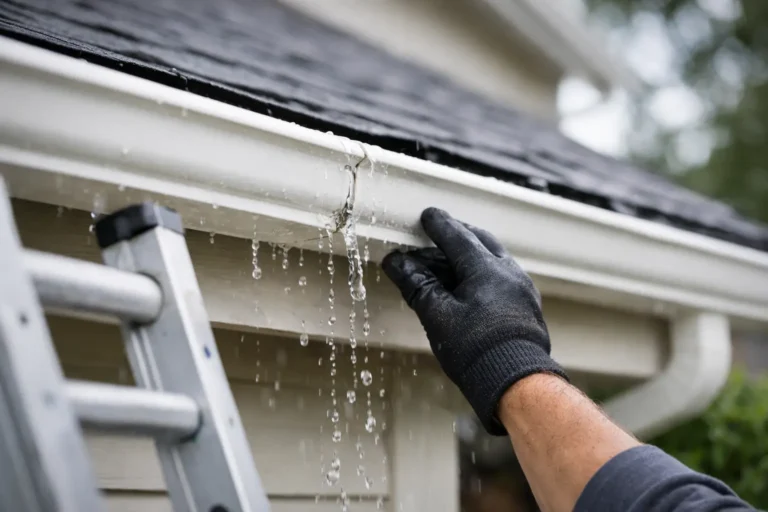
A guard is only one part of the system. Undersized gutters, loose spikes, poor gutter slope, leaking corners, and inadequate downspouts can all cause water problems regardless of the guard type. On an older home, it may make more sense to correct those fundamentals before or during guard installation.
Cost: Initial Price Versus Cost Over Time
Foam inserts are less expensive at the start, particularly for homeowners comfortable working on ladders. That lower purchase price is their clearest benefit. However, the value calculation changes if the foam needs frequent cleaning, begins restricting water flow, or requires replacement after a few seasons.
Mesh guards have a higher initial cost, especially when custom-fitted to seamless aluminum gutters. In return, homeowners are investing in a longer-term filtering system, professional attachment, and a solution designed around their roofline and drainage needs. For homes surrounded by evergreens or dealing with recurring overflow, the higher upfront investment can be easier to justify.
The right answer depends on the property. A lightly treed home with simple gutters may get acceptable short-term help from foam. A home under firs and pines, or one where overflowing gutters threaten landscaping, siding, foundations, or walkways, usually needs a more durable approach.
What Professional Installation Changes
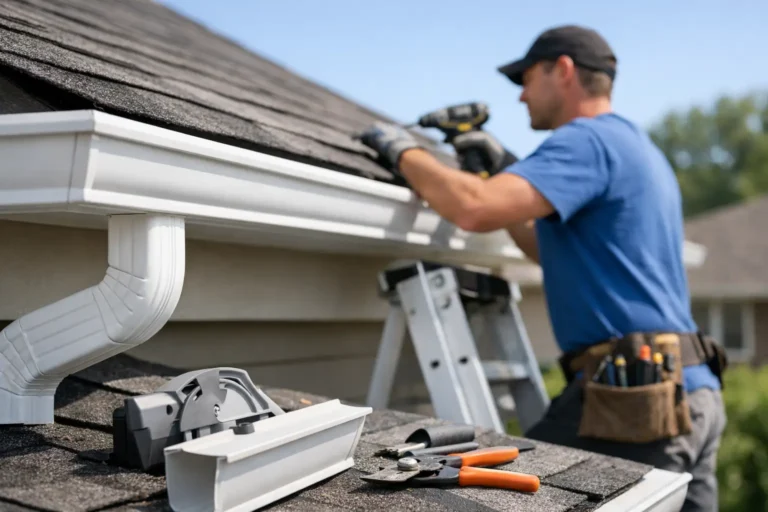
Professional installation is not just about putting a guard in place. It starts with evaluating the gutter itself. The installer should look for correct pitch, secure hangers, proper downspout placement, roof runoff patterns, and signs of existing water damage. Gutters should be cleaned before guards are installed, not covered over with old debris.
At NW Gutter Protection, the goal is to match the guard and gutter system to the home’s actual conditions, rather than sell the same answer for every roof. Premium stainless steel micro-mesh guards are custom fitted, and the work should leave the system ready for the rain it will face next week, not just the sales appointment it passed today.
For homeowners considering foam guards versus mesh guards, ask a straightforward question: how much ongoing work are you trying to avoid, and what kind of debris reaches your roof? A guard that fits the local climate, is installed on a sound gutter system, and keeps water moving is the one that protects your home when the forecast turns wet.