
How Often Should Gutters Be Cleaned in the PNW?
A gutter can look clear from the ground and still be one hard rain away from overflowing. In Southwest Washington and the Portland metro, pine and fir needles, roof grit, moss, and windblown leaves can settle in places that are hard to see. So, how often should gutters be cleaned? For many Pacific Northwest homes, the practical answer is at least twice a year, with more frequent checks for properties under heavy tree cover.
That schedule is not about making a chore list longer. It is about keeping water moving away from your roofline, siding, foundation, and walkways when the rain starts coming down in earnest.
How Often Should Gutters Be Cleaned? Start With Twice a Year
For a typical home with moderate tree coverage, clean and inspect gutters once in late spring and again in late fall. The spring cleaning removes winter debris before dry weather bakes it into the gutter channel. The fall cleaning should happen after the biggest leaf drop, but before prolonged winter storms put the system under its heaviest demand.
In this region, twice yearly is a baseline, not a guarantee. A home surrounded by mature firs, pines, cedars, or deciduous trees may need attention three or four times per year. Evergreen needles do not wait for autumn. They shed throughout the year, collect in corners, and can build a dense mat over a downspout opening surprisingly quickly.
A property with little nearby tree cover may get by with two thorough inspections and only one full cleaning in a lighter year. Even then, do not skip the fall check. Roof grit, small branches, and windblown debris can still block a downspout or slow drainage.
Your Property Determines the Real Cleaning Schedule
The calendar is useful, but your roof, landscaping, and local exposure matter more. Gutters on a single-story ranch home with open surroundings are easier to monitor and generally collect less debris than gutters on a two-story home tucked beneath tall conifers.
Tree type is one of the biggest factors. Broad leaves can pile up quickly in fall, while pine and fir needles are more persistent. Their narrow shape lets them slip into gutter openings, settle along seams, and catch other debris. Cedar debris can be especially stubborn when it becomes wet and compressed.
Roof condition also changes the equation. Asphalt shingles naturally shed granules over time, especially on aging roofs. That roof grit settles at the bottom of the gutter, where it mixes with organic material and turns into a heavy, muddy layer. It may not create a visible clog right away, but it reduces capacity and can hold moisture against the gutter system.
Consider the slope of the roof and the design of the valleys, too. A large roof valley can send a concentrated rush of water and debris into one short gutter run. That area may need a mid-season inspection even if the rest of the house is draining properly.
Signs You Should Clean Gutters Before the Next Scheduled Visit
Waiting for the next seasonal cleaning is not always the right call. Water behavior during and after rain gives you useful information about what is happening inside the system.
Watch for these warning signs:
- Water spilling over the front or back edge of the gutter during rain
- A downspout that trickles instead of releasing a steady stream of water
- Plants, moss, or small seedlings growing from the gutter channel
- Dark staining on fascia boards, siding, or the exterior wall below the gutter
- Pools of water near the foundation or erosion beneath downspout outlets
- Gutters that sag, pull away from the fascia, or show standing water days after rain
Overflow does not always mean the gutter itself is full. The downspout may be blocked underground or at the elbow, or the gutter could be improperly pitched. Still, debris is the first thing to check because it is the most common cause and the easiest issue to prevent.
Why Missed Cleanings Cause More Than a Mess
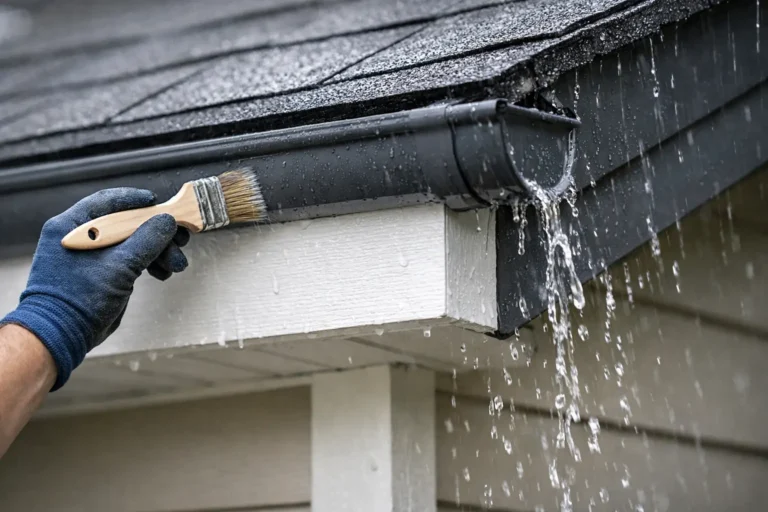
Gutters are a controlled drainage system. When they clog, water looks for another route. It can flow behind the gutter and wet the fascia, run down siding, saturate planting beds, or collect near the foundation. In a wet climate, repeated exposure is what turns a small maintenance problem into repair work.
Heavy debris also adds weight. Wet leaves, needles, and roof grit can create a dense load that strains hangers and fasteners. If the gutter begins to pull away, water can get behind it more easily. Correct installation with properly spaced hidden hangers helps a system carry normal rain loads, but no gutter is designed to hold a season’s worth of wet debris.
Clogs can also create slippery areas near entries and driveways when downspouts overflow or discharge in the wrong place. During colder stretches, that excess water may freeze. Keeping the system clear supports safer drainage around the home as well as protection for the structure itself.
Gutter Guards Reduce Cleaning, But They Do Not End Inspections
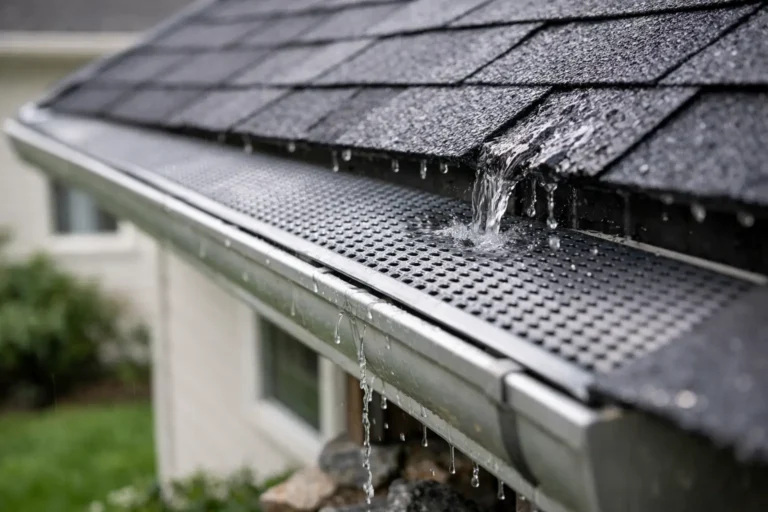
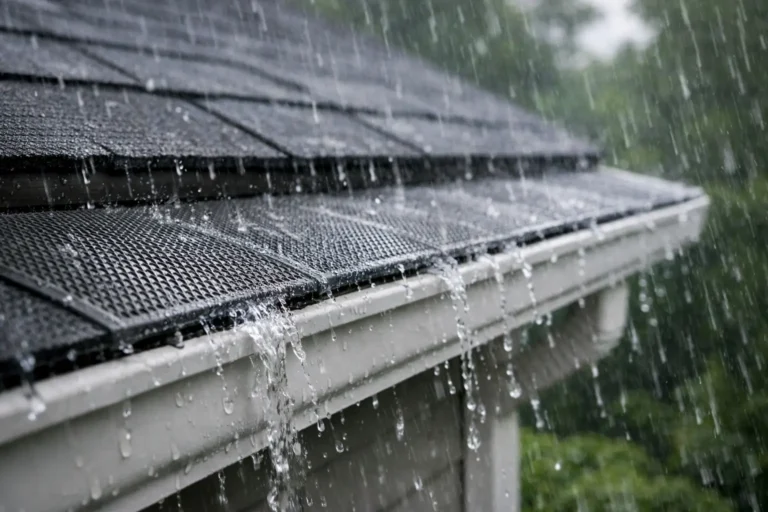
A well-designed gutter guard can make a major difference for homes under evergreen trees. Premium micro-mesh systems are built to keep out pine needles, leaves, and roof debris while allowing water to enter the gutter. That means less material inside the channel and far fewer full cleanouts for most homeowners.
But a guard is not a reason to ignore the gutter system. Fine roof grit, moss, and small particles can collect on top of mesh over time. Valleys may shed debris onto one section faster than rain can wash it away. Downspouts and underground drains still need to be checked for clear flow.
The trade-off is straightforward: quality gutter protection can greatly reduce dangerous ladder work and recurring cleanouts, but it works best with periodic visual inspections. On a heavily wooded Pacific Northwest property, inspect protected gutters at least once or twice a year and after major windstorms. If debris is resting on the guard, a light brushing or professional service may be all that is needed.
Product choice and installation details matter here. Guards that are poorly fitted, improperly pitched, or installed without accounting for roof valleys can create their own drainage problems. A system should be custom measured for the home and installed to manage the volume of water common in regional storms.
A Practical Gutter Maintenance Routine for PNW Homes
A simple routine prevents most surprises. In late spring, inspect the gutter line after winter weather has passed. Remove any debris, flush the gutters, and confirm that each downspout is carrying water away from the foundation. Look for loose fasteners, separated seams, and areas where water stands.
In fall, check again after nearby trees have dropped most of their leaves. Homes with evergreen cover should add a quick inspection after a severe wind event or several days of heavy rain. You are looking for overflow, debris dams near downspout openings, and material caught in roof valleys.
While cleaning, do not overlook downspout extensions and splash blocks. A perfectly clean gutter still cannot protect the house if the water is released directly next to the foundation. The goal is controlled drainage from the roof all the way to a suitable discharge area.
When to Call a Professional
Gutter work becomes less of a do-it-yourself job when the home is two stories, the roof is steep, access is limited, or power lines and uneven ground complicate ladder placement. It is also smart to bring in a professional when you see sagging sections, rotted fascia, persistent overflow, or water leaking behind the gutter.
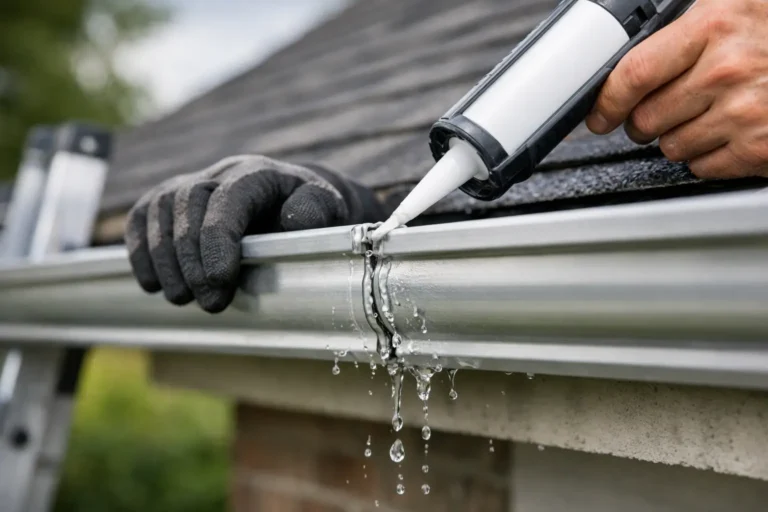
A professional inspection can separate a simple cleaning issue from a system issue. Sometimes the answer is a blocked downspout. Other times, undersized gutters, poor slope, weak fastening, or a badly placed downspout are the real reasons water keeps spilling over.
For homeowners who are tired of repeated needle cleanouts, NW Gutter Protection can assess whether seamless gutters and stainless steel micro-mesh protection make sense for the property’s tree cover, roof design, and drainage needs. The right recommendation should be based on what the home actually faces, not a one-size-fits-all sales pitch.
The best time to deal with gutter maintenance is before the next long stretch of rain, when a small amount of debris is still a simple fix. A clear path for water is one of the quietest, most practical ways to protect a home year after year.