
What Determines Your Seamless Gutter Value?
A gutter system earns its keep on the days you would rather not think about it: hard rain hitting a mossy roof, fir needles collecting in the valleys, and water moving quickly toward the foundation. Seamless gutter value is not simply the price per foot. It is the long-term value of a system that captures runoff, stays securely attached, drains correctly, and requires less attention through Pacific Northwest weather.
For homeowners in Southwest Washington and the Portland metro, that distinction matters. A low initial price can look attractive until overflowing water stains siding, erodes landscaping, or finds its way behind fascia boards. The better question is not, “What do gutters cost?” It is, “What am I getting for the money, and will it hold up where I live?”
What Creates Real Seamless Gutter Value?
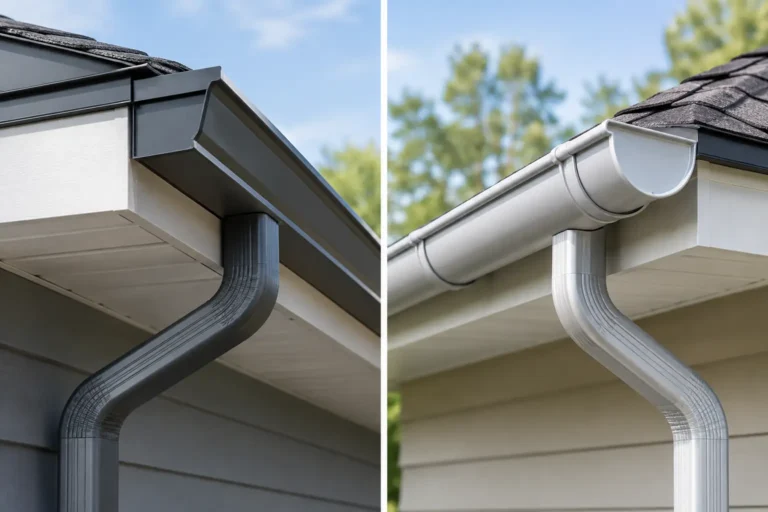
Custom-formed aluminum gutters are made to the measured length of your roofline. Unlike sectional gutters, which connect multiple pre-cut pieces with joints, a continuous run has seams mainly at corners and downspout outlets. Fewer joints mean fewer common places for leaks to develop over time.
That construction is valuable, but it is only one part of the system. Real value comes from how well the gutters match the home, the roof, and the volume of water the system must handle. A properly built system should move water away from the house without sagging, overflowing, or relying on frequent repair.
A quote should account for the gutter size and profile, total roofline, downspout placement, corners, fascia condition, and the practical path water takes from roof to ground. Homes with long roof runs, steep pitches, large roof areas, or concentrated valleys often need more drainage capacity than a basic layout provides. The right plan is not always the cheapest configuration, but it can prevent repeat work later.
Fit reduces weak points
A custom-measured gutter follows the roofline cleanly and avoids unnecessary joints. That improves appearance, but its greater benefit is functional. Every extra connector, end cap, and sealant-dependent joint is another component that can eventually need attention.
This does not mean sectional gutters have no place. They can be a reasonable solution for small repairs, temporary needs, or certain budget situations. For a full residential replacement, however, continuous aluminum runs generally provide a cleaner, lower-maintenance result.
Capacity matters during real rain
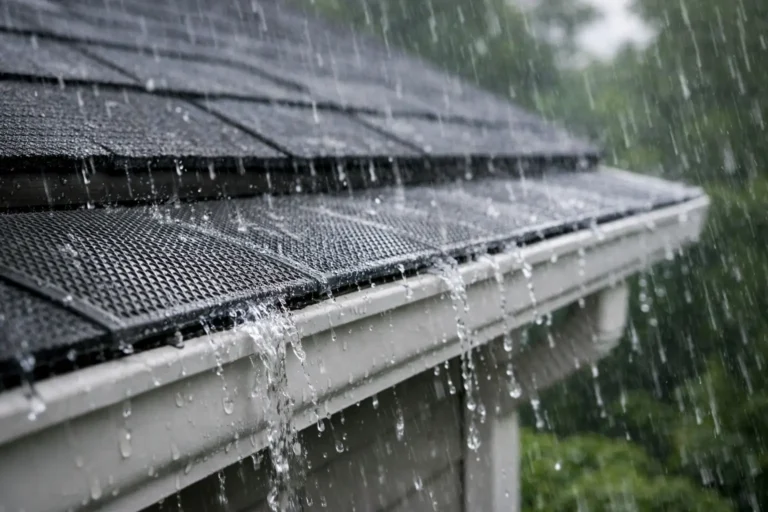
Pacific Northwest rain is often steady rather than dramatic, but sustained rainfall can expose an undersized or poorly pitched gutter system quickly. Water may spill over the front edge, run behind the gutter, or back up near roof edges. None of those outcomes is harmless when it happens repeatedly.
Proper gutter sizing and downspout planning help control that water. Larger gutters may make sense on homes with broad roof planes or heavy runoff areas. Additional downspouts can be just as important. If water enters a gutter faster than it can reach an outlet, even quality materials cannot make up for inadequate drainage design.
Installation determines whether materials perform
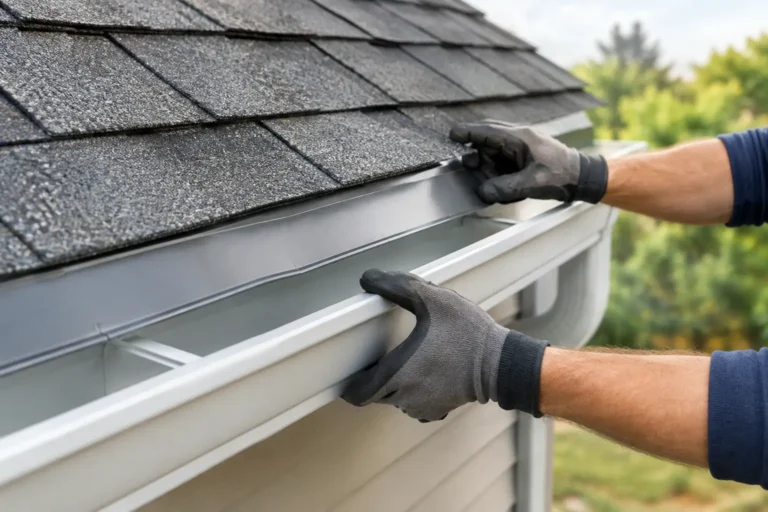
A well-made gutter installed poorly is still a poor investment. The gutter needs the correct slope toward the downspouts, secure fastening, sound connections, and enough support to resist the weight of standing water and wet debris.
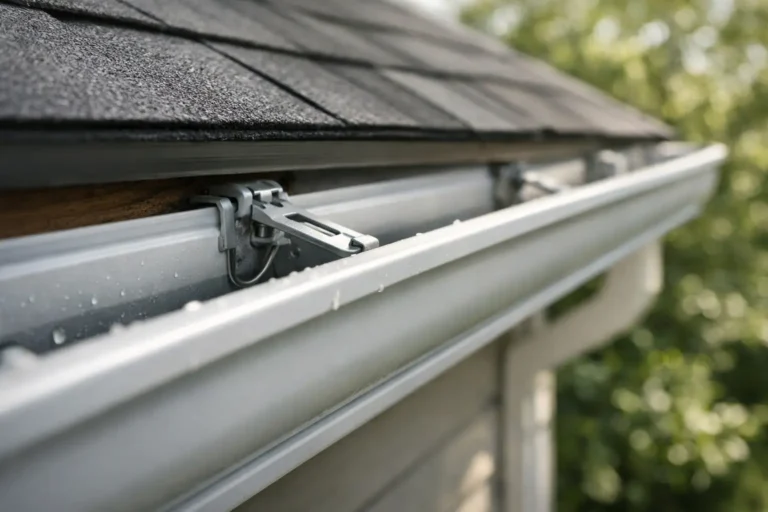
Hidden hangers are a key detail. They support the gutter from inside the channel and are fastened into solid framing behind the fascia. When installed at appropriate spacing, they help the system remain straight and secure through years of rain. A gutter that pulls away from the house or develops low spots will collect water, trap debris, and lose value quickly.
The Materials Behind Long-Term Performance
Aluminum is the standard choice for many residential gutter systems because it resists rust, is relatively lightweight, and is available in colors that complement the home. Material thickness matters, though. Thinner metal may cost less upfront but can dent more easily and may not feel as substantial along long roof runs.
The finish matters as well. A durable baked-on finish helps the gutter maintain its appearance and offers protection from the elements. Color matching should support the home’s exterior without becoming the main reason to choose a system. Drainage performance and secure installation come first.
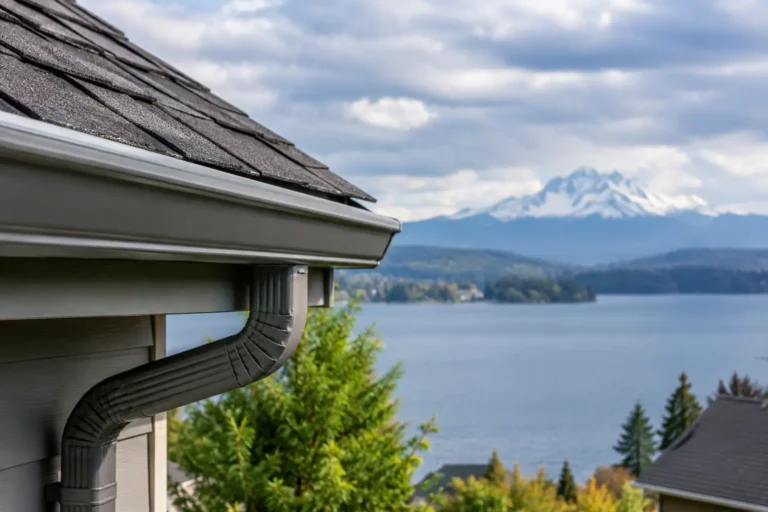
Downspouts deserve equal attention. Gutters collect water, but downspouts are responsible for carrying it away. Their size, number, location, and discharge point all affect whether water ends up safely away from the foundation. Extensions or appropriate drainage routing may be needed to keep runoff from saturating beds, walkways, and soil near the house.
Gutter Guards Can Increase the Value – When They Match the Debris
A new gutter system without protection may still need regular cleaning, especially beneath Douglas firs, pines, maples, and other mature trees common in this region. Needles, roof grit, moss fragments, and small leaves can collect in the channel and at the downspout opening. That is why homeowners should look at gutter guards as part of the full system, not as an unrelated add-on.
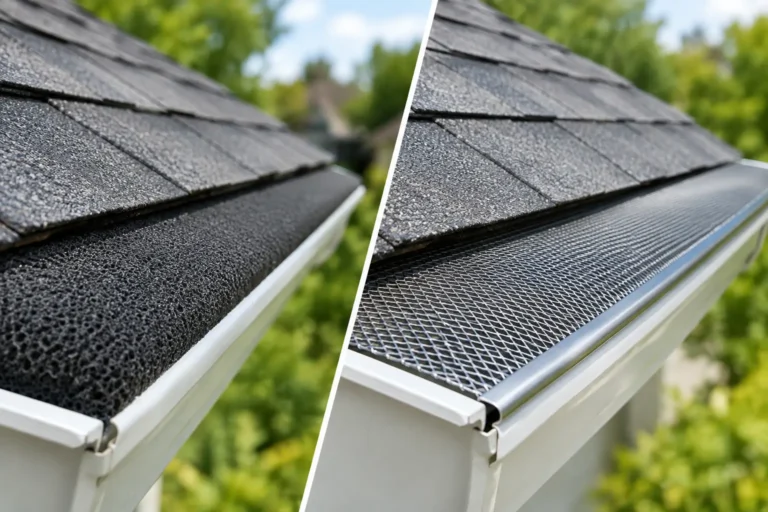
Not every guard handles Pacific Northwest debris equally. Large-hole screens can allow fine material through. Some hood-style designs may struggle when roof grit and wet organic debris build up at the entrance. A premium stainless steel micro-mesh guard is designed to keep out much smaller debris while allowing water to enter the gutter.
No gutter guard makes a roof maintenance-free. Debris can still rest on top of the guard and should be removed when needed, particularly after major wind events or heavy seasonal shedding. The value is in sharply reducing the material that enters and clogs the gutter, which reduces cleaning demands and helps preserve water flow.
For homeowners considering both new gutters and guards, installing them together can be practical. The installer can assess the fascia, set the gutter slope, position downspouts, and integrate the guard with the roof edge in one coordinated project. That is usually better than treating drainage as a series of disconnected fixes.
How to Judge a Gutter Quote Fairly
Two estimates can have very different prices because they may not describe the same work. Compare the actual scope, not just the bottom line. A clear quote should identify the gutter material and size, downspout work, removal of existing gutters if applicable, hanger method, gutter guard specifications, and how drainage will be handled at ground level.
Ask whether the system is custom formed on-site, how the installer will address damaged fascia or rotten wood if discovered, and whether corners and outlets are properly sealed and supported. Also ask who will perform the installation and who will be accountable if a problem appears after the work is complete. Direct answers matter more than a vague promise that the system is “premium.”
Warranty coverage is worth reviewing, but read what it covers. Product warranties and workmanship warranties are different. A long manufacturer warranty can be meaningful when paired with correct installation, yet it does not replace the need for an installer who understands roof drainage and local debris conditions. For example, Gutter Glove Pro systems can include a 50-year transferable manufacturer warranty, subject to its terms, alongside the benefit of professional installation.
When a Lower-Cost Option May Be Enough
There are situations where a full replacement is not the right first move. If gutters are relatively new, firmly attached, correctly sloped, and only have a localized leak or damaged section, a repair may be the sensible choice. Homes with little tree cover may also have less need for high-performance guards than properties surrounded by evergreens.
But repairs have limits. Repeated sealing, rehanging, cleaning, and patching can become more expensive than replacing an aging system that is undersized or failing in multiple places. Water stains on fascia, recurring overflow, frequent clogs, and sagging runs are signs that the problem may be structural rather than minor maintenance.
The goal is not to buy more gutter system than your home needs. It is to install the right system once, with capacity and materials suited to the property. That is where long-term value starts.
A Better Way to Think About the Investment
Gutters are easy to overlook because they work at the edge of the roof. Their job, however, affects the ground around the entire home. Controlled runoff helps protect siding, trim, fascia, foundations, landscaping, and entry areas from the effects of constant water exposure.
NW Gutter Protection approaches the work with the conditions of this region in mind: heavy rain, roof grit, and evergreen debris are not rare exceptions here. A straightforward assessment of roofline, drainage, and debris exposure can show whether replacement, guards, or targeted repair is the most practical next step.
The right gutter system should not demand attention every time rain moves in. It should give you confidence that water has a clear path away from the home, season after season.